
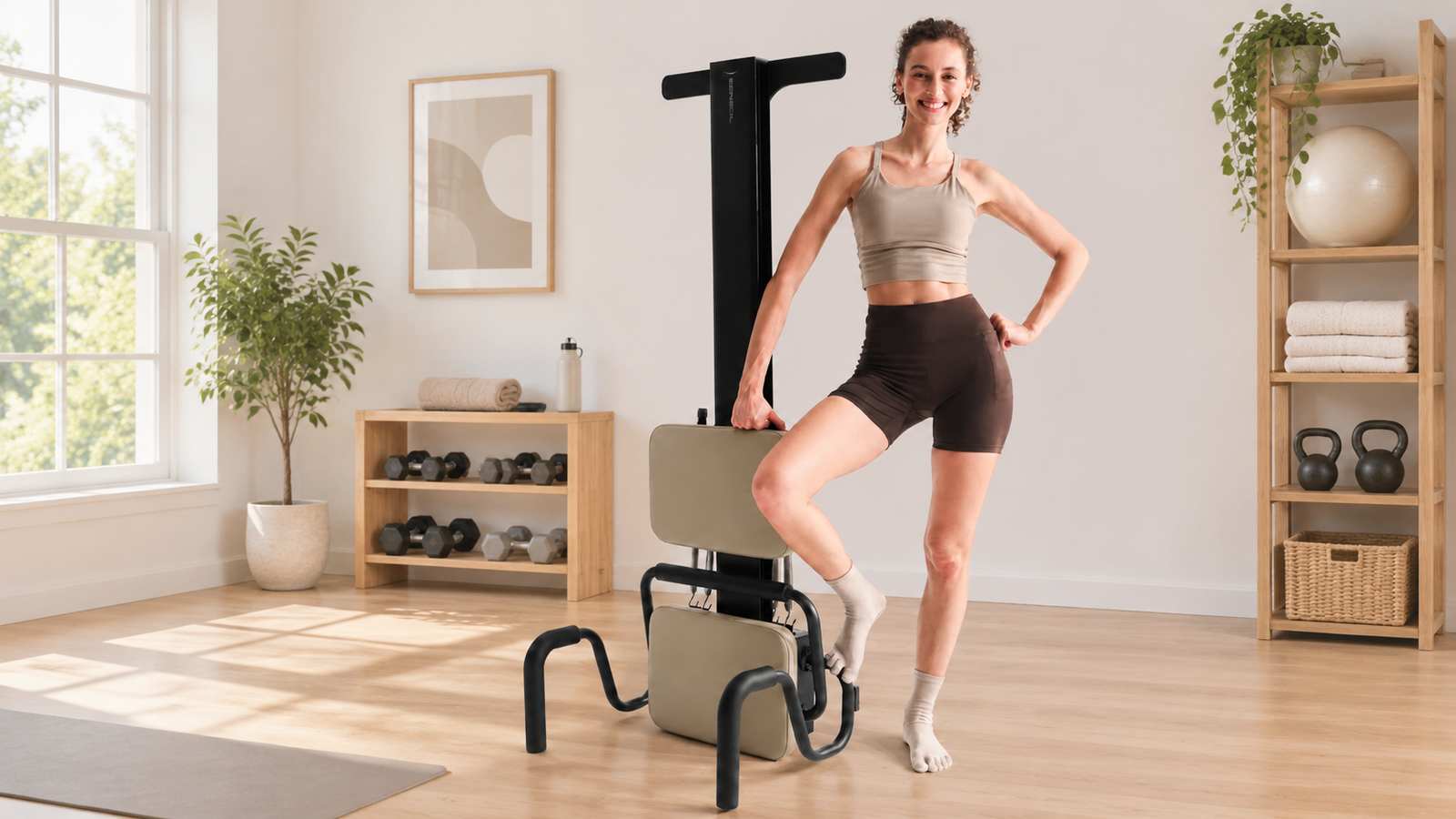
Avoid judging a home reformer by compactness alone
The most common mistake with compact Pilates equipment is assuming that a smaller machine automatically fits a smaller life. The Sensol FLEX AIR is designed for home training and has an upright storage position, but you still need a practical place to exercise, move around the frame and transition safely between positions. Storage convenience matters; usable workout space matters more.
Is the Sensol FLEX AIR worth it for home use? It can be worth it for someone who wants a compact, spring-resistance Pilates reformer and has enough clear space to use it safely. At $699, its value depends on whether you will use the mechanical spring system regularly, follow the supplied guidance and benefit from upright storage between sessions. It is not the right choice if your available area only accommodates the listed machine dimensions with no room for movement.
I found it more useful to assess FLEX AIR as part of a realistic wellness at home routine rather than as a piece of equipment that would create a routine by itself. Resources such as The Wellness Society’s collection of at-home self-care ideas make a similar practical point: personal care has to fit alongside work, family and ordinary responsibilities. A reformer is easier to keep using when its location, setup and session length already make sense for your week.
Measure the workout zone, not just the reformer footprint
FLEX AIR measures 64.8 × 24.3 × 17.3 inches when set up, or 164.5 × 61.6 × 43.9 centimetres, measured length by width by height. Those figures let you check whether the reformer itself will fit. They do not describe the total area required for Pilates movements, getting on and off the machine, or working with accessories beside it.
Mistake 1: Treating the listed dimensions as the full exercise area
A tape outline of the 64.8 × 24.3-inch footprint is a useful first check, but it should not be the final one. Leave clear space around the reformer for your full range of movement, as the product guidance directs. Consider where your arms and legs may extend and whether furniture, walls or doors interrupt the area. If the only possible position blocks a walkway, the room may technically fit the machine without functioning well as a training space.
Mistake 2: Planning for exercise but not setup and storage
The upright storage position helps reclaim floor space between sessions, yet that position also needs a suitable designated location. Before ordering, map the complete cycle: where the reformer will be used, how the area will be cleared and where the machine will stand when stored. This is one of those healthy home habits that seems unimportant until poor planning starts discouraging short, regular sessions.
Mistake 3: Ignoring the user-weight limit
The stated maximum user weight is 264.6 pounds, or 120 kilograms. Do not treat that figure as approximate or assume compact equipment can be used beyond its published limit. If a prospective user exceeds it, FLEX AIR is not an appropriate choice for that person. This is a straightforward suitability check, not a performance goal.
Know which resistance belongs to the reformer
FLEX AIR is a mechanical Pilates reformer whose main training resistance comes from springs. Four elastic bands are also supplied as a complimentary gift, but they are intended for separate accessory exercises. Confusing those two systems can lead to an inaccurate understanding of what you are buying and how sessions should be organised.
Mistake 4: Calling FLEX AIR an elastic-band reformer
The included bands do not replace or define the reformer’s primary resistance mechanism. Mechanical springs provide the main resistance for Pilates training on FLEX AIR. The bands can add separate exercise options away from the reformer’s principal spring-resistance work, so they are best viewed as accessories rather than the core system.
Mistake 5: Assuming more resistance is always better
Pilates practice should centre on controlled movement rather than chasing the greatest available resistance. Use the supplied SENSOL FLEX workout guidance to build familiarity with the machine and choose work appropriate to your current ability. Beginners in particular should avoid changing several variables at once; learning the movement pattern first makes a routine easier to understand and repeat.
Mistake 6: Overlooking what is actually included
The package includes the FLEX AIR reformer, two handles, one ankle strap and four complimentary elastic bands for separate accessory exercises. That is the complete stated inclusion list, so buyers should not assume that other accessories are supplied. Check the planned exercises against these included items before purchase rather than relying on photographs or expectations formed from other reformers.
A simple routine is more sustainable than an ambitious launch
Buying equipment can create a burst of motivation, but the first week should not become a test of how much training you can tolerate. A better starting point is to decide when the reformer will come out, which supplied guidance you will follow and how the room will be reset afterwards. That turns setup and storage into parts of the habit instead of barriers surrounding it.
For simple healthy living, consistency usually benefits from fewer decisions. Keep the intended workout area clear, store the included handles and ankle strap in a known place, and choose a repeatable time window. A beginner-oriented home wellness practice starter guide also frames progress around building daily habits, which is a more useful model than waiting for an occasional perfect session.
You can place reformer practice within a broader routine without making every day a full wellness event. The step-by-step guide to creating a holistic home routine discusses daily practices supporting several aspects of wellbeing, while this guide to planning an at-home wellness retreat offers a more occasional, structured reset. FLEX AIR can suit either approach, but the machine does not require an elaborate ritual to be useful.
Safe storage starts with following the supplied instructions
Another common mistake is treating an upright storage feature as permission to improvise. Follow the supplied setup, storage and safety instructions before using or storing FLEX AIR. The product information confirms the storage position but does not support assumptions about alternative orientations, modified setups or unsupported storage methods.
Make the transition between training and storage deliberate. Clear the surrounding area, account for the handles, ankle strap and bands, and do not rush the process simply because the reformer is designed for everyday home practice. If more than one person uses the room, everyone should know that the workout and storage zones need to remain unobstructed.
- Do not begin until the supplied setup and safety instructions have been read.
- Do not use the reformer beyond the stated 264.6-pound or 120-kilogram maximum user weight.
- Do not confuse the complimentary elastic bands with the reformer’s mechanical spring-resistance system.
- Do not assume the 64.8 × 24.3-inch footprint represents all the space needed to exercise.
These checks are not complicated, which is precisely why they work as healthy home habits. They turn safety and room preparation into repeatable actions instead of matters left to memory. If any instruction is unclear, pause and seek current guidance from Sensol rather than guessing.
FLEX AIR is not suitable for every home or user
FLEX AIR is not for anyone above its 264.6-pound or 120-kilogram maximum user weight. It is also a poor fit for a room that can hold the reformer only by eliminating the clear surrounding space required for movement. Compact should not be interpreted as usable in any corner, beside any piece of furniture or across a busy household walkway.
It may not suit someone who wants a different primary resistance format, because FLEX AIR relies on mechanical springs for its main Pilates resistance. Buyers looking specifically for a machine defined by elastic-band resistance should not mistake the four complimentary gift bands for that type of system. Likewise, anyone expecting accessories beyond two handles, one ankle strap and those four bands should compare their requirements with the stated package contents.
Delivery expectations also deserve attention. Free standard curbside freight delivery is available to eligible addresses in the contiguous 48 U.S. states, with liftgate unloading included where required. Inside delivery, stair carry, room-of-choice placement and assembly are not included. Offshore islands and U.S. island territories, including Hawaii and Puerto Rico, are excluded, while serviceable remote mainland addresses may involve a carrier surcharge confirmed in advance; customers should verify service to a specific Alaska mainland address before ordering.
Where to Buy
Frequently asked questions
How do I choose quality on a budget?
Start by checking whether the core mechanism, size, user limit and included accessories match how you plan to train. FLEX AIR costs $699 and uses mechanical springs as its main resistance, so assess that actual system rather than assigning value to the complimentary elastic bands or assuming unlisted accessories are included.
How often should this be refreshed or maintained?
No fixed maintenance interval is stated in the provided product information. Follow the supplied setup, storage and safety instructions, and refresh your training routine when it becomes difficult to perform with attention and control rather than changing the machine or resistance without guidance.
What should beginners start with?
Beginners should start with the supplied SENSOL FLEX workout guidance and controlled movements appropriate to their current ability. Learn how the spring-resistance reformer works before adding separate exercises with the complimentary elastic bands, and keep early sessions simple enough to repeat consistently.
What mistakes should I avoid?
Avoid treating the machine footprint as the entire workout area, exceeding the 264.6-pound user limit or confusing accessory bands with the main spring system. You should also avoid improvising setup or upright storage; use the supplied instructions and keep clear space around the reformer.