
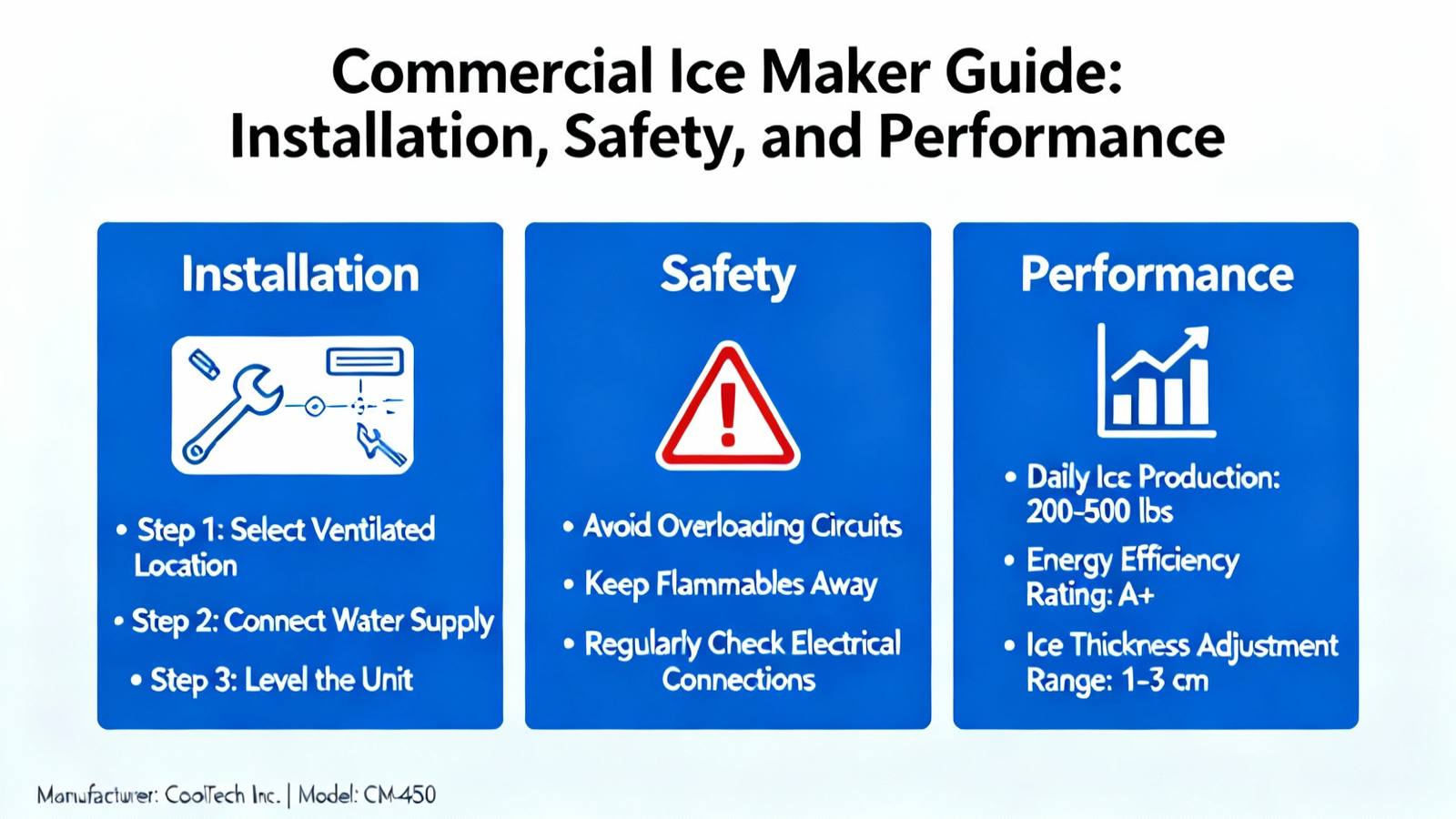
For any bustling food service operation, a reliable ice maker is the unsung hero of the back-of-house. This guide delves into the essential features, proper installation, and critical safety protocols for a heavy-duty commercial ice maker, ensuring you maximize performance and longevity while safeguarding your investment and premises.
Engineering for Endurance: Core Specifications & Build
At the heart of a dependable commercial unit is its construction and design. This model features a fully durable stainless steel construction, which is the industry standard for corrosion resistance, ease of cleaning, and longevity in high-moisture environments. Its operation on standard 110V 60Hz power at 780W makes it accessible for most US commercial kitchens without requiring special electrical upgrades. A key modern feature is the use of environmentally friendly R290 (propane) refrigerant. According to Wikipedia, R290 has a “negligible ozone depletion potential and very low global warming potential” compared to traditional hydrofluorocarbons, making it a more sustainable choice, though it requires specific handling due to its flammability. The stated compatibility with climate types SN, N, ST indicates it is tested to perform reliably in a range of ambient temperatures, from subtropical to temperate, which is crucial for kitchens with variable heat loads.
Strategic Installation: Space, Plumbing, and Power
Proper setup is non-negotiable for optimal function and safety. The unit requires a dedicated drinking water supply connection with a specific water pressure range (14.5-58 psi), as using non-potable water violates health codes and can damage components. Critical clearance of at least 5.9 inches on all sides is mandated to ensure adequate airflow for the condenser; insufficient ventilation is a primary cause of premature compressor failure. The included 70″ three-prong power cord is designed for the unit’s draw; using an extension cord, as the manual warns against, can lead to voltage drop, overheating, and is a documented fire hazard. As highlighted in a Reddit discussion on appliance installation, users often underestimate the importance of following these manufacturer specs to the letter.
Critical Safety and Initial Startup Protocols
Adhering to safety guidelines protects both personnel and equipment. The warnings to keep the unit away from flammable materials and direct heat sources are directly tied to its electrical components and use of R290 refrigerant. The most critical step is the 24-hour rest period after delivery. If the unit was tilted during transport, oil can migrate from the compressor. Allowing it to settle upright lets the oil flow back, preventing severe damage upon startup—a point frequently emphasized by technicians in online forums. Furthermore, the drain pipe must be properly installed and positioned lower than the machine’s outlet to facilitate gravity drainage of meltwater, preventing internal flooding and ice blockages.
Optimizing Long-Term Performance and Output
Once operational, understanding factors that influence production ensures you meet your ice needs. The machine’s output is directly influenced by the surrounding environmental temperature; production will slow in hotter ambient conditions as the system works harder to reject heat. It is strictly for indoor use, as outdoor conditions introduce contaminants, temperature extremes, and unauthorized access that compromise safety and hygiene. Regular cleaning with approved solutions is essential to prevent scale and slime mold buildup, which can affect ice quality and machine health. For operations requiring robust output, exploring a model like the high-capacity commercial stainless steel ice maker can provide a greater reserve. The principle of matching capacity to demand is key, as noted in industry resources, to avoid overworking a smaller unit.
Conclusion
Investing in a commercial ice maker is a significant decision that impacts daily operations. This analysis underscores that beyond mere specifications, the true value lies in understanding the synergy between its durable stainless steel construction, correct installation with proper clearance and plumbing, and strict adherence to safety and startup protocols. The use of R290 refrigerant reflects a move toward environmental responsibility but underscores the need for professional handling. As with any commercial appliance, the manufacturer’s guidelines—from the mandatory 24-hour settling period to the prohibition of extension cords—are written to prevent common failures. By treating the ice maker as a precision piece of kitchen equipment requiring specific conditions, rather than a simple plug-and-play appliance, businesses can ensure consistent ice production, avoid costly downtime, and extend the unit’s service life for years to come. Ultimately, the reliability of your commercial ice maker is a direct result of the care taken during its setup and ongoing maintenance.
This guide is a lifesaver for anyone trying to navigate the installation and safety of a new commercial ice maker.
\}}
This guide is a lifesaver for anyone trying to navigate the proper installation and safety of a commercial ice maker.
\}}
This guide really highlights why a reliable commercial ice maker is such a crucial piece of equipment for any busy kitchen.
\}}
This guide really highlights why a reliable commercial ice maker is such a crucial piece of equipment for any busy kitchen.
\}}
This guide really highlights why a reliable commercial ice maker is such a crucial piece of equipment for any busy kitchen.
\}}