
Correct setup protects the reformer from avoidable strain
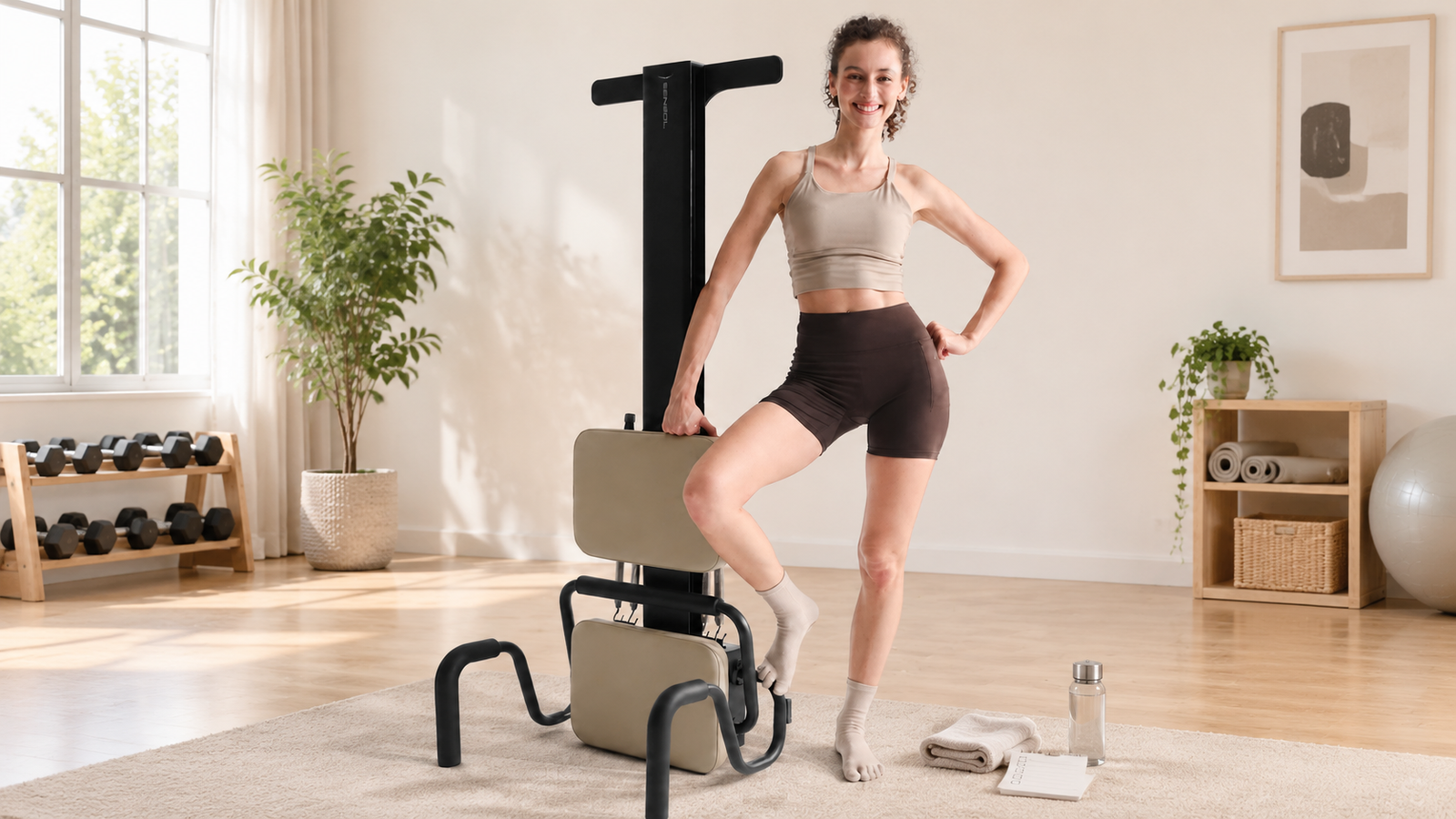
The Sensol FLEX AIR is a compact, spring-resistance Pilates reformer designed for everyday home practice. Its set-up dimensions are 64.8 × 24.3 × 17.3 inches, or 164.5 × 61.6 × 43.9 centimetres, measured length by width by height. Those figures tell you how much space the machine itself occupies, but they do not represent the total area needed for exercise.
Is the Sensol FLEX AIR worth it for home use? It can be worth it for someone who wants a compact mechanical reformer with spring resistance and an upright storage position. It is a less suitable choice if you cannot provide clear workout space, exceed its 264.6-pound maximum user weight, or expect powered features rather than a mechanical system.
Plan around movement, not just the footprint
Measure the intended room before setting up the reformer, then account for the reach of your arms and legs during each movement. Furniture, walls and low shelves should not interfere with your full range of motion. I found that treating the listed footprint as the starting point—not the complete space requirement—is the more sensible way to plan a home Pilates area.
Respect the stated user-weight limit
The maximum user weight is 264.6 pounds, or 120 kilograms. That limit should be treated as a firm operating boundary rather than a flexible target. It is also important not to assume that familiarity with another reformer overrides the setup and safety instructions supplied with this model.
Recheck the setup after moving the machine
Upright storage helps reclaim floor space, but each return to the workout position is a new setup. Before getting onto the carriage, confirm that the reformer is positioned as directed in the supplied instructions and that the surrounding floor area is clear. If anything looks displaced, loose or damaged, pause rather than trying to correct it while under load.
The spring system needs focused checks before every session
Mechanical springs provide the main resistance on the Sensol FLEX AIR. That distinction matters for both training and maintenance: the springs are the working resistance system, while the four supplied elastic bands are a complimentary gift for separate accessory exercises. The bands should not be treated as replacements for the reformer springs.
Inspect what you can see without dismantling anything
Before a session, look over the visible springs and accessible connection areas for an obvious change from their normal condition. Stop if you notice damage, unusual deformation, a loose connection or anything else that makes the setup questionable. A visual check is not permission to open, modify or dismantle the mechanism; follow the supplied instructions and seek appropriate support when a concern goes beyond a simple setup correction.
Listen and feel for changes during controlled movement
Controlled movement is central to how the FLEX AIR is intended to be used. If the reformer suddenly feels different, produces an unfamiliar sound or no longer moves as expected, end the exercise carefully and inspect the setup. Continuing simply to finish a planned number of repetitions can turn a small issue into unnecessary wear or a safety problem.
Keep the accessory bands separate from reformer maintenance
The included package contains the FLEX AIR reformer, two handles, one ankle strap and four elastic bands. Check accessories before using them, and retire an item from the session if it appears damaged. Do not attach the gift bands in an improvised attempt to change the reformer’s spring resistance, because they are supplied for separate accessory exercises rather than as its main resistance mechanism.
A short cleaning and storage routine is easier to sustain
Maintenance works best when it is attached to the end of every workout rather than saved for an occasional deep clean. Remove personal items from the surrounding area, deal with any moisture or visible residue promptly, and leave the equipment ready for the next inspection. Use only care methods permitted by the supplied guidance; the product facts do not specify a cleaning chemical or lubricant, so it would be unwise to assume that any household product is suitable.
Finish the session before beginning maintenance
Complete the movement, dismount and make sure the equipment is no longer under active use before cleaning or checking it. Avoid reaching into moving areas or trying to adjust a questionable component while you are positioned on the reformer. If the instructions identify a particular order for setup, storage or safety checks, that sequence should take priority over general advice.
Use upright storage deliberately
The upright storage position is designed to help reclaim floor space between sessions. Use it according to the supplied storage instructions rather than treating it as a casual way to lean the machine wherever it fits. Before moving to storage, check that loose accessories have been collected so the two handles, ankle strap and gift bands do not become trip hazards or get trapped around the reformer.
Healthy home habits make equipment care more consistent
A reformer lasts longer when its care routine fits naturally into the household. Keep the workout zone free from unrelated storage, choose a predictable time for practice and reserve a place for the accessories. These are small examples of simple healthy living, but they reduce rushed setups and make it easier to notice when something has changed.
If consistency is the difficult part, The Wellness Society offers at-home self-care practice ideas for making personal time around work, family and other obligations. A practical approach is to pair each Pilates session with a two-minute reset: return accessories, inspect the visible equipment and clear the surrounding floor.
For a broader wellness at home plan, Fit Life Traders discusses home-based mind-and-body wellness practices, while BioVibra provides a step-by-step guide to establishing a home wellness routine. These sources are not FLEX AIR maintenance manuals, but they can help place equipment care within repeatable daily habits.
When you want a more structured reset, Ashlina Kaposta shares a step-by-step at-home wellness retreat plan. If Pilates forms part of such a day, avoid turning one long session into compensation for missed practice. Consistent setup, controlled movement and a proper post-session check are better healthy home habits than rushing through an ambitious schedule.
The FLEX AIR is not suitable for every home or user
This reformer is not appropriate for a user above the stated maximum weight of 264.6 pounds or 120 kilograms. It is also a poor fit for a room that can accommodate the 64.8 × 24.3 × 17.3-inch machine but cannot provide clear space around it for full movement. Compact does not mean that the reformer can be operated safely in a tightly obstructed corner.
It is not the right choice for someone specifically seeking powered resistance or a machine whose main resistance comes from elastic bands. The FLEX AIR is a mechanical reformer, and its main resistance is provided by springs. The four elastic bands are complimentary accessories intended for separate exercises.
Buyers should also understand the delivery arrangement. Free standard curbside freight delivery is available to eligible addresses in the contiguous 48 U.S. states, with liftgate unloading included where required. Inside delivery, stair carry, room-of-choice placement and assembly are not included. Offshore islands and U.S. island territories, including Hawaii and Puerto Rico, are excluded, while serviceable remote mainland addresses may involve a carrier surcharge confirmed in advance; service to a specific Alaska mainland address should be checked before ordering.
Finally, this is not a machine for someone unwilling to follow the supplied setup, storage and safety instructions. Upright storage is useful, but it still requires deliberate handling. Anyone who needs help with safe equipment use should obtain suitable guidance rather than improvising adjustments or exercises.
A written maintenance schedule prevents guesswork
There is no fixed spring-replacement interval stated in the provided product information, so avoid inventing one. Condition, changes in operation and the supplied guidance should shape maintenance decisions. A simple written record can note the date, any visible concern and what action was taken without pretending to be a technical service log.
- Before each session: confirm clear workout space, review the visible setup and check the accessories you intend to use.
- During each session: use controlled movement and stop if the reformer feels or sounds unexpectedly different.
- After each session: address visible moisture or residue using an approved care method, collect accessories and follow the storage instructions.
- Periodically: compare the visible condition of the springs, handles, ankle strap and bands with their usual condition, and review the supplied safety guidance.
- After relocation: repeat the setup checks instead of assuming the previous arrangement still applies.
Do not lubricate, dismantle or modify a component unless the supplied instructions expressly direct you to do so. General mechanical intuition is not a substitute for model-specific guidance. When a concern cannot be resolved through the documented setup process, stop using the affected equipment until you have obtained suitable support.
This measured approach supports longevity without making unsupported promises about lifespan. No maintenance routine can guarantee that a component will last for a particular number of years. What it can do is reduce preventable neglect and make changes easier to identify before the next workout begins.
Where to Buy
- For United States customers: Sensol FLEX AIR at the official Sensol store — US store
Frequently asked questions clarify everyday care
What mistakes should I avoid?
Do not confuse the complimentary elastic bands with the reformer’s main spring-resistance system, exceed the 264.6-pound user limit or assume the listed dimensions represent the entire workout area. Avoid improvised modifications, unsupported repairs and storage methods that conflict with the supplied instructions.
What should beginners start with?
Start by reading the supplied setup, storage and safety guidance, then create a clear practice area around the reformer. Use the SENSOL FLEX workout guidance to begin building a routine, prioritising controlled movement over speed or complexity.
How often should this be refreshed or maintained?
Perform a brief visual and setup check before every workout, followed by basic care and correct storage after the session. Review the equipment more closely at regular intervals and after moving it, but do not assume a replacement timetable that is not stated in the product guidance.
How do I choose quality on a budget?
Focus on whether the machine’s stated system, size, user limit and included accessories fit your actual needs rather than buying on feature count alone. For the FLEX AIR, assess the mechanical spring resistance, 64.8 × 24.3 × 17.3-inch setup footprint, upright storage position and 264.6-pound maximum user weight against your room and intended practice.
The setup dimensions were really helpful, and the maintenance tips make it much clearer how to avoid unnecessary strain on the Sensol FLEX AIR.