
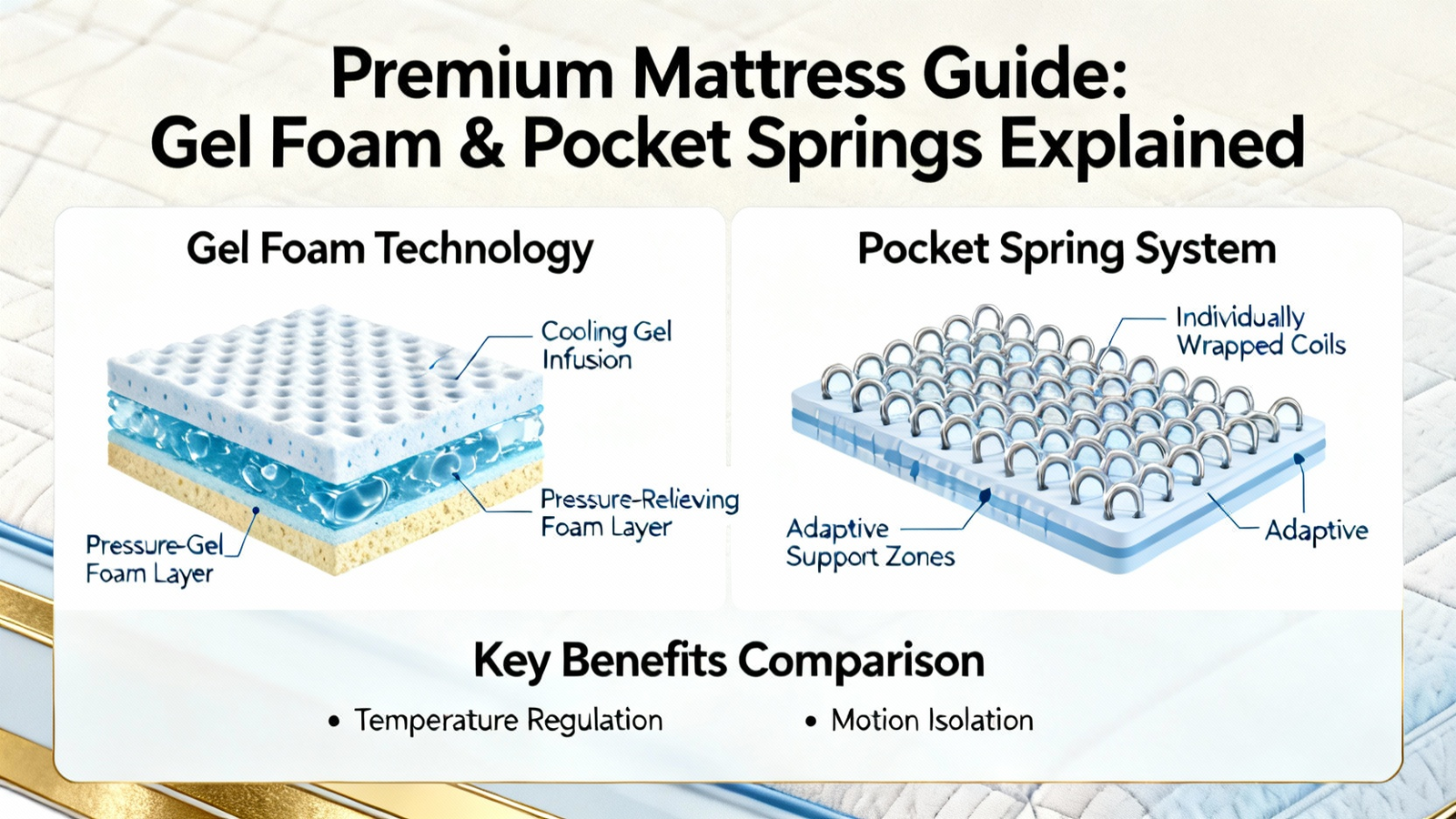
Choosing the right mattress is a critical decision for long-term health and sleep quality. This article delves into the engineering behind premium mattresses, examining how advanced materials like gel memory foam and high-density pocket springs work in unison. We will explore the science of pressure relief, temperature regulation, and edge support, providing you with the knowledge to invest in a truly restorative night’s sleep.
The Science of Surface Comfort and Safety
The top layer of a mattress is your first point of contact, making material choice paramount. Premium knitted fabrics, like the 270gsm textile mentioned, are prized for breathability and softness. When combined with integrated flame-retardant materials, they address two key concerns: comfort and safety. This aligns with consumer priorities noted in discussions on r/Mattress, where breathability and safety standards are frequently cited as top purchasing criteria. Beneath this, the inclusion of a 1cm gel-infused memory foam comfort layer tackles a common sleep complaint: overheating. Gel infusions are designed to draw heat away from the body, a feature supported by their widespread use in the industry for thermoregulation.
Engineered Core Support: Beyond Basic Springs
The true innovation in modern mattresses lies in the support core. The use of individually pocketed springs with a 1.9mm wire diameter and 30cm height represents a significant engineering advancement. As detailed on Wikipedia’s mattress entry, pocketed coils move independently to minimize motion transfer and better conform to body contours. The specification of dual-row 2.2mm thickened edge springs is a direct response to the perennial issue of edge sagging. This reinforcement creates a stable, usable perimeter, effectively increasing the sleepable surface area and enhancing the mattress’s structural integrity over time.
The Importance of Layered Construction and Density
A mattress is a system where every layer has a dedicated function. Positioned between the comfort layer and the springs, a 3cm high-density foam transition layer is crucial. It prevents the sleeper from feeling the springs directly (a phenomenon known as “bottoming out”) and provides an additional buffer for pressure relief. High-density foams are associated with greater durability. This multi-layer philosophy ensures that pressure distribution, support, and comfort are addressed in stages, rather than relying on a single material. The perimeter construction, using robust fabric and foam, further locks this layered system into a durable, unified structure.
Conclusion: Synthesizing Technology for Luxurious Sleep
In summary, a high-quality mattress like the 14″ White Knit Memory Foam Compressible Mattress is a feat of ergonomic engineering. It begins with a safe, breathable surface, integrates active temperature management through gel memory foam, and utilizes a sophisticated core of pocketed springs for targeted support and motion isolation. The strategic use of high-density foams and reinforced edges addresses common failure points, directly extending the product’s lifespan. This 14-inch deluxe design is not merely about height; it’s about allocating depth to specialized materials that perform distinct functions in unison. For the sleeper, this translates to the coveted “hotel-grade” experience: a sleep surface that is consistently supportive, cool, and durable. Investing in such a meticulously constructed mattress is an investment in sustained sleep quality, where every component is optimized to contribute to profound rest and long-term physical well-being.
This guide really helped me understand the science behind gel foam and pocket springs for a better night’s sleep.
\}}
This guide really helped me understand the science behind gel foam and pocket springs for better sleep.
\}}
This guide really helped me understand the science behind gel foam and pocket springs for a better night’s sleep.
\}}
This guide really helped me understand the science behind gel foam and pocket springs for a better night’s sleep.
\}}