
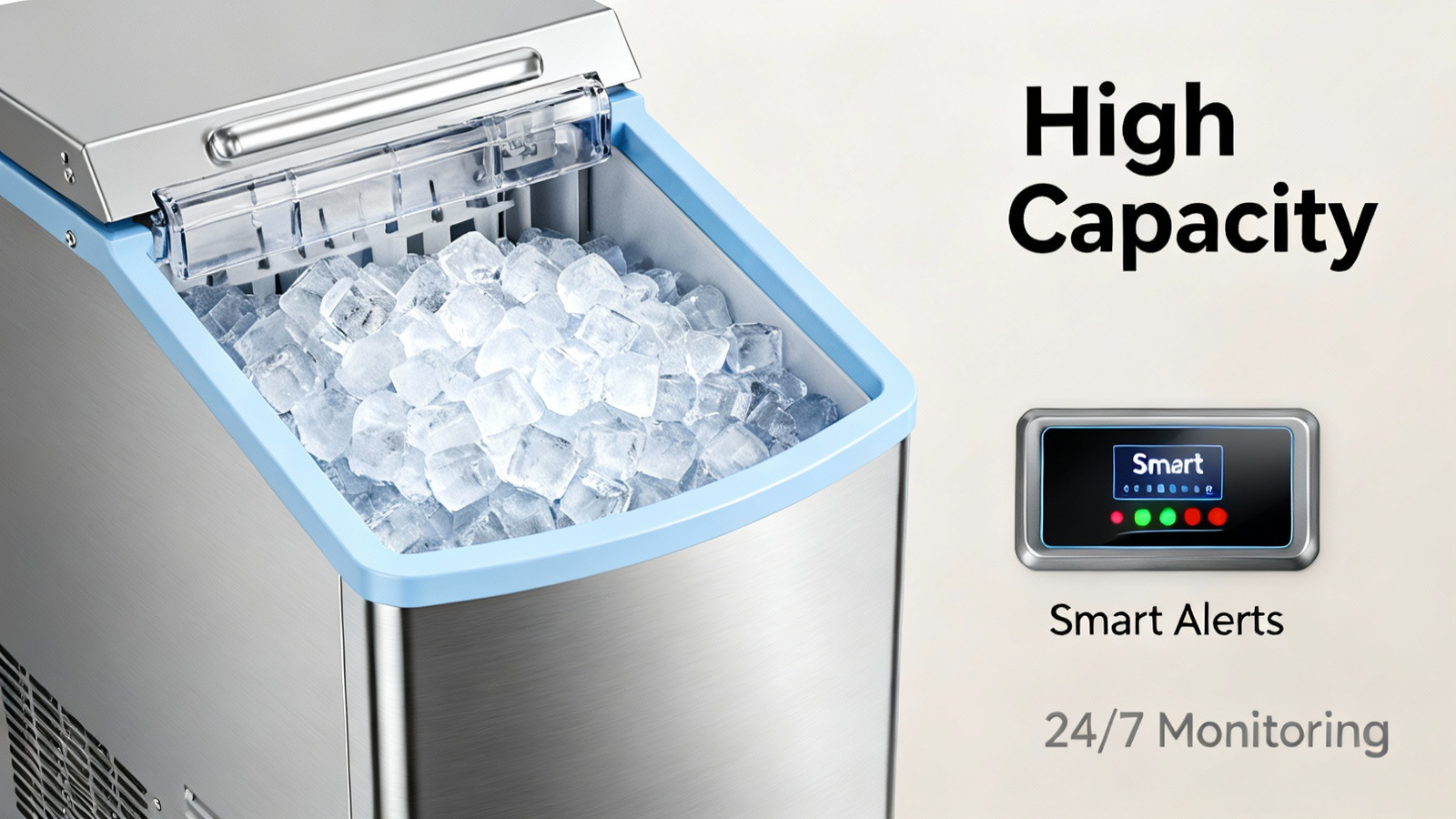
For any business relying on a constant ice supply, a commercial ice maker is a critical investment. This article explores the advanced features of modern units, focusing on intelligent alerts, automated maintenance, and high-capacity design that ensure operational efficiency and reliability in demanding environments.
Intelligent Operation with Proactive Alert Systems
Modern commercial ice makers move beyond simple production to offer intelligent monitoring. Features like fault alerts and water shortage alerts act as an early warning system, notifying staff of issues before they halt production. This is crucial for preventing downtime, as equipment failure can directly impact revenue and customer satisfaction in hospitality settings. The discreet ice full alert is equally important, automatically pausing ice production when the bin is full to prevent overflow and water waste, ensuring a safe and clean workspace.
Engineered for Efficiency and Consistent Quality
Reliability is built into the design through features that minimize manual intervention. Auto defrost technology eliminates the need for labor-intensive manual defrosting cycles, which historically was a common maintenance task noted in industry discussions. This not only saves staff time but also ensures the machine runs at peak efficiency, preventing ice buildup that can reduce production capacity. Furthermore, integrated water filters are essential for ice quality and machine longevity. They remove impurities that can affect taste and, as noted in Wikipedia entries on ice machines, scale buildup from minerals is a primary cause of mechanical failure. A quality filter protects the internal components, ensuring clean ice and reducing long-term maintenance costs.
High-Capacity Design for Demanding Environments
The core purpose of a commercial unit is to meet high-volume demand. A machine like the 22.24 in. 420 lbs/24h Ice Tray Count 156 Commercial Split Ice Maker is engineered for this, producing hundreds of pounds of ice daily. The large-capacity storage bin, often holding 300 lbs. or more, is vital for peak service periods. This high output aligns with the needs discussed in business forums, where users emphasize capacity as a top purchasing criterion. The split design, separating the ice-making engine from the storage bin, allows for flexible installation and often improves kitchen workflow.
User-Centric Features for Enhanced Usability
Beyond raw power, thoughtful details define a superior ice maker. Adjustable feet ensure stable leveling on uneven floors, which is critical for proper machine function and consistent ice production. An intuitive touch control panel simplifies operation for all staff members. For accessibility and hygiene, features like a flip-up ice bin door and an included ice scoop are standard. The inclusion of dual drainage options—water pump drainage and gravity drainage—provides installation flexibility to suit different kitchen layouts, a point often raised as important in professional installation guides.
In summary, today’s commercial ice makers, such as the high-capacity split system, represent a significant evolution from basic ice producers to intelligent, reliable partners in business operations. By integrating proactive alert systems for faults and water levels, they prevent costly interruptions. Automation of tasks like defrosting saves labor and maintains efficiency, while water filtration safeguards both ice quality and the machine’s internal mechanics. The non-negotiable high-volume output, paired with user-friendly designs featuring stable leveling, intuitive controls, and flexible drainage, addresses the core needs of busy establishments. Investing in a unit with this comprehensive feature set ultimately ensures an uninterrupted supply of clean ice, supporting seamless service, customer satisfaction, and the smooth daily workflow that is essential for success in the foodservice and hospitality industries. Choosing a robust model like the 420 lbs per day commercial ice machine means investing in operational consistency.
It’s impressive how modern commercial ice makers use smart alerts to prevent downtime and keep operations running smoothly.
\}}
It’s impressive how modern commercial ice makers use smart alerts to prevent downtime and keep operations running smoothly.
\}}
This article really highlights how the high-capacity design and smart alerts in modern commercial ice makers are game-changers for keeping operations running smoothly.
\}}