
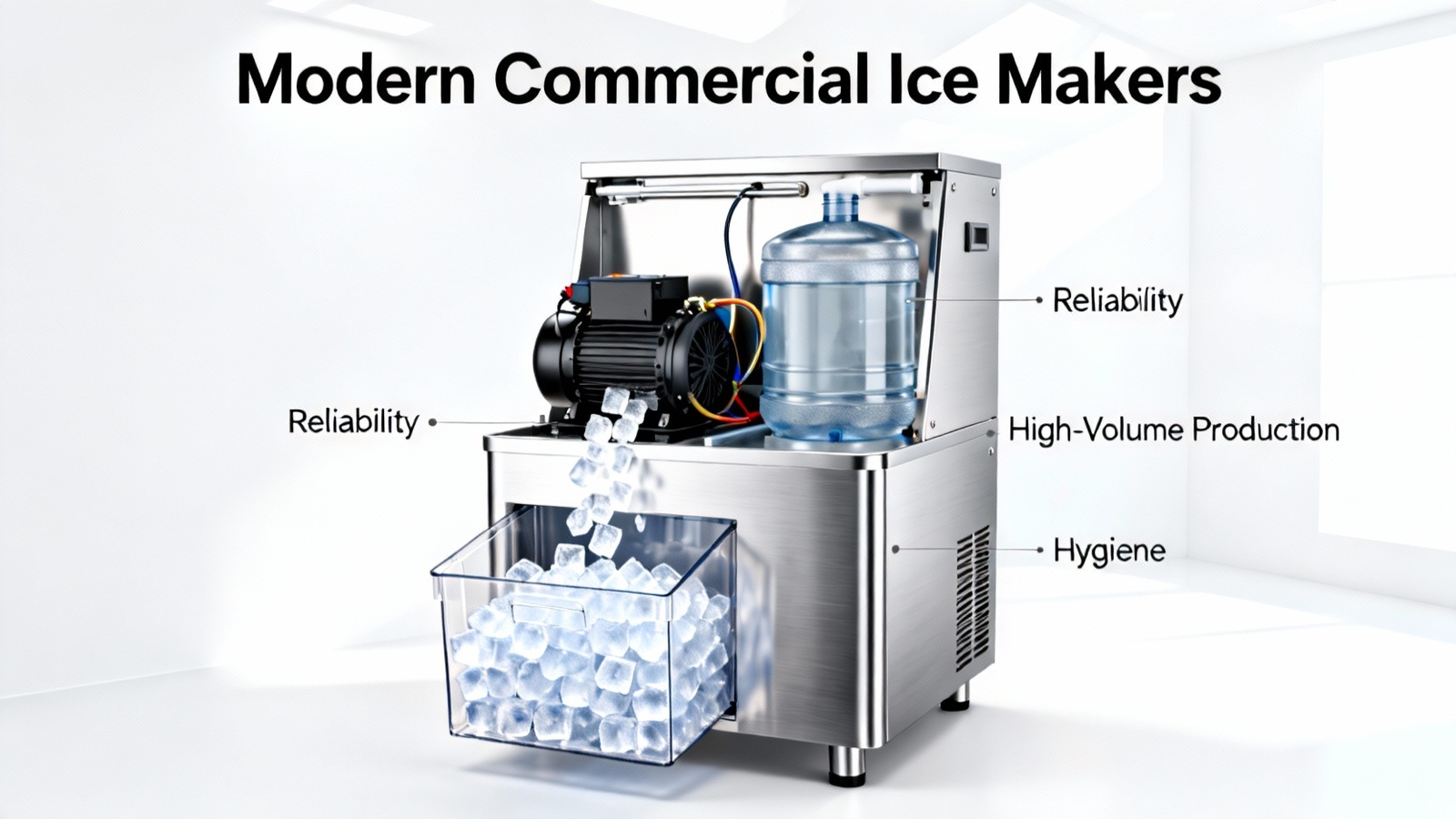
For any business that relies on a steady supply of ice, machine failure is more than an inconvenience—it’s a disruption to service and profit. This article explores the advanced features of modern commercial ice makers, focusing on intelligent alerts, high-volume production, and user-centric design that work in concert to ensure operational reliability and efficiency.
Intelligent Operation and Proactive Alerts
Modern commercial ice makers have evolved from simple appliances into connected, intelligent systems. Key to this is the integration of fault and status alerts that communicate directly with the operator. A fault alert system acts as an early warning, identifying issues like compressor faults or drainage problems before they halt production entirely. Similarly, a water shortage alert prevents damage to the unit by notifying staff when the supply line is compromised. This proactive approach to maintenance, underscored by a discreet ice full alert, minimizes downtime. As noted in a discussion on r/KitchenConfidential (post dated Dec. 2023), consistent monitoring and immediate response to these alerts are critical for preventing costly repairs in high-demand environments.
Engineering for High-Volume Demand
The core mandate of a commercial unit is to produce ice at a volume that meets public demand. This requires robust engineering under the hood. A machine capable of producing 450 lbs. of ice per day, translating to over 14,900 ice cubes, is designed for continuous duty cycles. This high output is supported by features like auto defrost, which eliminates the need for manual intervention and maintains peak efficiency by preventing frost buildup on the evaporator—a common cause of reduced performance. Furthermore, a large capacity bin holding 300 lbs. ensures a substantial buffer of ice is always available during peak hours, making a unit like the Tittla split commercial ice maker suitable for busy bars, restaurants, or healthcare facilities.
Hygiene, Accessibility, and Installation
Beyond production, sanitation and ease of use are paramount in commercial settings. An integrated water filter is essential for producing clean, clear ice free from odors and impurities, which aligns with health code expectations. User-facing design elements like a flip-up ice bin door and an included ice scoop facilitate hygienic serving without direct hand contact with the ice. On the installation side, practical features such as 4-adjustable feet ensure the unit is perfectly leveled, which is critical for proper operation of internal components and drainage. The option for both water pump drainage and gravity drainage provides flexibility for different installation layouts, a point often emphasized by technicians in online forums.
User Interface and Functional Design
The final layer of a well-designed ice maker is an intuitive interface that gives operators clear control. An intuitive touch control panel simplifies operation, allowing for easy mode selection and status checks. This is complemented by aesthetic and functional touches like a blue lighted ice storage bin. This lighting does more than enhance aesthetics; it serves as a clear visual indicator of ice level in low-light environments like walk-in freezers or behind a bar. This thoughtful integration of control and feedback creates a seamless user experience, reducing training time and operational errors.
In summary, selecting a commercial ice maker requires looking beyond mere production specs to a holistic system designed for real-world operation. As evidenced by discussions among industry professionals, the integration of proactive fault and water alerts is a game-changer for preventative maintenance. Coupled with the high-volume capability of producing 450 lbs. of ice daily and the sanitation assurance of a built-in water filter, these features form the backbone of reliable service. Practical installation benefits like adjustable feet and multiple drainage options, alongside user-centric designs such as the lighted bin and flip-up door, address the daily needs of staff. Therefore, a machine that synthesizes these elements—like the featured commercial ice maker—doesn’t just make ice; it ensures operational continuity, upholds hygiene standards, and provides tangible control to the user, making it a sound investment for any demanding commercial environment.
It’s impressive how modern commercial ice makers use intelligent alerts to prevent costly disruptions.
\}}
It’s amazing how modern ice makers use intelligent alerts to prevent costly downtime before it even happens.
\}}