
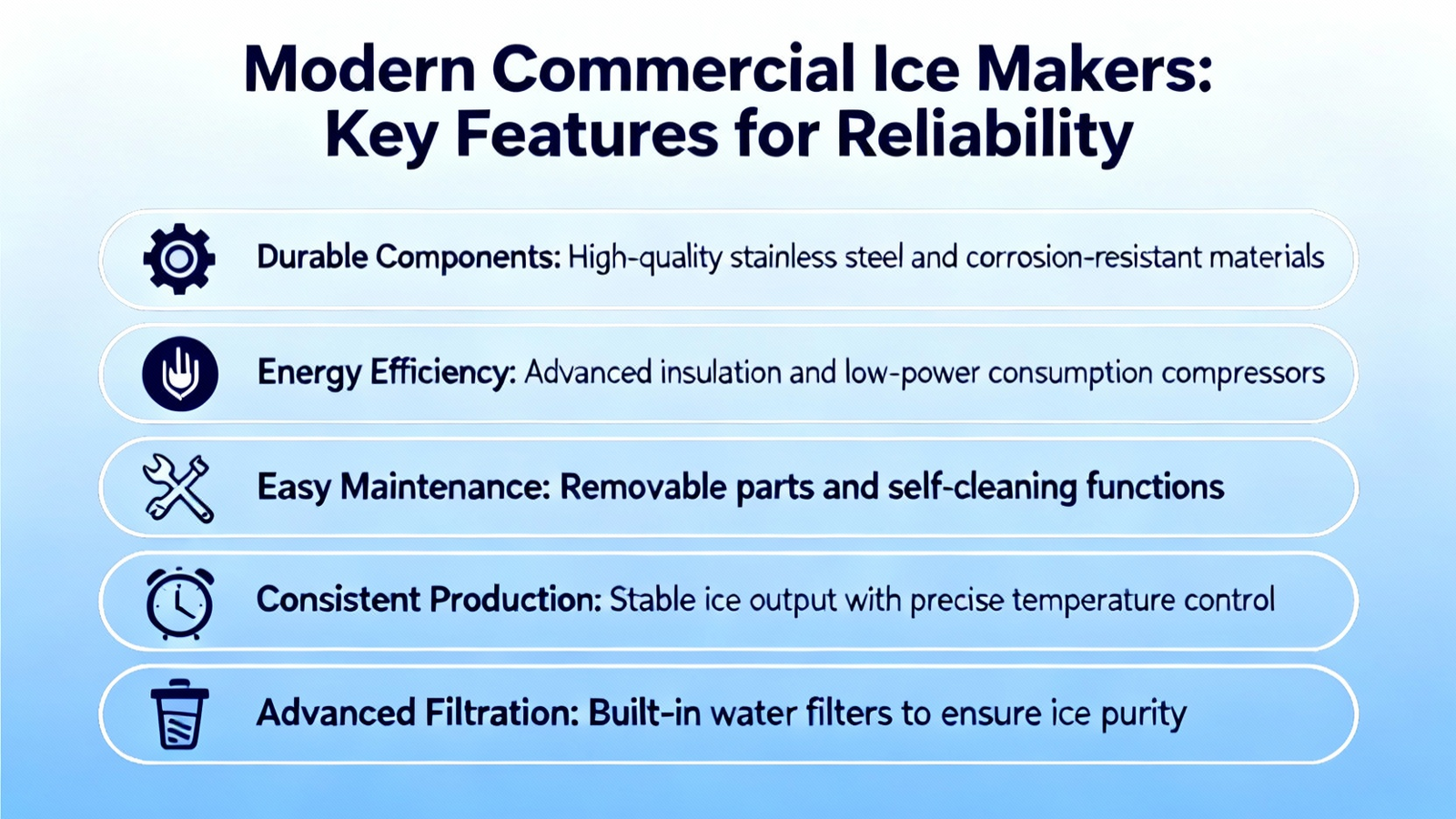
For any business reliant on a steady ice supply, a commercial ice maker is a critical investment. This article delves into the advanced features of modern units, like intelligent fault alerts and auto-defrost systems, that go beyond basic ice production to ensure operational reliability, hygiene, and ease of use in demanding environments.
Intelligent Operation and Proactive Alerts
Modern commercial ice makers are engineered for self-preservation and communication. Features like fault alerts and water shortage alerts act as an early warning system, notifying staff of issues before they halt production. This is crucial for minimizing downtime, a common concern in hospitality forums. As noted in a Reddit discussion on February 22, 2023, ice machine failures can severely disrupt service. The discreet ice full alert is equally vital, preventing energy waste and potential water overflow that can damage equipment and flooring.
Hygiene, Maintenance, and Consistent Quality
Maintaining ice quality and machine longevity requires addressing scale and contaminants. The auto defrost function prevents ice buildup on the evaporator, ensuring consistent production cycles and reducing strain on the compressor. Furthermore, an integrated water filter is essential for taste and safety. According to Wikipedia, scale buildup from minerals is a primary cause of inefficiency and failure. Regular filtration and descaling, aided by these automated features, are recommended best practices for food-safe ice production.
Design for Capacity and Accessibility
High-volume output must be matched with practical storage and access. A unit producing 420 lbs. of ice per day requires a substantial bin, like one holding 300 lbs.. This capacity, suitable for busy bars or event spaces, prevents frequent emptying. User-centric design elements like the intuitive touch control panel, flip-up ice bin door, and included ice scoop promote efficient and hygienic service. Practical installation is ensured by 4-adjustable feet for level placement, which is critical for proper water distribution and even ice formation, as an unlevel unit can produce thin or incomplete cubes.
Professional Drainage and Aesthetic Considerations
For commercial installation, drainage flexibility is key. A main unit offering both water pump drainage and gravity drainage provides options for various kitchen layouts, allowing for proper discharge of wastewater from the ice-making process. Beyond pure function, features like a blue lighted ice storage bin enhance usability and ambiance. The light acts as a visual inventory indicator in low-light settings and adds a touch of modern elegance, contributing to a professional back- or front-of-house environment. This blend of utility and design is evident in comprehensive solutions like the commercial split ice maker.
In summary, today’s commercial ice makers are sophisticated systems designed for resilience and ease. From the proactive fault and shortage alerts that prevent operational crises to the auto defrost and water filter that safeguard ice quality and machine health, these features collectively minimize manual intervention and maximize uptime. The emphasis on high capacity, accessible design with a flip-up door, and stable adjustable feet addresses the core needs of volume and convenience. Finally, professional-grade drainage options and thoughtful touches like blue bin lighting ensure seamless integration into a commercial workspace. Investing in a unit with this holistic feature set, such as a high-performance split-type ice machine, is an investment in uninterrupted service, allowing businesses to focus on their customers rather than equipment malfunctions. Ultimately, the right ice maker is a silent partner in profitability, ensuring you truly never run out of ice again.
The intelligent fault alerts mentioned here are a game-changer for preventing downtime in a busy kitchen.
\}}
The intelligent fault alerts you mentioned are a game-changer for preventing downtime in a busy kitchen.
\}}