
Choosing the right mattress is a critical decision for sleep health, blending materials science with personal comfort. This article delves into the engineering behind a modern hybrid mattress, examining how specific layers and components—from advanced knit fabrics to pocketed coil systems—work in concert to provide an optimal balance of pressure relief, support, and durability for restorative sleep.
The Foundation of Comfort: Top Layer Materials
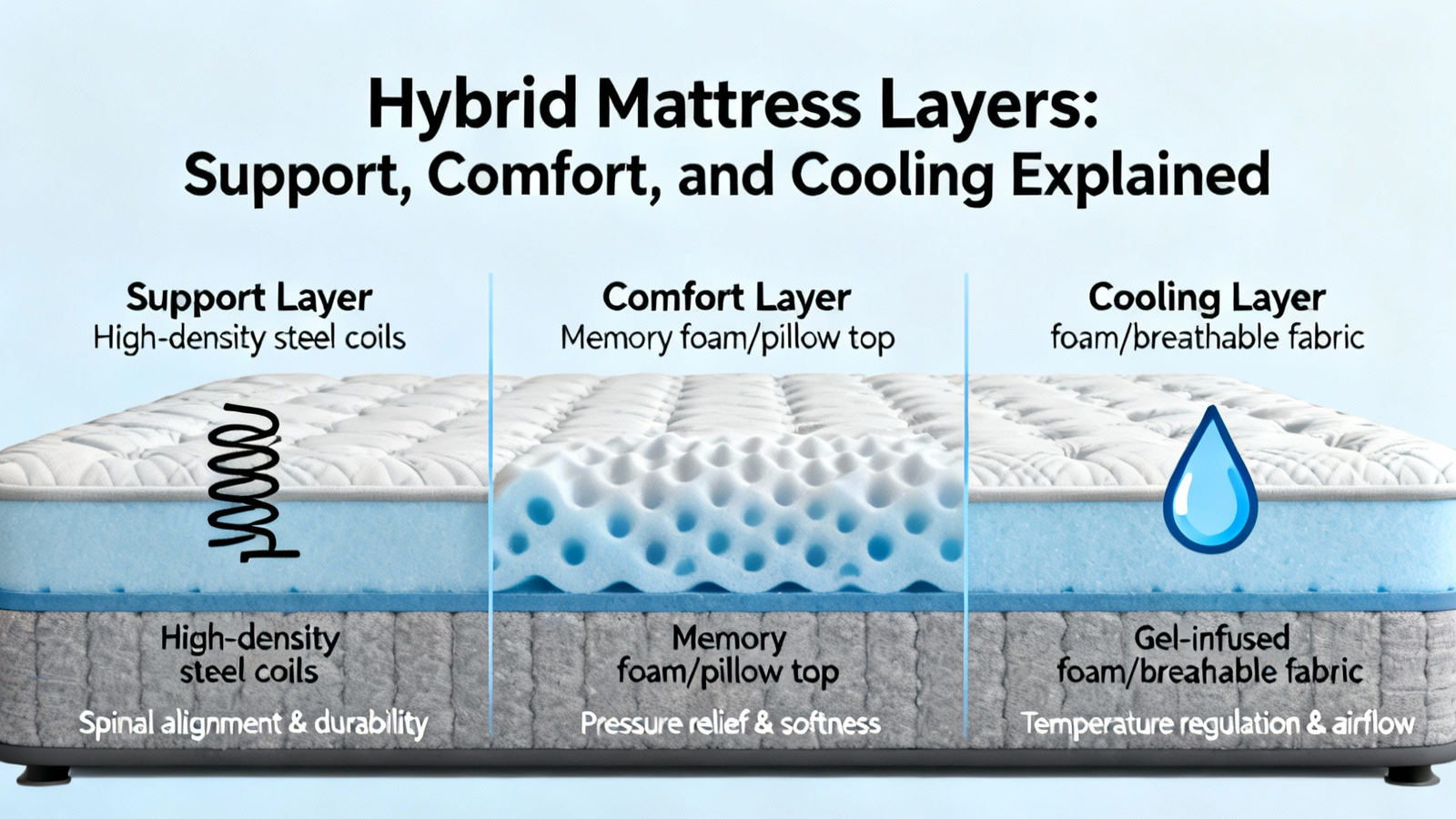
The initial contact layer of a mattress sets the tone for comfort and climate. This model uses a 270gsm knit fabric, a high-grammage material known for breathability and soft durability. Beneath this, a choice of 1cm gel-infused memory foam or 3cm standard foam addresses pressure point relief. Gel infusion, as noted in discussions on sleep technology, aims to mitigate memory foam’s traditional heat retention by improving airflow and dissipating warmth (Reddit, January 2022). This 4cm total cushioning zone adapts to the body’s contours, a principle rooted in the viscoelastic properties of memory foam, a material developed by NASA in the 1960s and later adapted for consumer use (Wikipedia).
Engineered Support: The Pocket Spring Core
Beneath the comfort layers lies the core support system: 18cm pocket springs with 1.8mm diameter wire. Unlike traditional interconnected spring units, each pocketed coil moves independently. This design provides targeted support and motion isolation, meaning movement on one side of the bed is less likely to disturb a partner. The gauge (thickness) of the wire (1.8mm) contributes to the mattress’s overall firmness and longevity. This engineering aligns with widespread user experiences highlighting pocket springs for superior spinal alignment and reduced partner disturbance, a frequent point of praise in mattress forums.
Safety, Stability, and Structural Integrity
A mattress’s perimeter and base are crucial for safety and edge support. This design incorporates reinforced borders with additional foam and fire-retardant materials, meeting stringent U.S. safety standards like the Consumer Product Safety Commission’s 16 CFR Part 1633 for open-flame resistance. The polyester bottom cover ensures non-slip stability on various bed frames or foundations. These elements are often overlooked but are vital for the mattress’s durability, safety, and consistent performance across the entire sleep surface, preventing the premature sagging often reported in lower-quality constructions.
The Hybrid Advantage and Final Considerations
This 10″ White Knit Memory Foam Compressible Mattress exemplifies the modern hybrid mattress, merging the contouring benefits of foam with the responsive support of springs. The “compressible” feature indicates it is likely designed for convenient shipping, a direct-to-consumer model benefit. When evaluating such a mattress, consider how the material choices—from the breathable knit to the gel foam option—address personal sleep preferences like temperature regulation and pressure relief against the foundational support of the pocket spring grid.
In conclusion, this 10-inch hybrid mattress represents a thoughtful synthesis of material technologies aimed at enhancing sleep quality. The top layers, featuring advanced knit and gel memory foam, directly target comfort and cooling, addressing common complaints about traditional memory foam. The substantial core of individually pocketed springs provides the essential, durable support necessary for proper spinal alignment and pressure distribution, a feature consistently validated by user experiences on platforms like Reddit. The inclusion of reinforced borders and fire-retardant materials underscores a commitment to safety and longevity, critical factors for investment. Ultimately, such a design philosophy—balancing plush surface adaptation with resilient, targeted support—caters to sleepers seeking a middle ground between the “sinking” feel of all-foam and the bounciness of traditional innersprings. By understanding the role and interaction of each component, from the 270gsm fabric to the 1.8mm coils, consumers can make an informed decision that aligns their specific physical needs with engineered sleep solutions, paving the way for more restorative rest.
This article really breaks down how the hybrid mattress layers work together for that perfect balance of support and cool comfort.
\}}
This breakdown of hybrid mattress layers really helps demystify the engineering behind a good night’s sleep.
\}}