
Unlocking Commercial Ice Production: A Deep Dive into High-Efficiency Ice Makers
For bars, cafes, and restaurants, a reliable ice machine is the unsung hero of service. This article explores the critical features of modern commercial ice makers, focusing on efficiency, hygiene, and operational intelligence. We’ll examine how technological advancements meet practical needs in high-demand environments.
The Critical Role of Water Filtration in Ice Quality
Superior ice begins with water quality. A high-efficiency water filter is not an accessory but a necessity for any commercial ice maker. It directly impacts taste, clarity, and equipment longevity. Tap water contains minerals like calcium and chlorine, which can affect flavor and cause scale buildup inside the machine. As noted in discussions on water treatment, scale accumulation is a primary cause of reduced efficiency and mechanical failure in appliances. The filtration system in a unit like the TITTLA commercial ice machine serves a dual purpose: protecting the internal components and ensuring the final ice product is pure and odor-free, which is essential for the integrity of beverages.
Engineering for Durability and High-Volume Output
Commercial environments demand ruggedness. The use of stainless steel is a industry standard for durability and hygiene, as its non-porous surface resists bacteria and is easy to sanitize. Paired with a powerful compressor, this construction supports high-volume production. For instance, a machine capable of producing 100 pounds of ice in 24 hours addresses the core need for volume in foodservice. This capacity, as highlighted in user reviews on platforms like Reddit, is a key decision factor for business owners who cannot afford downtime. The engineering must balance this output with energy efficiency; a robust compressor should perform reliably without excessive power draw, a point often debated by professionals in hospitality subreddits when comparing brands and models.
Intelligent Features: Automation and User-Centric Design
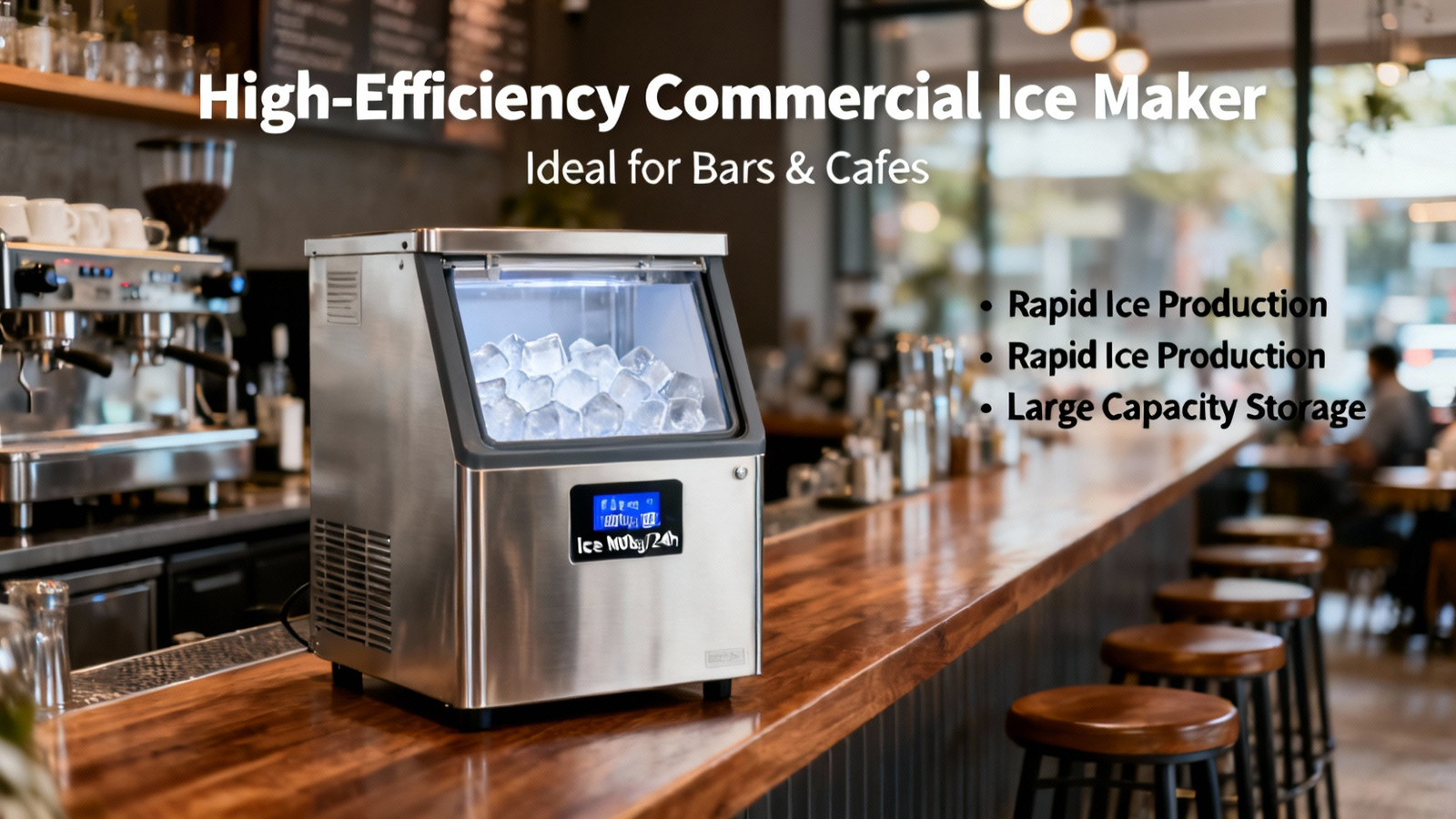
Modern ice makers integrate smart features that go beyond simple freezing. Automatic cleaning and defrost cycles are critical for maintenance, helping to prevent microbial growth and scale—a common pain point cited in online forums. An intuitive LCD control panel allows precise adjustment of ice thickness and production timing, giving operators control based on real-time demand. Features like a transparent observation window and interior lighting, while seemingly minor, enhance usability during busy service hours. The inclusion of practical accessories, such as a dedicated drain pipe to remove meltwater, underscores a design philosophy focused on operational hygiene and efficiency, reducing manual labor and potential contamination points.
Application Versatility and Operational Considerations
The true test of a commercial ice maker is its adaptability. A freestanding design with a substantial storage bin (e.g., 24 lbs) offers flexibility for various venues, from coffee shops to banquet halls. It’s crucial to understand that these are ice producers, not long-term storage solutions; ice should be transferred to a dedicated freezer bin for extended holding. The community on Reddit’s restaurant forums often emphasizes this distinction to prevent melt cycles from degrading ice quality. Furthermore, proper installation—including level placement, adequate ventilation, and connection to a dedicated water line—is repeatedly stressed as foundational for achieving the advertised performance and lifespan of any commercial ice maker machine.
Conclusion: The Foundation of Beverage Service
In summary, selecting a commercial ice maker requires a holistic view of its capabilities. The journey from water inlet to ice dispenser involves critical stages: effective filtration to ensure purity, robust mechanical engineering for relentless production, and intelligent automation to simplify maintenance. As evidenced by industry discussions, neglecting any of these aspects can lead to increased operational costs and compromised beverage quality. A machine like the TITTLA 100Lbs/24H Commercial Ice Maker exemplifies this integration, offering the volume, durability, and user-friendly features demanded by small to medium-sized businesses. Ultimately, a reliable ice machine is an investment in service consistency and customer satisfaction. By prioritizing core engineering principles and hygienic design, business owners can secure a vital component of their daily operations, ensuring they never run short of this essential commodity.
This article really highlights why investing in a high-efficiency ice maker is so crucial for keeping a busy bar or cafe running smoothly.
\}}
This article really highlights why investing in a high-efficiency ice maker is so crucial for keeping a busy bar or cafe running smoothly.
\}}
This article really highlights why investing in a high-efficiency ice maker is so crucial for keeping a busy bar or cafe running smoothly.
\}}
This deep dive into high-efficiency ice makers really highlights how crucial the right machine is for keeping service smooth in a busy cafe.
\}}
This deep dive into high-efficiency ice makers really highlights how crucial the right machine is for keeping service smooth in a busy cafe.
\}}
This deep dive into high-efficiency ice makers really highlights how crucial the right machine is for keeping service smooth in a busy cafe.
\}}
This deep dive into high-efficiency ice makers really highlights how crucial the right machine is for keeping service smooth in a busy cafe.
\}}