
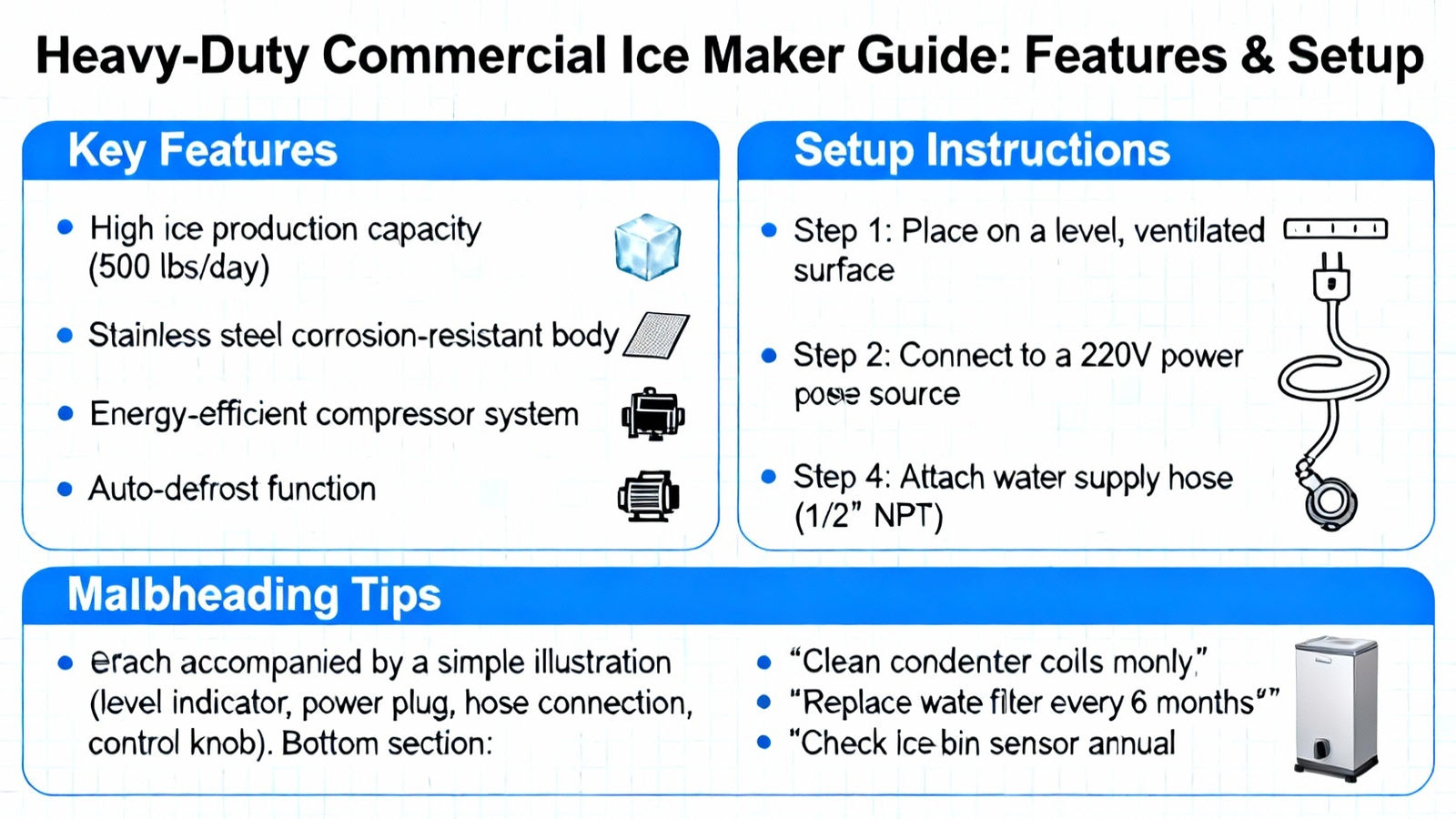
The Complete Guide to Heavy-Duty Commercial Ice Makers
Selecting and installing a commercial ice maker is a critical decision for any food service business. This guide delves into the specifics of a durable, stainless steel unit designed for 110V operation, covering its robust construction, essential installation requirements, and vital safety protocols. Understanding these details ensures optimal performance, longevity, and safety in demanding environments like restaurants, bars, and hotels.
Engineering for Endurance and Efficiency
At the core of this commercial ice maker is its heavy-duty stainless steel construction. This material is industry-standard for its corrosion resistance, ease of cleaning, and ability to withstand constant use in high-moisture environments. The unit utilizes R290 refrigerant, a propane-based solution gaining prominence for its low environmental impact. As noted on Wikipedia, R290 has a “negligible ozone depletion potential and very low global warming potential” compared to traditional hydrofluorocarbons (HFCs), making it a more sustainable choice. Its compatibility with SN, N, and ST climate types means it can reliably operate in varied ambient temperatures, a crucial factor for kitchens and storage areas that may not be perfectly climate-controlled.
Critical Pre-Installation and Placement Guidelines
Proper setup is non-negotiable for performance and safety. The requirement for a drinking water supply connection underscores the need for clean, potable water to ensure ice quality and prevent scale buildup. Placement requires a minimum of 6 inches of clearance on all sides for adequate airflow, which is essential for condenser efficiency and preventing overheating. A key step, often emphasized by professionals on forums like Reddit, is the 24-hour settling period after delivery. As one user advised in a 2023 r/refrigeration discussion, always let the unit stand upright to allow compressor oil to settle, preventing immediate damage upon startup. Furthermore, connecting a gravity drain pipe lower than the machine’s outlet is mandatory to handle meltwater discharge effectively.
Operational Safety and Best Practices
Adhering to safety protocols protects both personnel and property. The explicit warnings against using extension cords and keeping the unit away from flammable materials address significant fire hazards. The internal electrical demands of a 780W compressor can cause undersized or long extension cords to overheat. This aligns with safety recommendations from electrical authorities. The instruction to avoid using liquids other than water prevents chemical damage and potential toxic ice production. Additionally, maintaining correct water pressure (14.5-58 psi) is vital; pressure outside this range can lead to valve failures or insufficient fill rates, impacting ice production cycles. As highlighted in the manual, environmental temperature directly influences cycle time, with hotter ambient air slowing production—a factor critical for capacity planning during peak service.
Conclusion: A Strategic Investment for Your Business
In summary, this heavy-duty commercial ice maker represents a significant investment built for durability and efficiency, thanks to its stainless steel construction and eco-friendly R290 refrigerant. However, its technical merits can only be fully realized through meticulous installation—including proper clearance, water pressure management, and drainage—and strict adherence to safety practices, such as avoiding extension cords and allowing for proper settling time. The collective wisdom from industry resources, including technical subreddits and engineering pages, reinforces that the longevity of such equipment hinges on following these precise guidelines. For business owners in the United States, from bustling restaurant kitchens to high-volume hotel catering, mastering these operational details ensures a reliable ice supply, safeguards your premises, and maximizes the return on your equipment investment, keeping service cool and flowing smoothly.
This guide really breaks down the key features to look for in a heavy-duty commercial ice maker.
\}}
This guide really breaks down the key features to look for in a heavy-duty commercial ice maker.
\}}
This guide really breaks down the key features to look for in a heavy-duty commercial ice maker.
\}}
This guide really helped me understand the key features to look for in a heavy-duty commercial ice maker for my restaurant.
\}}