
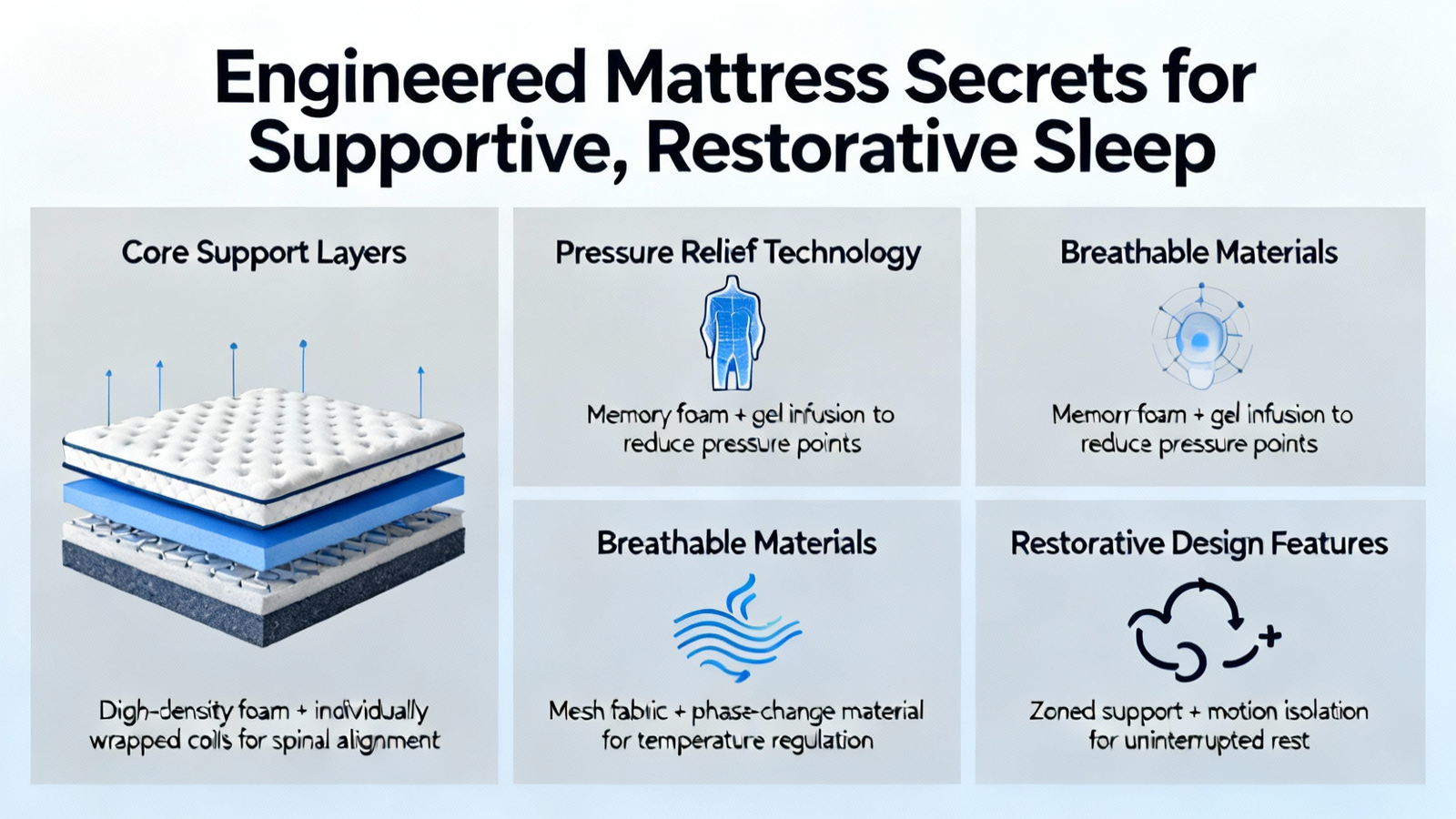
Discovering the perfect mattress involves balancing support, comfort, and value. This article explores the innovative engineering behind modern compressible mattresses, focusing on multi-layer construction, durable edge support, and the science of pressure relief. We’ll analyze how these features contribute to restorative sleep, supported by insights from sleep science and consumer experiences.
The Science of Layered Support: More Than Just Memory Foam
Modern mattress design, like that of the 12″ Independent Spring Mattress, hinges on multi-layer construction to target different needs. A soft top layer provides initial pressure relief, contouring to the body’s curves. This is crucial for side sleepers, as noted in discussions on r/Mattress, where proper shoulder and hip alignment is a frequent concern. Beneath this, a core of individually pocketed springs offers zoned support, adapting to weight distribution and minimizing motion transfer—a key benefit for couples.
This layered approach is validated by the principle of ergonomics, which Wikipedia defines as “the scientific discipline concerned with the understanding of interactions among humans and other elements of a system” to optimize human well-being (Wikipedia, Ergonomics). A mattress engineered with distinct comfort and support layers applies this principle directly to sleep, aiming to maintain spinal alignment and reduce pressure points throughout the night.
Engineered for Longevity: Edge Support and Durable Foundations
A common point of premature wear in mattresses is the perimeter. High-density edge reinforcement technology directly addresses this, creating a stable, usable sleep surface from edge to edge. This prevents the “roll-off” feeling and provides a solid sitting edge, extending the functional life of the mattress. Durability is a composite of materials and design; as highlighted in a r/BuyItForLife thread on mattress durability, construction quality is often cited as more critical than brand name alone.
The 30cm (12-inch) scientific thickness of a mattress like the Rstll model isn’t arbitrary. This profile allows for sufficient depth to house both substantial comfort layers and a robust support core. A thicker mattress can better prevent the sensation of “bottoming out,” especially for heavier individuals, ensuring the balanced support promised is maintained for years, not just months.
Convenience Meets Performance: Compression and Setup
The advent of bed-in-a-box technology revolutionized mattress retail by solving logistical headaches. Advanced compression and vacuum-sealing allow a queen mattress to ship in a box roughly the size of a mini-fridge. This not only simplifies delivery but also reduces the carbon footprint associated with shipping bulky items. For the consumer, the benefit is clear: manageable transport and easy setup in the intended room.
Once unboxed, the expansion process is a testament to material resilience. High-quality memory foam and springs are engineered to return to their intended form without permanent damage. It’s a practical innovation that doesn’t sacrifice performance for convenience, bringing a premium sleep experience directly to your doorstep without the traditional delivery struggles.
Choosing for Your Sleep Ecosystem: Size and Application
Selecting the correct size—Twin, Full, Queen, or King—is the final step in personalizing your sleep environment. Each size serves a distinct need, from space-efficient Twin beds for children to spacious King beds for couples seeking maximum personal space. The choice impacts not just comfort but room aesthetics and functionality.
This versatility makes such a mattress a strategic upgrade for various settings: a supportive foundation in a child’s room, a hospitable solution for a guest room, or a daily retreat in the primary bedroom. The unifying factor is the application of ergonomic and durable design principles to enhance sleep quality across all these scenarios, proving that value is measured in nightly comfort and long-term satisfaction.
In summary, a high-quality compressible mattress represents a significant convergence of sleep science, material engineering, and consumer-centric design. The multi-layer construction, featuring memory foam and independent pocket springs, is engineered to provide targeted pressure relief and maintain spinal alignment—a principle rooted in ergonomics. Enhanced durability through reinforced edges and a substantial 30cm profile ensures this support remains consistent over time, addressing common consumer concerns about mattress longevity. The innovative bed-in-a-box delivery model removes traditional purchasing barriers, making premium sleep technology accessible and convenient. Ultimately, whether for a child’s first “big kid” bed, a welcoming guest room, or your own master suite, investing in a thoughtfully engineered mattress is an investment in daily well-being. By prioritizing foundational support, adaptive comfort, and resilient construction, you secure not just a product, but a cornerstone of health and restorative rest for years to come.
The multi-layer construction you described really highlights the innovative engineering that goes into a truly supportive mattress.
\}}
The multi-layer construction you described really highlights the innovative engineering that goes into a truly supportive mattress.
\}}
This article really highlights how important that multi-layer construction is for truly restorative sleep.
\}}
This article really highlights how important durable edge support is in a modern mattress.
\}}