
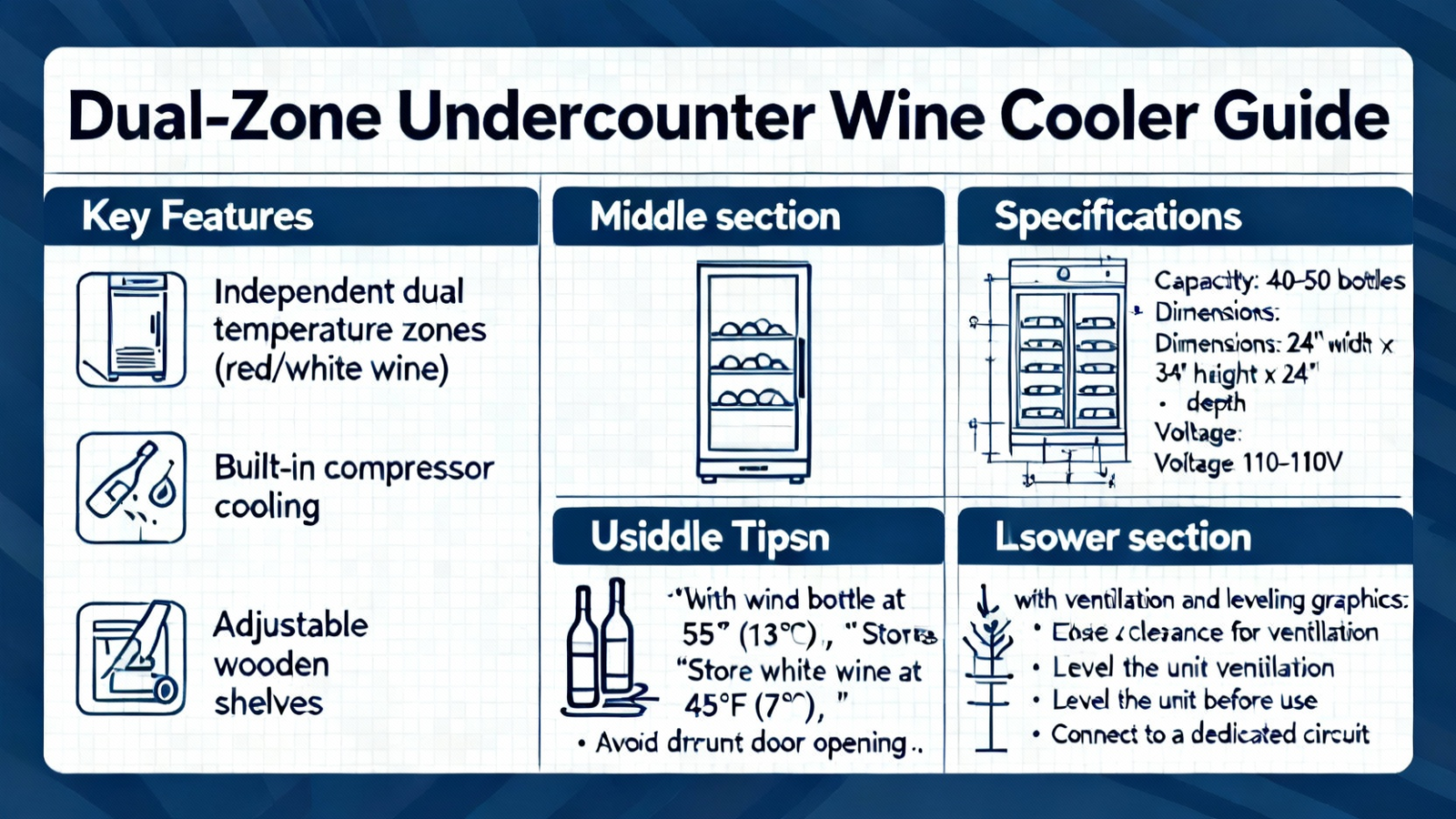
For wine enthusiasts with limited space, the undercounter wine refrigerator represents the pinnacle of accessible preservation. This article explores the sophisticated engineering behind compact dual-zone coolers, detailing how features like precise temperature control, advanced insulation, and thoughtful design converge to protect and showcase your collection, ensuring every bottle is served at its perfect moment.
The Science of Dual-Zone Temperature Precision
Storing red and white wines at their respective ideal temperatures is not a luxury—it’s a necessity for flavor preservation. As noted on Wikipedia, the long-term storage of wine requires consistent temperatures, typically between 45–65 °F (7–18 °C), with specific varieties thriving in narrower bands. A dedicated dual-zone system, like that in a 15″ dual-zone wine cooler, allows one compartment to hold whites at a crisp 45-50°F while another matures reds at a cellar-perfect 55-65°F. This precision prevents the flat flavors caused by warmth and the muted aromas from excessive cold, a point often emphasized by hobbyists on forums like r/wine.
Engineering for Preservation and Silence
Beyond temperature, true wine guardianship involves shielding from light, vibration, and humidity fluctuations. The double-tempered glass door is critical, offering enhanced insulation and blocking 99% of UV rays, which can cause “light strike” and prematurely age wine. Inside, a silent compressor minimizes vibration, a factor Wikipedia cites as potentially disrupting the sediment and aging process. This makes such a refrigerator ideal for open-concept kitchens and living areas, as users in a January 2023 Reddit thread sought, prioritizing units that operate without audible disruption to daily life.
Intelligent Design for Real Kitchens
The utility of an undercounter wine cooler is measured by its integration into smaller footprints. Solid beech wood shelves are not merely aesthetic; they are stable, removable, and prevent bottles from rolling, accommodating various bottle shapes from standard Bordeaux to taller Champagne bottles. Blue LED lighting provides ambiance without the heat output of traditional bulbs. With a capacity for 30 bottles, this 30-bottle wine cooler maximizes vertical space, a design principle lauded in compact kitchen layouts. The built-in design ensures it fits seamlessly under standard countertops, transforming unused space into a dedicated wine storage zone.
Conclusion: A Sophisticated Hub for Wine Enjoyment
In summary, a well-designed undercounter wine refrigerator addresses the core tenets of proper wine storage: precision, protection, and practicality. By employing dual-zone technology, it delivers on the scientific requirement for varied, stable temperatures, directly impacting the sensory profile of your wine. Its construction with UV-blocking glass and a silent compressor directly mitigates common wine faults related to light and vibration, as documented by authoritative sources. For the space-conscious collector, features like versatile beech wood shelving and a compact 15-inch footprint provide a tailored solution that integrates effortlessly into the heart of the home.
Ultimately, this appliance transcends simple cooling; it becomes a sophisticated hub for wine enjoyment. It empowers you to build a diverse collection ready for any occasion, ensuring a perfectly chilled white or a optimally tempered red is always within reach. By safeguarding your investment from external factors, it guarantees that the time and care taken in selecting each bottle is honored in every glass. For those seeking to elevate their home wine experience without compromise, a dual-zone undercounter cooler represents an essential, reliable, and elegant cornerstone of modern living.
This guide really highlights how a dual-zone cooler is essential for properly storing both reds and whites in a compact space.
\}}
This dual-zone cooler guide is exactly what I needed to understand the engineering behind precise temperature control for my collection.
\}}