
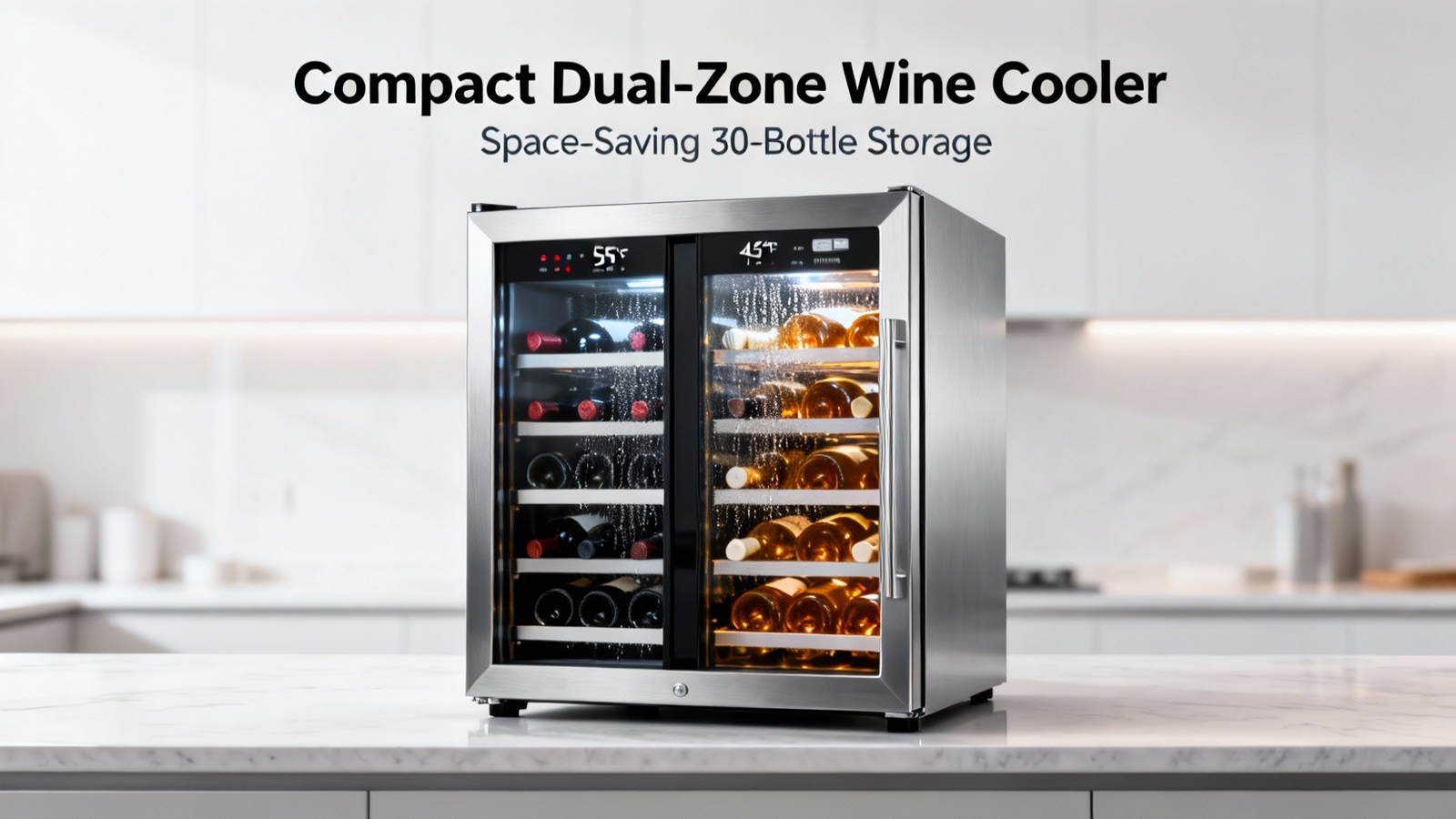
For wine enthusiasts with limited space, finding a cooling solution that balances capacity, performance, and design can be a challenge. This article delves into the features and benefits of compact dual-zone wine coolers, using the Nipus 15 Inch Wine Cooler Refrigerator as a prime example, to explore how modern appliances meet the precise storage needs of both red and white wines in any home.
Space-Saving Design Meets Substantial Capacity
The defining feature of a compact wine cooler is its ability to maximize storage in a minimal footprint. Models like the Nipus, with a width under 15 inches, are engineered specifically for integration into base cabinets or as sleek freestanding units. Despite the slim profile, advanced shelving design allows for a surprising capacity—up to 30 Bordeaux-style bottles. This is achieved through the use of solid beech wood shelves, a material noted for its strength and stability in humid environments, which can be removed and reconfigured to accommodate larger or irregularly shaped bottles. This design philosophy directly addresses a common constraint in urban living, making serious wine storage accessible without requiring a dedicated cellar.
The Critical Importance of Dual-Zone Temperature Control
Proper wine storage hinges on consistent temperature, and different wines have different needs. As noted on Wikipedia’s wine storage page, long-term preservation generally requires temperatures between 12–14 °C (53–57 °F), with reds often stored slightly warmer than whites. A single-zone cooler forces a compromise. A dual-zone wine cooler eliminates this by maintaining two separate climates. The upper zone can be set cooler for white wines, sparkling wines, and rosés (typically 40-55°F), while the lower zone maintains a warmer environment ideal for red wines (55-65°F). This precise separation ensures each wine matures correctly, preserving its intended aroma and flavor profile, a point often emphasized by enthusiasts in forums like r/wine where storage conditions are frequently discussed.
Advanced Cooling Technology for Preservation and Peace
Beyond basic refrigeration, high-quality wine coolers incorporate systems designed for the delicate nature of wine. The Nipus unit features a super air circulation system and a quiet compressor. Even air circulation is vital to prevent “hot spots” and ensure every bottle is cooled uniformly, while a quiet compressor (often operating around 38dB) ensures the unit doesn’t disrupt living spaces. Furthermore, the use of double-paned tempered glass doors provides superior insulation against external temperature fluctuations and blocks harmful UV rays, which can degrade and prematurely age wine. This combination of features creates a stable, vibration-minimized environment, protecting the sediment and complex chemistry of the wine from disturbance.
Integration, Efficiency, and Intelligent Features
The final considerations for any appliance are how it fits into daily life. The flexibility for built-in or freestanding installation offers significant aesthetic versatility. Embedded LED lighting showcases the collection without generating excess heat. Digital controls with memory functions allow for fine-tuned temperature management and ensure settings are maintained even after a power interruption. From an efficiency standpoint, modern units using refrigerants like R600a are designed to be energy-conscious; for context, an estimated yearly use of 146 kWh is comparable to the energy consumption of a standard household refrigerator, as per general ENERGY STAR benchmarks. This makes a dedicated low noise wine fridge a practical addition rather than an extravagant drain on resources.
In conclusion, a compact dual-zone wine cooler represents a sophisticated solution for the discerning drinker with spatial constraints. By examining models like the 30-bottle Nipus cooler, we see how essential features—from its space-saving 15-inch width and dual-climate zones to its stable beech wood shelving and UV-protective glass—work in concert to meet the rigorous standards of proper wine preservation. The integration of quiet, energy-efficient technology ensures this is done unobtrusively and sustainably. As highlighted in community discussions on platforms like Reddit, consistent temperature control is non-negotiable for wine aging, making a dedicated cooler far superior to a standard kitchen refrigerator. Ultimately, whether for a kitchen, home bar, or office, investing in a purpose-built wine refrigerator is an investment in preserving the quality, taste, and value of your wine collection, allowing every bottle to be enjoyed as the vintner intended.
This compact dual-zone wine cooler looks like a perfect space-saving solution for my growing collection.
\}}
This compact dual-zone wine cooler sounds like the perfect space-saving solution for my growing collection.
\}}