
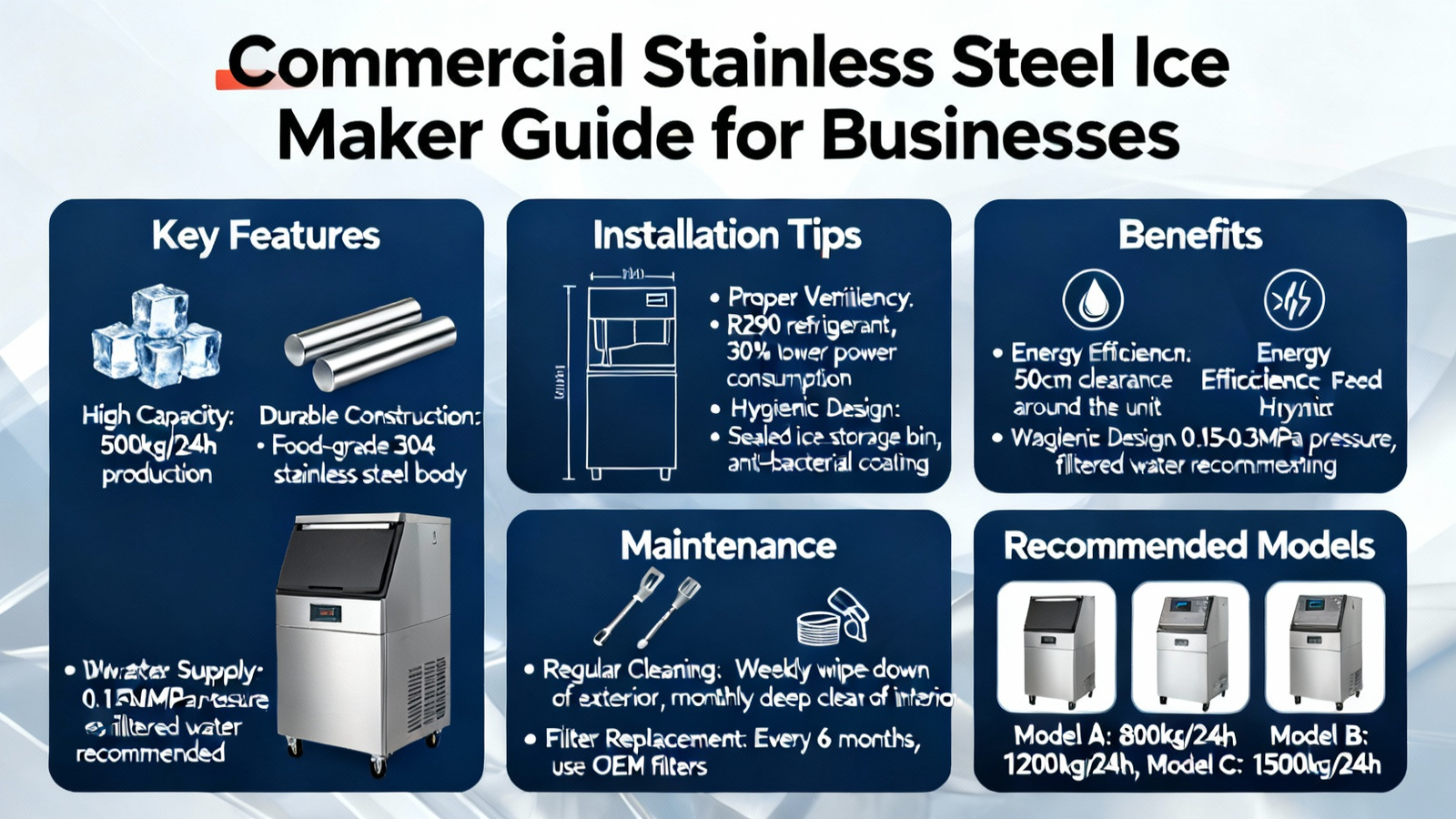
For restaurants, bars, and hotels, a reliable ice maker is essential. This guide explores the key features, installation requirements, and safety protocols for a heavy-duty commercial ice maker with durable stainless steel construction, ensuring you maximize performance and longevity for your business.
Engineering for Commercial Endurance
Built with durable stainless steel construction, this ice maker is designed for the rigors of high-volume environments. Stainless steel is the industry standard for commercial foodservice equipment due to its corrosion resistance, ease of sanitation, and structural integrity. The unit operates on standard 110V/60Hz power, drawing 780W, and utilizes environmentally friendly R290 (propane) refrigerant. R290 has a Global Warming Potential (GWP) of 3, significantly lower than traditional hydrofluorocarbons (HFCs), aligning with modern environmental standards. Its compatibility with climate types SN, N, and ST ensures reliable performance across varied temperature environments common in commercial kitchens across the United States.
Critical Installation and Setup Protocols
Proper installation is non-negotiable for optimal function. The unit requires a direct connection to a potable drinking water supply with a pressure between 14.5-58 psi; outside this range, a pressure changeover valve is mandatory. A gravity-fed drain line, with its outlet lower than the machine’s port, must be connected to handle meltwater discharge. As noted in a Reddit discussion from November 2023, allowing a unit to settle after transport is critical: “Upon arrival, please leave the unit upright and wait 24 hours before plugging it in” to let compressor oil settle. Furthermore, maintain at least 5.9 inches of clearance on all sides for adequate airflow, which is essential for condenser efficiency and preventing overheating.
Operational Safety and Best Practices
Adhering to safety guidelines protects both personnel and equipment. The ice maker comes with a three-prong plug and a 70-inch cord; extension cords are not recommended due to the risk of overheating and fire. The unit must be kept away from flammable materials, direct sunlight, and heat sources like stoves. It is designed for indoor use only. Importantly, only water should be used to make ice, as other liquids can damage the system and create health hazards. These precautions align with general commercial appliance safety principles often emphasized by professionals, such as those shared on forums like r/KitchenConfidential, where improper equipment setup is a frequent topic of concern.
Maximizing Long-Term Performance and Output
To ensure consistent ice production, operators must understand the factors influencing performance. The surrounding environmental temperature directly impacts ice-making cycle times; hotter ambient temperatures can reduce output. Regular cleaning and maintenance, as per the manufacturer’s instructions, are vital to prevent scale buildup and sanitary issues. For businesses seeking a unit with these robust features, exploring a commercial stainless steel ice maker is a step toward reliable operations. Investing in a properly specified commercial ice maker like this model supports the demanding pace of foodservice by providing a dependable supply of ice.
In summary, selecting and operating a heavy-duty commercial ice maker requires careful attention to its engineering specifications, installation prerequisites, and safety guidelines. The stainless steel construction and R290 refrigerant offer durability and environmental responsibility, while proper setup—including correct water pressure, drainage, and settling time—lays the foundation for reliable service. Adherence to operational safety, such as avoiding extension cords and using only water, mitigates risks. Ultimately, the performance and lifespan of the equipment, whether it’s a high-capacity stainless steel ice maker, hinge on understanding these integrated factors. By following these comprehensive guidelines, businesses can ensure their ice maker remains a dependable asset, supporting seamless daily operations and contributing to overall service efficiency in the demanding commercial landscape.
This guide is a great breakdown of the key features to look for in a reliable commercial ice maker.
\}}
This guide is a great breakdown of the key features to look for in a reliable commercial ice maker.
\}}
This guide really highlights why a durable commercial ice maker is such a crucial investment for a busy business.
\}}