
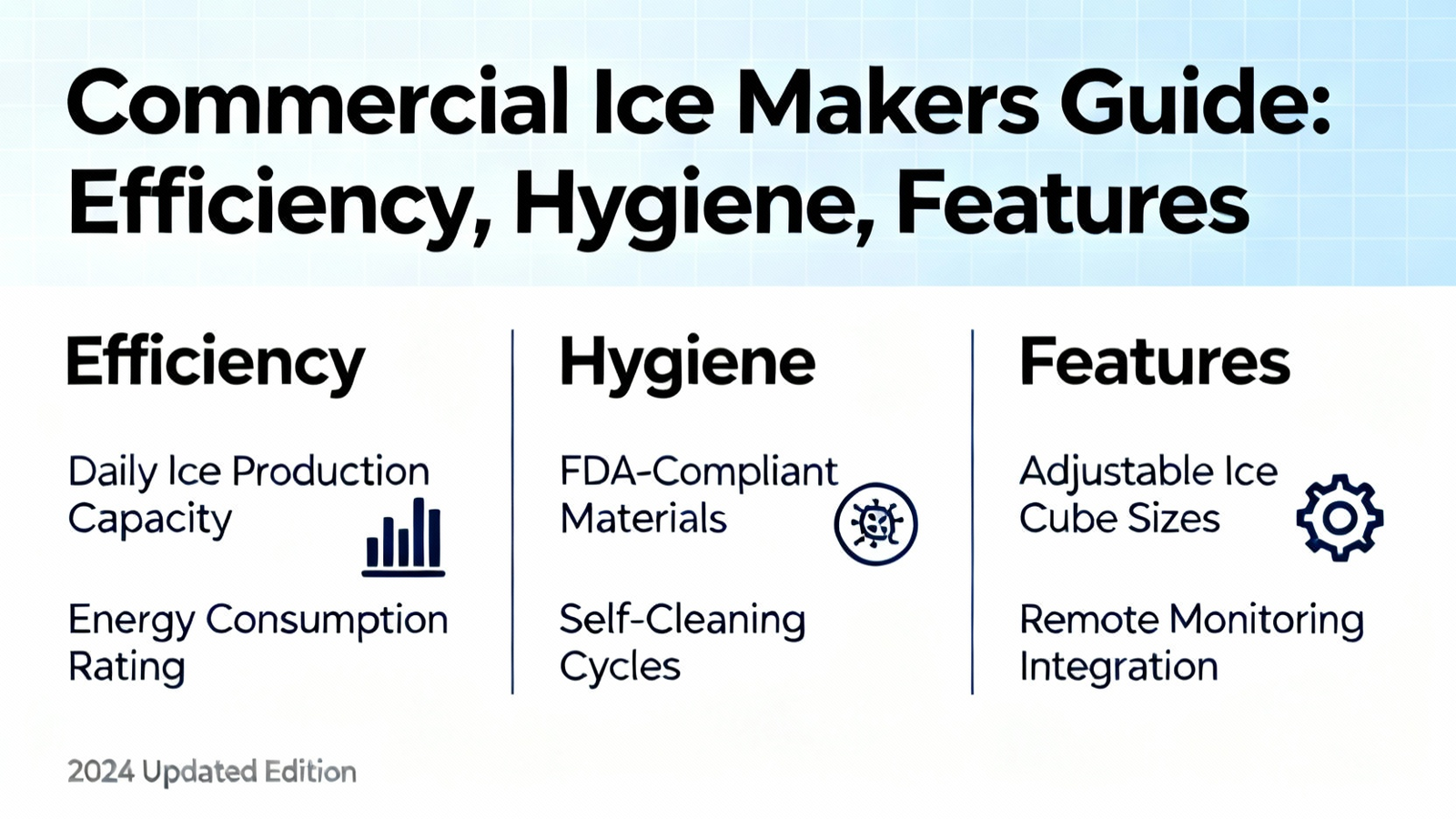
Maximizing Efficiency and Hygiene: The Complete Guide to Commercial Ice Makers
For bars, restaurants, and cafes, a reliable ice machine is a cornerstone of daily operations. This article delves into the critical features of modern commercial ice makers, focusing on efficiency, sanitation, and design. We’ll explore how innovations like built-in filtration and automated cleaning not only ensure ice quality but also impact operational workflow and compliance with health standards.
The Critical Role of Water Filtration in Ice Quality
Water quality is the single greatest factor determining the clarity, taste, and hardness of ice cubes. Tap water contains minerals like calcium and chlorine, which can lead to cloudy ice and scale buildup inside the machine. A high-efficiency water filter, like the one included with the TITTLA commercial ice maker, is engineered to remove these impurities. This process, as noted in discussions on water treatment, directly results in purer, better-tasting ice and protects the machine’s internal components from scale, which can degrade efficiency and lifespan. The convenience of an easy-connect system further simplifies this essential maintenance step.
Automated Sanitation: Beyond Basic Cleaning
Manual cleaning is often inconsistent in busy commercial settings. An auto-clean function represents a significant advancement in food safety. This feature circulates a cleaning solution through the water distribution system and evaporator, targeting biofilm and scale that manual wiping cannot reach. The importance of such automated processes is underscored by food safety guidelines, which emphasize preventing microbial growth in hard-to-reach appliance areas. Coupled with removable water channels and drain pipes for melted ice, these features form a comprehensive hygiene system, ensuring the ice produced meets health codes and consumer expectations for cleanliness.
Engineered for Demanding Commercial Workflows
Commercial equipment must balance robust output with user-centric design. A machine like the TITTLA ice machine highlights this with a 100 lbs/24h production capacity powered by a high-efficiency compressor, addressing the high-volume needs of peak service times. Operationally, features like an LCD control panel for adjusting ice thickness, a front observation window, and interior blue lighting streamline use. The stainless steel construction is not only durable but also aligns with commercial kitchen material standards for its non-porous, corrosion-resistant, and easy-to-sanitize properties, as commonly referenced in equipment specifications.
Strategic Implementation and Best Practices
Optimal performance hinges on correct installation and usage. The unit’s freestanding design with bottom spacers prevents moisture damage, a common point of failure noted in appliance repair forums. While the machine offers substantial storage, it’s crucial to remember that, as with most dedicated ice makers, it is not a refrigerator; ice for long-term storage should be transferred to a freezer to maintain cycle efficiency. Utilizing the provided ice scoop, rather than glasses or hands, is a fundamental hygiene practice emphasized in the industry to prevent contamination. Proper placement with adequate ventilation and connection to potable water lines completes a setup that ensures reliability.
In conclusion, selecting and maintaining a commercial ice maker requires a focus on integrated systems that ensure quality and safety. Key features such as integrated water filtration are essential for producing clear, odor-free ice and protecting the machine’s longevity. Automated cleaning functions and sanitary stainless-steel construction are non-negotiable for meeting health standards and simplifying maintenance in a demanding environment. Furthermore, understanding the machine’s operational parameters—like its high daily production capacity and the need to transfer ice for long-term storage—allows businesses to fully leverage the equipment’s capabilities. A model like the TITTLA 100Lbs/24H Commercial Ice Maker exemplifies how these elements combine into a robust solution. By prioritizing these engineering and operational principles, business owners can secure a dependable ice supply that supports seamless service, upholds customer trust, and contributes to a streamlined, efficient back-of-house operation.
Great guide—really highlights how crucial efficiency and hygiene are for any busy food service operation.
\}}
Great guide—really highlights how crucial efficiency and hygiene are for any busy food service operation.
\}}
This guide really highlights how crucial efficiency and hygiene are when choosing a commercial ice maker for a busy kitchen.
\}}
This guide really highlights how crucial efficiency and hygiene are when choosing a commercial ice maker for a busy kitchen.
\}}