
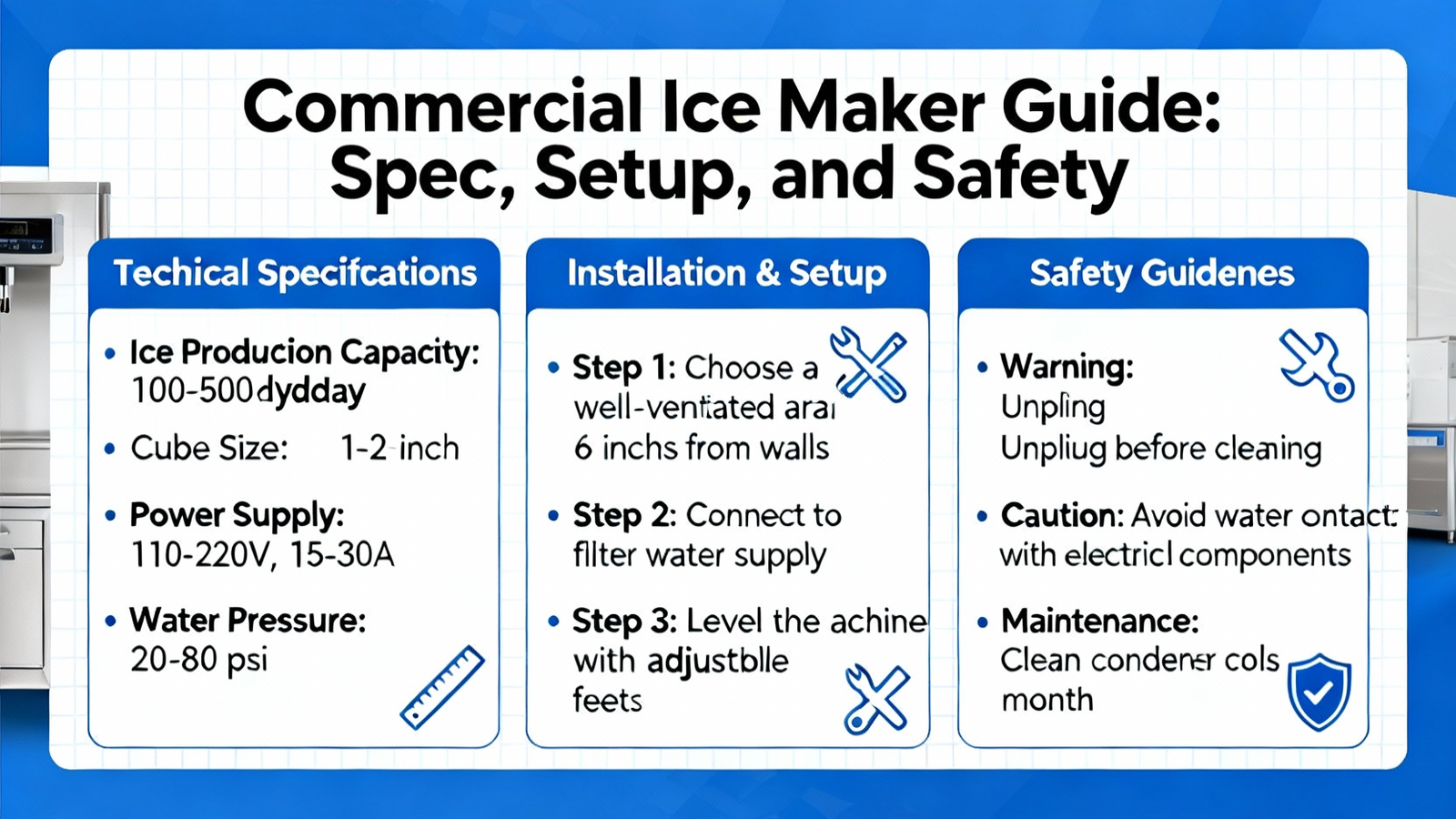
For restaurants, bars, and hotels, a reliable ice supply is non-negotiable. This guide delves into the specifications, installation, and safe operation of a heavy-duty 145 lb. capacity commercial ice maker. We’ll explore its durable stainless steel construction, critical setup requirements, and best practices to ensure longevity and peak performance in your business.
Engineering for Commercial Endurance
Built with durable stainless steel construction, this ice maker is designed to withstand the rigors of a high-volume foodservice environment. Stainless steel is the industry standard for commercial kitchens due to its corrosion resistance and ease of sanitation, a point underscored by its prevalence in equipment guidelines. The unit’s compatibility with climate types SN, N, and ST indicates reliable performance across varied ambient temperatures, from subtropical to temperate environments. Powered by a 780W, 110V/60Hz system common in the United States, it utilizes environmentally friendly R290 (propane) refrigerant. As noted in discussions on refrigerant trends, R290 is gaining favor for its low global warming potential, though proper handling is essential due to its flammability.
Critical Installation and Setup Protocols
Proper installation is paramount for safety and efficiency. The unit requires a dedicated drinking water supply with a pressure between 14.5-58 psi; outside this range, a changeover valve is mandatory to prevent system damage. As highlighted in user experiences on forums like r/KitchenConfidential, improper water pressure is a common cause of premature ice maker failure. Furthermore, the machine needs a minimum of 6 inches of clearance on all sides for airflow and must be connected to a gravity drain, as meltwater and wastewater are expelled automatically. Perhaps most crucially, after delivery, the unit must stand upright for 24 hours before initial use to allow the refrigerant oil to settle, a step often emphasized in appliance manuals to avoid compressor failure.
Operational Safety and Best Practices
Adhering to operational guidelines ensures safety and extends the machine’s lifespan. The included three-prong plug and 70-inch cord should connect directly to a grounded outlet; using an extension cord is strongly discouraged due to overheating and fire risk, a warning frequently echoed by electrical safety authorities. The unit must be kept away from heat sources and direct sunlight, as ambient temperature directly influences ice production cycles. It is designed for indoor use only. Importantly, only potable water should be used. Introducing other liquids can damage the evaporator and contaminate ice, posing a health hazard. Regular cleaning and maintenance, as per the manufacturer’s schedule, are non-negotiable for food safety.
Maximizing Your Investment in Ice Production
This 26.4 in. 145 lb. Capacity Commercial Stainless Steel Ice Maker represents a significant investment for your operation. To maximize its return, understand that its output is optimized within its specified environmental conditions. The net weight of approximately 145.51 lb and its footprint require a stable, level location. For high-demand operations, integrating this unit into a broader equipment plan is wise. Considering its Safety Protection Type I classification, which typically refers to insulation standards, ensures it meets baseline safety requirements. For businesses seeking a robust and efficient solution, this commercial ice maker offers a balance of capacity, durability, and modern, eco-conscious refrigeration technology.
In summary, selecting and operating a commercial ice maker like this stainless steel model requires attention to detail from unboxing to daily use. Its durable construction and R290 refrigerant system are designed for performance and environmental responsibility, but they demand correct installation—including proper water pressure, drainage, and electrical connection. The mandatory 24-hour settling period post-delivery and the prohibition on outdoor use or extension cords are critical safety and longevity protocols. By following these guidelines, businesses in restaurants, bars, hotels, and catering can ensure a consistent, safe ice supply. Ultimately, the reliability of your heavy-duty commercial ice maker hinges on treating it as a precision piece of kitchen machinery, where adherence to manufacturer specifications is not just recommended but essential for operational success and cost-effectiveness over time.
This guide really clarifies the critical setup requirements for a heavy-duty unit like that 145 lb. capacity commercial ice maker.
\}}
This guide really clarifies the critical setup requirements for a heavy-duty unit like that 145 lb. capacity commercial ice maker.
\}}
This guide is super helpful for understanding the specs and setup of a commercial ice maker before making that big purchase.
\}}
This guide is super helpful for understanding the specs and setup of a commercial ice maker before making that big purchase.
\}}