
For restaurants, bars, and hotels, a reliable ice supply is non-negotiable. This guide delves into the robust features of a heavy-duty commercial ice maker built for demanding environments, while providing crucial installation and safety insights to ensure optimal performance and longevity for your business.
Engineering for Endurance: Core Specifications & Build
At the heart of this unit is its durable stainless steel construction, a material chosen for its corrosion resistance, ease of cleaning, and ability to withstand the high-moisture, high-use environment of a commercial kitchen. This aligns with industry standards where stainless steel is preferred for food service equipment. Powered by a standard 110V/60Hz outlet and drawing 780W, it offers compatibility with common US commercial electrical systems. Notably, it utilizes environmentally friendly R290 (propane) refrigerant. According to Wikipedia, R290 has a “negligible ozone depletion potential and very low global warming potential compared to traditional refrigerants”, making it a more sustainable choice, though it requires specific handling due to its flammability. Its compatibility with climate types SN, N, and ST ensures reliable ice production across varied temperature conditions found in different regions of the United States.
Strategic Installation: Space, Plumbing, and Power
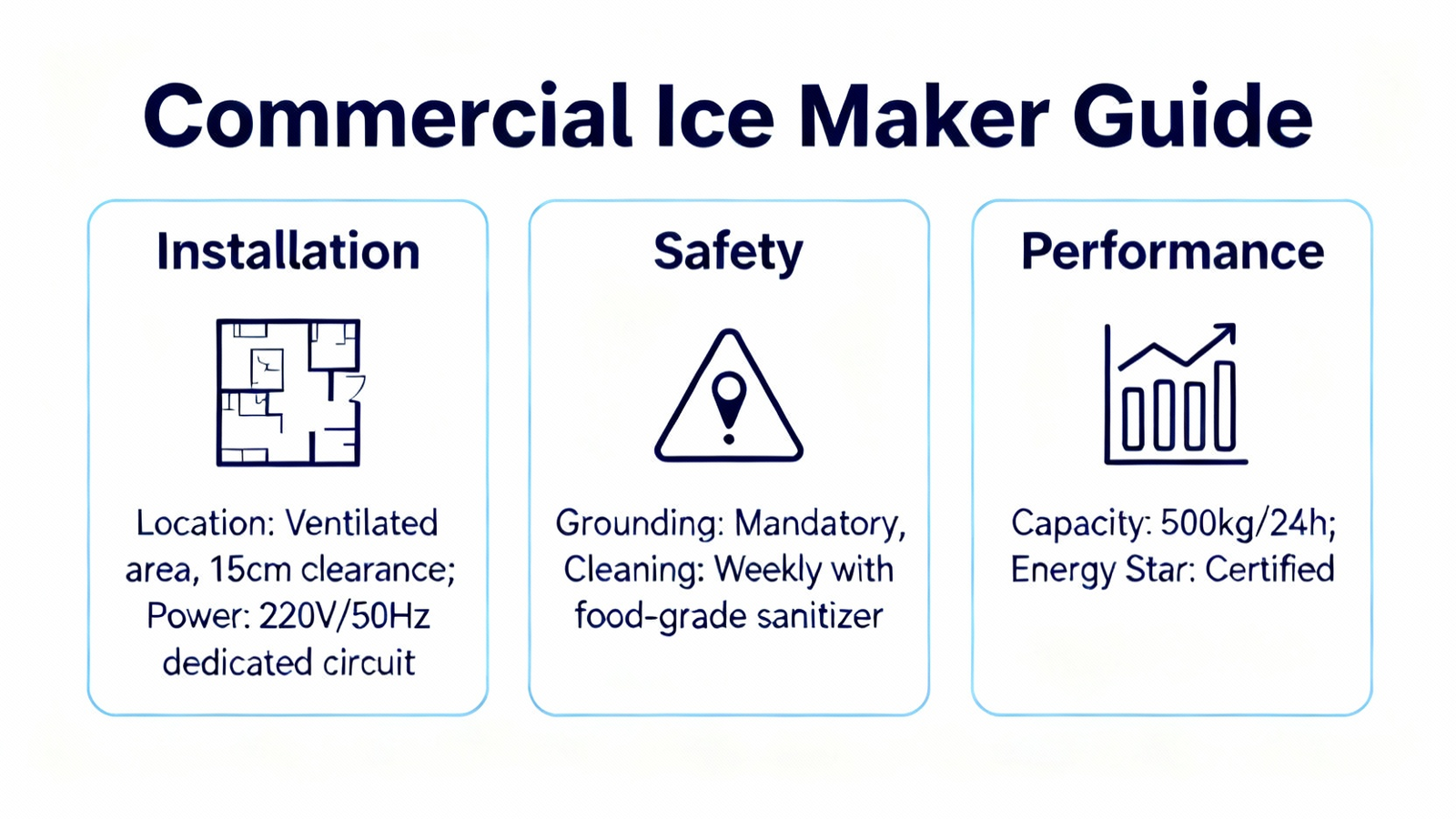
Proper installation is critical for safety and efficiency. The unit requires a dedicated drinking water supply with a pressure between 14.5-58 psi; outside this range, a pressure changeover valve is mandatory to prevent system damage. A gravity-fed drain connection, with its outlet lower than the machine’s, is essential for wastewater disposal. Adequate ventilation is non-negotiable: a minimum 5.9 inches (15 cm) of clearance on all sides is required to allow heat dissipation, a point often emphasized in professional forums discussing appliance longevity. The included 70-inch three-prong plug should connect directly to a grounded outlet; using an extension cord is strongly discouraged as it can overheat, creating a fire hazard—a safety concern frequently echoed in appliance discussion threads on Reddit.
Critical Safety & Operational Protocols
Adhering to safety guidelines protects both personnel and equipment. The unit must be kept away from flammable materials and heat sources like stoves or direct sunlight. It is designed for indoor use only; outdoor operation exposes it to elements and temperature extremes it is not rated for. Only potable water should be used to make ice, as other liquids can damage the internal components and contaminate the ice. A vital step upon delivery is to let the unit stand upright for 24 hours before initial plug-in, allowing the refrigerant and oils to settle after transit, which is a standard procedure for compressor-based appliances to prevent premature failure.
Optimizing Performance for Your Business
To achieve the stated production capacity, users must account for environmental factors. The surrounding ambient temperature directly influences ice-making cycle times; a hotter kitchen will reduce efficiency. Regular cleaning and maintenance, as per the manufacturer’s instructions, are essential to ensure food-safe ice and prevent scale buildup. For businesses seeking a balance of capacity and footprint, exploring options like the 23.2 in. 500 lbs./24h Capacity Commercial Stainless Steel Ice Maker can be worthwhile. Understanding these variables ensures that your investment, such as in a robust commercial stainless steel ice maker, delivers a consistent return in the form of a dependable ice supply.
Conclusion
Investing in a commercial ice maker is a significant decision that impacts daily operations. This analysis highlights that beyond the appealing specs—stainless steel build, eco-friendly R290 refrigerant, and substantial daily output—the true key to success lies in meticulous installation and adherence to operational protocols. From ensuring correct water pressure and mandatory drainage to providing adequate clearance and strictly following indoor-use and electrical safety guidelines, each step directly influences the machine’s reliability, safety, and lifespan. The requirement to let the unit settle after delivery underscores the importance of handling precision-engineered appliances with care. Furthermore, recognizing that environmental temperature affects production times allows for realistic planning during peak service hours. By treating the ice maker as a core piece of kitchen infrastructure and following these comprehensive guidelines, business owners can secure a dependable ice supply, ensuring beverage service and food presentation never falter, thereby safeguarding customer satisfaction and operational fluidity.
This guide is a must-read for anyone looking to install a heavy-duty commercial ice maker and get the most out of it.
\}}
This guide is a lifesaver for anyone installing a commercial ice maker in a busy kitchen.
\}}