
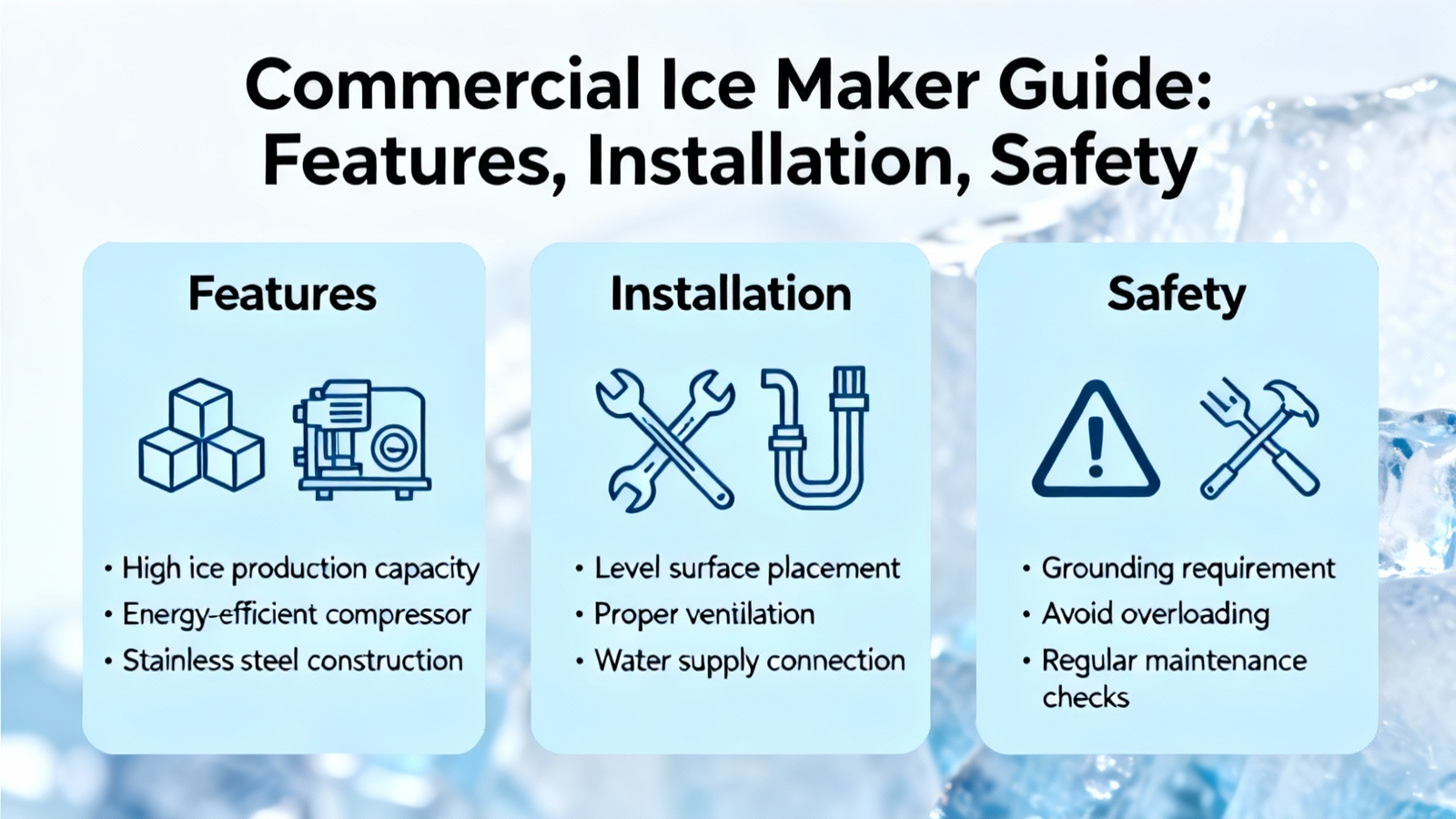
For restaurants, bars, and hotels, a reliable ice maker is non-negotiable. This guide explores the key features, essential installation requirements, and critical safety protocols for operating a heavy-duty, stainless steel commercial ice maker. Understanding these elements is crucial for maximizing performance, ensuring longevity, and maintaining a safe foodservice environment.
Engineering for Commercial Endurance
Built for the rigors of daily service, this ice maker’s durable stainless steel construction offers superior corrosion resistance and easy sanitation, a standard in professional kitchens. Its compatibility with climate types SN, N, and ST ensures reliable operation across varied environmental conditions, from temperate to subtropical. The use of R290 (propane) refrigerant is a significant modern advancement. As noted on Wikipedia, R290 has a “negligible ozone depletion potential and very low global warming potential” compared to traditional hydrofluorocarbons, making it an environmentally responsible choice for businesses mindful of their ecological impact. This robust engineering supports a high-output cycle suitable for demanding operations.
Critical Installation and Setup Procedures
Proper installation is foundational to performance and safety. The unit requires a dedicated drinking water supply with precise pressure between 14.5-58 psi; outside this range, a pressure changeover valve is mandatory to prevent system damage. As emphasized in user discussions on Reddit, such as a 2023 thread seeking ice machine advice, ensuring correct water line installation is a common and vital first step. Furthermore, upon delivery, the unit must be left upright for 24 hours before initial use to allow the compressor oil to settle, a critical step often highlighted in manufacturer guidelines to ensure longevity. Adequate spacing (at least 5.9 inches on all sides) and a proper gravity-fed drain connection are also non-negotiable for airflow and wastewater management.
Operational Safety and Best Practices
Adhering to safety protocols protects both personnel and equipment. Key mandates include:
- Never using an extension cord, as the 780W draw can cause overheating and fire risk; the included 70-inch, three-prong plug must connect directly to a grounded outlet.
- Keeping the unit away from flammable materials and heat sources like stoves or direct sunlight, which can impair efficiency and create hazards.
- Using only potable water to make ice; introducing other liquids can damage the system and contaminate ice, violating food safety codes.
- Understanding that ice production time is influenced by ambient temperature, with warmer environments typically slowing the cycle.
These practices, corroborated by safety advisories from equipment forums, form the basis for secure, uninterrupted operation.
Conclusion: Investing in Reliable Ice Production
Selecting and operating a commercial ice maker like the 23.2 in. 500 lbs./24h Capacity Commercial Stainless Steel Ice Maker requires attention to detail from unboxing to daily use. Its stainless steel build and environmentally friendly R290 refrigerant offer durability and sustainability, while its climate compatibility guarantees performance in diverse settings. However, this performance is contingent on correct installation—including proper water pressure, drainage, and spacing—and strict adherence to safety guidelines, such as avoiding extension cords and using only water. By following these comprehensive steps, businesses in the United States can ensure their commercial stainless steel ice maker becomes a dependable asset, supporting seamless service while minimizing downtime and safety risks. Ultimately, the right ice maker is not just an appliance but a critical component of operational flow and customer satisfaction.
This guide really highlights why understanding the installation requirements is so crucial for a commercial ice maker’s safety and performance.
\}}
This guide really highlights why understanding the installation and safety protocols is so crucial for a commercial ice maker.
\}}