
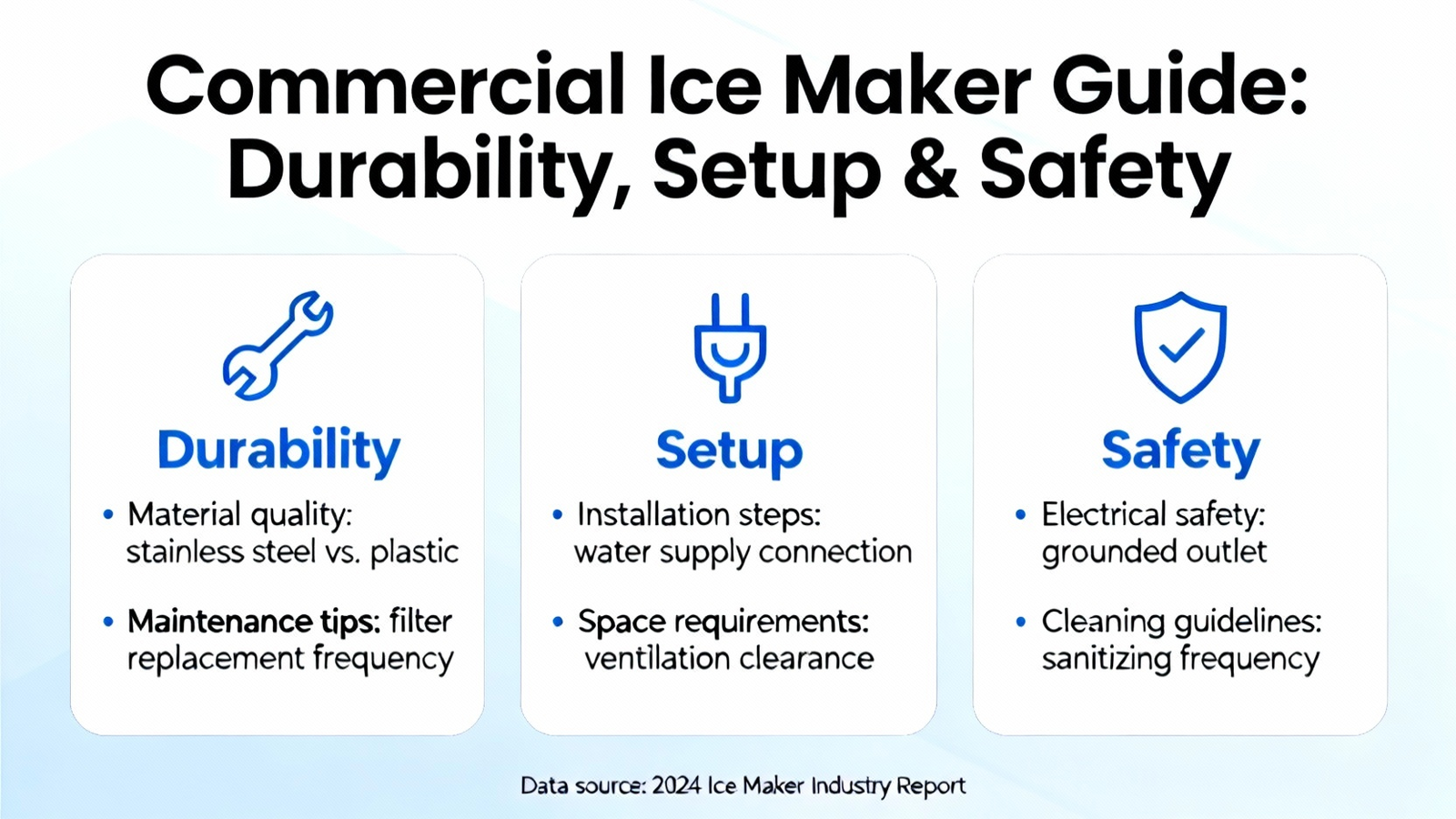
The Ultimate Guide to Heavy-Duty Commercial Ice Makers: Durability, Setup & Safety
Selecting and installing a heavy-duty commercial ice maker is a critical decision for any foodservice business. This guide delves into the robust features of professional-grade machines, like durable stainless steel construction and efficient operation, while providing an authoritative, step-by-step overview of essential installation requirements and safety protocols to ensure optimal performance and longevity.
Engineering for Commercial Endurance
True commercial ice makers are built to withstand constant use in demanding environments. The hallmark of this durability is stainless steel construction, which resists corrosion, is easy to clean, and maintains hygiene—a non-negotiable in food service. Internally, the use of environmentally friendly refrigerants like R290 (propane) is becoming standard. According to Wikipedia, R290 has a “negligible ozone depletion potential and very low global warming potential” compared to traditional refrigerants, making it a sustainable choice for forward-thinking businesses. Furthermore, compatibility with multiple climate types (SN, N, ST) ensures the compressor and system are engineered to perform reliably in a range of ambient temperatures, a feature often highlighted in industry discussions about equipment sourcing.
Critical Pre-Installation Requirements
Proper setup begins long before the unit is plugged in. First, the machine requires a potable drinking water supply connected to an inlet valve designed for specific water pressure (typically 14.5-58 psi). Pressure outside this range can necessitate a regulator. Second, ventilation is crucial. A minimum of 6 inches of clearance on all sides allows for adequate airflow, preventing compressor overheating and failure. Third, location is key. The unit must be placed away from heat sources like stoves or direct sunlight, and on a level surface capable of supporting its substantial weight (over 145 lbs). As seasoned professionals on Reddit often advise, “Let the unit sit upright for 24 hours after delivery” to allow compressor oils to settle, a critical step for longevity often overlooked in haste.
Electrical and Drainage: Non-Negotiable Safety
Commercial appliances demand professional-grade electrical and plumbing handling. These units come with a three-prong plug for grounding and should be connected directly to a dedicated outlet. Extension cords are strongly discouraged as they can overheat under the sustained 780W load, creating a fire hazard—a point frequently emphasized in electrical safety guidelines. Equally important is drainage. The ice maker produces wastewater from the freeze cycle and meltwater from stored ice. A properly installed gravity drain line, where the outlet is lower than the machine’s drain port, is essential. Failure to do this can result in water overflow and internal damage, a common installation error noted in online service forums.
Operational Best Practices for Peak Performance
Once installed, following operational guidelines ensures efficiency and safety. Only use water to make ice; other liquids can damage the evaporator and contaminate the system. Be aware that ambient temperature directly impacts ice production times; a hotter kitchen environment will reduce daily output. Regular cleaning and maintenance, as per the manufacturer’s schedule, prevent scale buildup and bacterial growth. For businesses seeking a machine embodying these principles, the 23.23 in. 750 lbs./24h Capacity Commercial Stainless Steel Ice Maker is engineered for such rigorous daily use. It’s also wise to consult resources like Wikipedia’s page on Ice machines for general industry standards, and real-world user experiences on platforms like r/KitchenConfidential for practical maintenance tips shared by industry veterans.
Conclusion
Investing in a heavy-duty commercial ice maker is an investment in the backbone of your beverage and food service operations. As we’ve explored, success hinges on understanding the machine’s engineered durability—from its stainless steel exterior and R290 refrigerant system to its multi-climate compatibility. The journey from delivery to first batch of ice is procedural: allowing proper settling time, ensuring a dedicated water line with correct pressure, providing ample ventilation space, and installing a compliant drain are all critical steps that cannot be shortcut. Adherence to electrical safety, including avoiding extension cords and keeping the unit away from flammables, protects both your staff and your business. Remember, consistent performance relies on operational diligence, including using only water, acknowledging how room temperature affects output, and committing to a regular cleaning schedule. By treating your commercial ice maker as the specialized piece of equipment it is, you secure a reliable supply of ice, minimize costly downtime, and ensure the hygiene and efficiency that customers and health inspectors demand. Proper selection, installation, and care transform this substantial appliance into a dependable asset for years to come.
This guide really highlights why durability is the most important factor when choosing a commercial ice maker for a busy kitchen.
\}}
This guide really highlights why durability is the most important factor when choosing a commercial ice maker for a busy kitchen.
\}}
This guide really highlights how crucial a durable commercial ice maker is for keeping a busy kitchen running smoothly.
\}}
This guide really highlights how crucial a durable commercial ice maker is for keeping a busy kitchen running smoothly.
\}}
This guide really highlights how crucial a durable commercial ice maker is for keeping a busy kitchen running smoothly.
\}}
This guide really highlights how crucial a durable commercial ice maker is for keeping a busy kitchen running smoothly.
\}}