
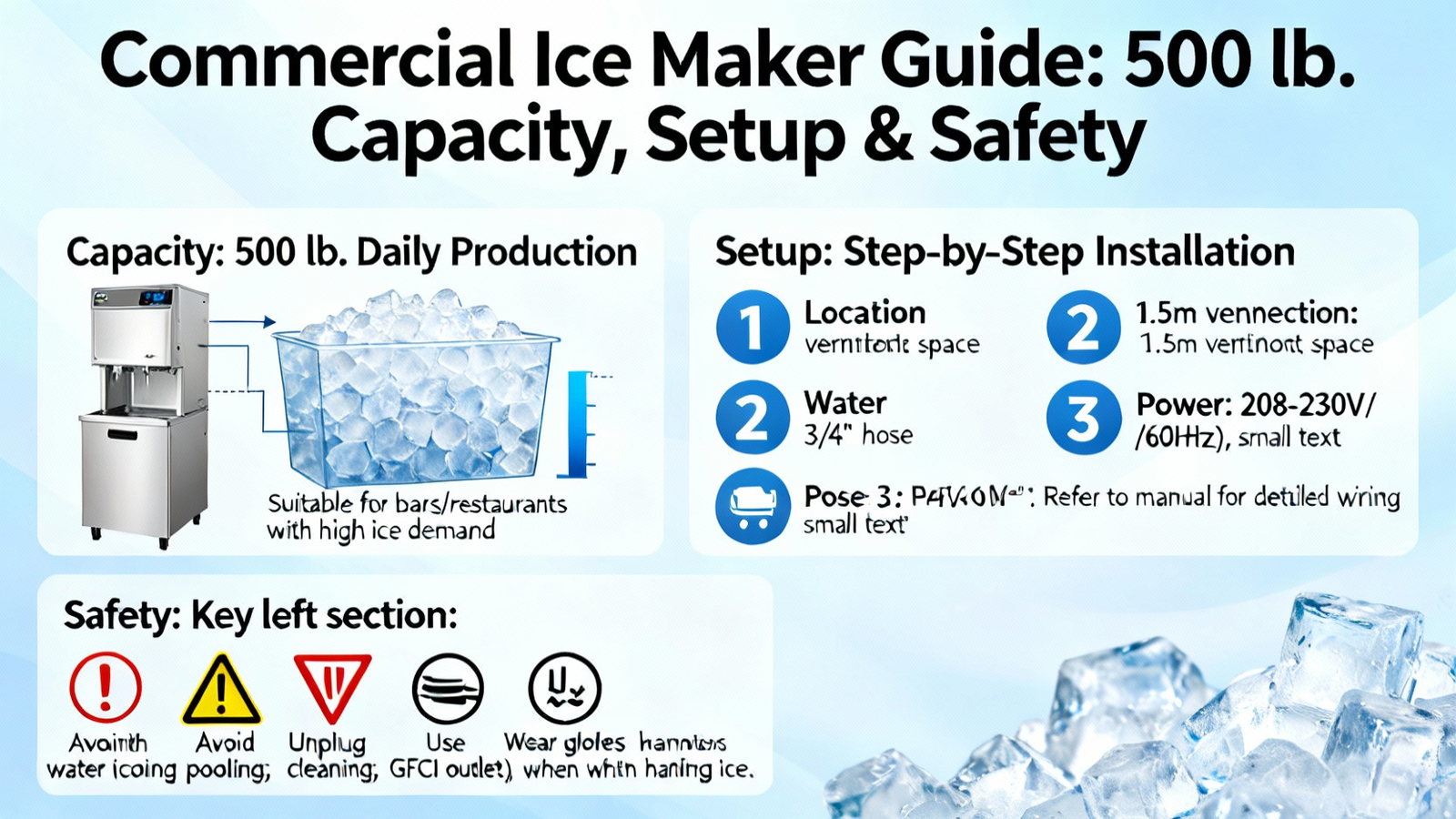
For restaurants, bars, and hotels, a reliable ice maker is a cornerstone of daily operations. This guide delves into the critical specifications and installation requirements of a heavy-duty 500 lb./24h commercial ice maker. We’ll explore its durable construction, essential setup for optimal performance, and vital safety protocols to ensure longevity and safe operation in your business.
Engineering for Endurance: Stainless Steel and R290 Refrigerant
At the core of this unit is its durable stainless steel construction, chosen for its resistance to corrosion, ease of cleaning, and ability to withstand the high-demand environment of a commercial kitchen. This material aligns with industry standards for food service equipment, prioritizing hygiene and durability. Powering its cooling system is the environmentally friendly R290 refrigerant, a propane-based hydrocarbon. R290 has a significantly lower Global Warming Potential (GWP) compared to traditional HFC refrigerants. As noted in discussions on refrigerant phases, its adoption is part of a broader industry shift toward more sustainable options, though it requires specific handling due to its flammability.
The machine’s compatibility with climate types SN, N, ST ensures reliable performance across varied environments in the United States, from subtropical to temperate zones. With a net weight of approximately 145.51 lb and dimensions of 26.4 × 23.2 × 61.4 in, its design is optimized for robust output in a space-efficient footprint, making it an ideal commercial stainless steel ice maker for high-volume settings.
Pre-Installation: Site Requirements and Water Connection
Proper installation is non-negotiable for performance and safety. The unit requires a dedicated drinking water supply connected as its source, with a critical water pressure range of 14.5-58 psi (0.1-0.4 MPa). Pressure outside this range necessitates a changeover valve to prevent mechanical issues. Furthermore, a gravity-fed drainage system is mandatory. As the ice in the inner tank melts, wastewater is discharged through a port; the drain pipe outlet must be lower than the ice maker’s outlet to function correctly.
Adequate ventilation is crucial. The manual specifies leaving at least 5.9 in (15 cm) of space on all sides between the machine and walls. This allows heat expelled by the condenser to dissipate efficiently. Placing the unit away from direct sunlight and heat sources like stoves or radiators prevents the compressor from overworking, which can shorten its lifespan and increase energy consumption.
Critical Safety and Initial Startup Protocols
This ice maker incorporates Safety Protection Type I insulation and is equipped with a three-prong plug on a 70″ cord for proper grounding. Critical safety notes include avoiding extension cords, which can overheat, and keeping the unit and cord away from flammable materials. It is designed for indoor use only; outdoor operation is not recommended due to exposure and safety risks.
Upon delivery, a vital step is to leave the unit upright for 24 hours before plugging it in. This settling period allows the refrigerant and compressor oil, which may shift during transit, to stabilize. As explained in appliance forums, failing to do this can cause immediate compressor failure. After this wait, allow an additional hour for the refrigerant to settle before the initial power-on for optimal long-term function.
Optimizing Performance and Long-Term Operation
For consistent ice production, users must adhere to several operational guidelines. Only use water in the unit; other liquids can damage the system and contaminate ice. Be aware that the surrounding environmental temperature directly influences ice-making time; higher ambient temperatures will slow production cycles. Regular maintenance, including cleaning and sanitizing as per the manufacturer’s instructions, is essential to prevent scale buildup and ensure food-safe ice.
Choosing a machine with the right capacity, like this 500 lbs./24h Capacity Commercial Stainless Steel Ice Maker, is key to meeting demand without overworking the equipment. Proper installation and care directly impact the machine’s efficiency and service life, protecting your investment.
In summary, this heavy-duty commercial ice maker combines robust stainless-steel construction with modern, eco-conscious R290 refrigerant technology to meet the rigorous demands of food service businesses. Its reliable performance across various climates is contingent upon meticulous attention to pre-installation requirements—specifically, correct water pressure, mandatory drainage setup, and adequate ventilation spacing. The outlined safety protocols, especially the critical 24-hour settling period post-delivery and the prohibition of extension cords, are not mere suggestions but essential practices to ensure operational safety and prevent costly mechanical failures. By understanding that environmental factors affect cycle times and committing to using only a potable water source, operators can maximize the output and longevity of their equipment. Ultimately, integrating this powerful stainless steel ice maker into your operation with careful planning and adherence to these guidelines provides a dependable foundation for daily service, ensuring a constant supply of ice while upholding the highest standards of safety and efficiency.
This guide really highlights why a reliable 500 lb. commercial ice maker is such a game-changer for busy operations.
\}}
This guide really highlights how a reliable 500 lb. ice maker is essential for keeping a busy restaurant or bar running smoothly.
\}}
This guide really highlights how a reliable 500 lb. ice maker is essential for keeping a busy restaurant or bar running smoothly.
\}}
This guide really highlights how a reliable 500 lb. ice maker is essential for keeping a busy restaurant or bar running smoothly.
\}}
This guide really highlights how a reliable 500 lb. ice maker is essential for keeping a busy restaurant or bar running smoothly.
\}}