
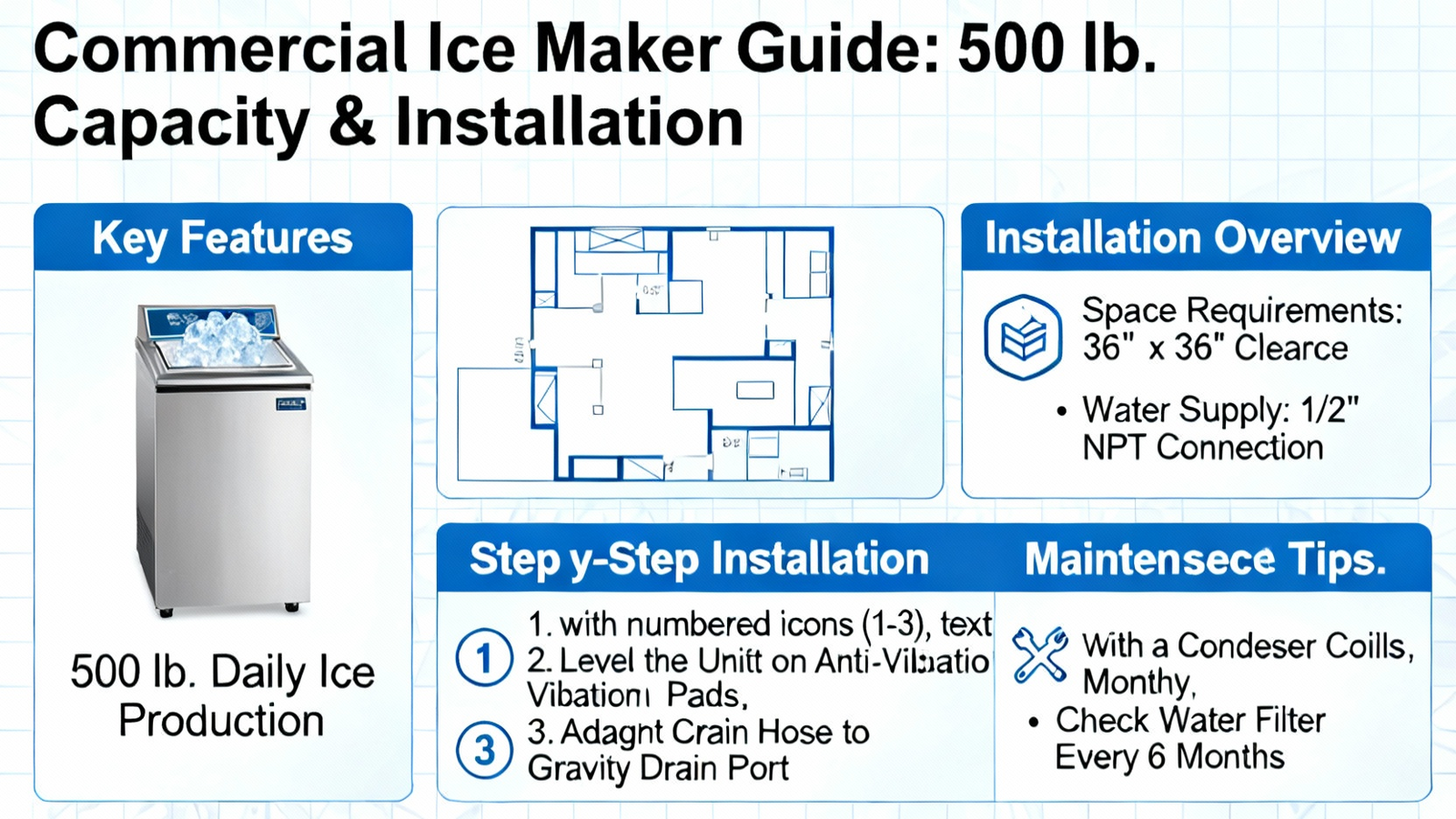
For restaurants, bars, and hotels, a reliable ice maker is essential. This guide explores the key features, installation requirements, and safety protocols for a heavy-duty 500 lb./24h commercial ice maker with durable stainless steel construction. Understanding these details ensures optimal performance, longevity, and safety for your high-volume operation.
Engineering for Commercial Endurance
Built for the rigors of daily service, this ice maker’s stainless steel construction is not just about aesthetics; it’s a critical feature for durability and hygiene. Stainless steel resists corrosion, withstands frequent cleaning with commercial chemicals, and maintains a professional appearance. The unit utilizes environmentally friendly R290 (propane) refrigerant, which has a lower Global Warming Potential (GWP) compared to traditional hydrofluorocarbons (HFCs). As noted in discussions on refrigerant trends, R290 is gaining favor for its efficiency and environmental profile, though proper handling is crucial due to its flammability. The 780W power draw on a standard 110V circuit makes it accessible for most commercial kitchens without requiring specialized electrical work.
Critical Installation and Site Preparation
Proper installation is paramount for performance and safety. The unit requires a direct drinking water supply with a pressure between 14.5-58 psi. Pressure outside this range necessitates a changeover valve to prevent mechanical issues. A gravity-fed drainage connection is mandatory, as wastewater and meltwater are continuously expelled; the drain outlet must be lower than the machine’s port. Ventilation is also key: a minimum 5.9 inches (15 cm) of clearance on all sides is required for airflow, preventing overheating and ensuring efficient operation. As emphasized in a Reddit discussion from February 2023, improper clearance is a common mistake leading to premature failure.
Operational Safety and Initial Setup
Adhering to safety guidelines protects your investment and your premises. The manufacturer provides specific cautions: never use an extension cord (risk of overheating/fire), keep the unit away from flammable materials and heat sources like stoves, and use only water to make ice. Upon delivery, a crucial step is to let the unit stand upright for 24 hours before initial use. This allows the compressor oil, which may have been displaced during transit, to settle back into the compressor, preventing severe damage. This advice is consistently echoed by appliance technicians on forums and is a standard industry practice for shipped refrigeration units.
Performance Factors and Long-Term Reliability
Performance is influenced by ambient conditions. The unit is rated for climate types SN, N, ST (Subnormal/Normal/Subtropical), meaning it can operate reliably in a range of environmental temperatures. However, ice production time can vary with surrounding temperature; hotter kitchens will reduce efficiency. For consistent, high-volume output, placing the machine in a cool, well-ventilated area is ideal. It is not recommended for outdoor use, as exposure to the elements and wide temperature swings can degrade components and void warranties. For operations needing a proven solution, this 23.2 in. 500 lbs./24h Capacity Commercial Stainless Steel Ice Maker is engineered to meet demanding schedules.
Conclusion
Investing in a commercial ice maker like this stainless steel model is a significant decision for any foodservice business. Its durable construction, use of eco-friendly R290 refrigerant, and compatibility with standard electrical outlets make it a practical and responsible choice. However, its technical potential is only realized through meticulous attention to installation prerequisites—proper water pressure, dedicated drainage, and adequate ventilation—as well as strict adherence to safety protocols, including the critical 24-hour settling period post-delivery. Understanding that environmental factors like ambient temperature will impact production cycles allows for better operational planning. By following these comprehensive guidelines, you ensure that this heavy-duty ice maker delivers reliable, hygienic ice day in and day out, supporting the seamless flow of service and contributing to the overall efficiency and safety of your commercial establishment.
This guide really clarified the installation requirements for a 500 lb. commercial ice maker, which is exactly what our new bar needs.
\}}
This guide really clarified the installation requirements for a 500 lb. commercial ice maker, which is exactly what our new bar needs.
\}}
This guide really clarified the installation requirements for a 500 lb. commercial ice maker, which is exactly what our busy bar needs.
\}}
This guide really clarified the installation requirements for a 500 lb. commercial ice maker, which is exactly what our busy bar needs.
\}}