
Unlocking Commercial Ice Production: A Deep Dive into High-Efficiency Ice Makers
For businesses in the foodservice and hospitality industry, a reliable ice maker is not a luxury—it’s a critical operational component. This article explores the advanced features of modern commercial ice machines, focusing on efficiency, hygiene, and design innovations that meet rigorous commercial demands. We’ll analyze how integrated technology and robust construction translate to real-world performance and value.
Engineering for Peak Performance and Purity
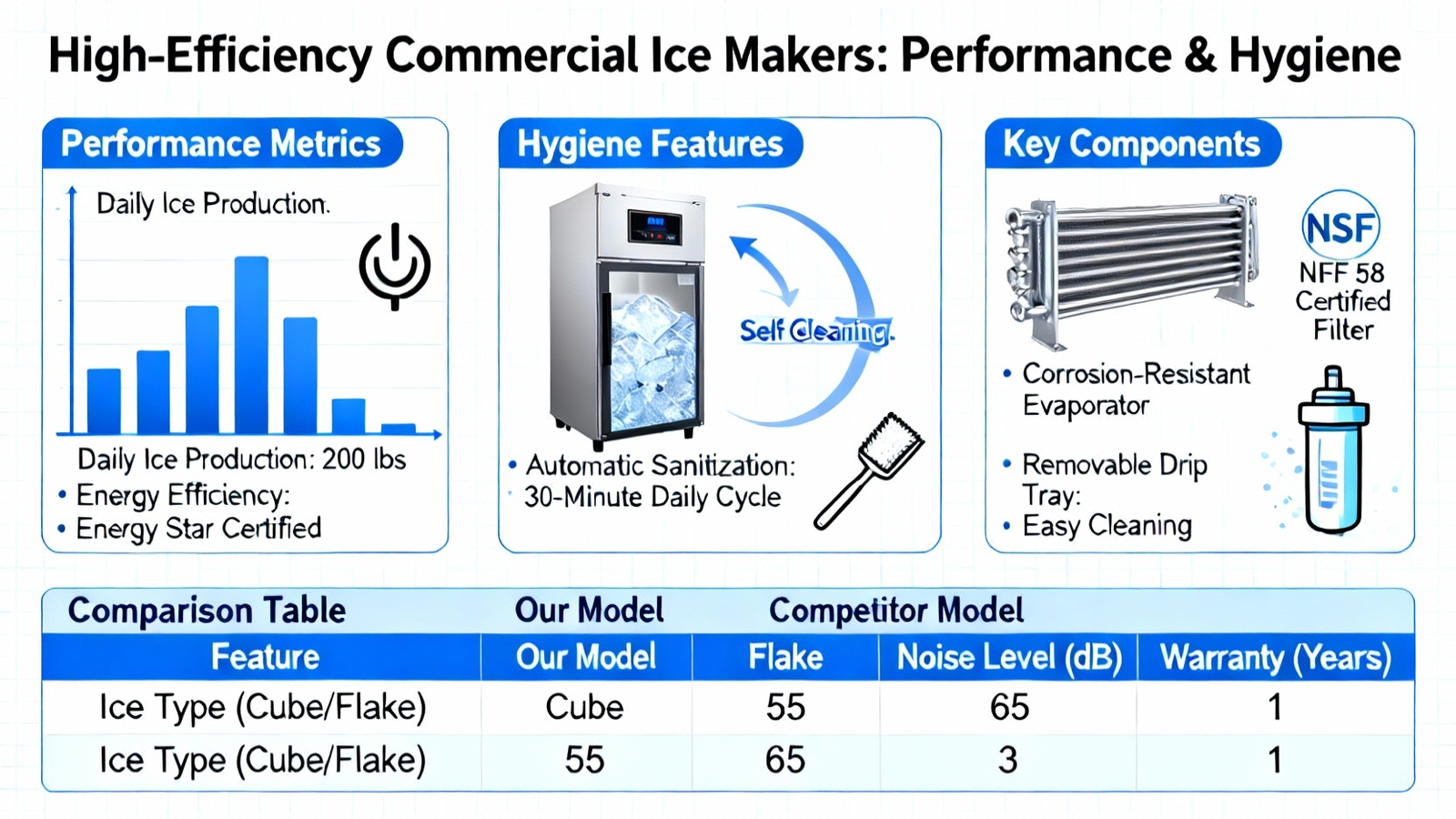
At the core of any commercial ice maker is its ability to produce clean, clear ice consistently and rapidly. High-performance compressors, like the 495W imported compressor noted in models such as the TITTLA 100Lbs/24H Commercial Ice Maker, are engineered for low noise and high energy efficiency. This is crucial, as energy consumption is a significant operational cost. Furthermore, integrated high-efficiency water filters are essential. They address a key concern for ice quality by filtering tap water to remove impurities and chlorine, which can affect taste and clarity. The importance of water filtration in ice is underscored by discussions in communities like r/KitchenConfidential, where professionals emphasize the impact of water quality on equipment longevity and ice purity.
Intelligent Operation and Simplified Maintenance
Modern units move beyond simple on/off switches to feature intuitive LCD control panels. These interfaces allow precise adjustment of ice thickness and production timing, and crucially, they enable automatic self-cleaning cycles. Regular cleaning is non-negotiable for food safety. As highlighted on Wikipedia’s Ice machine maintenance section, scale buildup and microbial contamination (like from Pseudomonas or Legionella bacteria) are serious risks in poorly maintained machines. The auto-clean function, combined with removable water channels, systematizes this vital upkeep, reducing labor and ensuring compliance with health codes—a frequent topic of concern for business owners on platforms like Reddit.
Robust Design for Demanding Environments
Durability in a commercial setting is paramount. A full stainless steel exterior is the industry standard, prized for its corrosion resistance, hygienic properties, and professional appearance. This material choice directly impacts the machine’s lifespan, especially in moist, high-use environments. The design also considers practical utility: features like a large-capacity storage bin (24 lbs) with thick insulation, a front observation window with interior lighting, and included accessories like drain pipes and ice scoops create a seamless workflow. The inclusion of a drain pipe, for instance, prevents water stagnation—a key maintenance point often advised by users in online forums to ensure consistent ice maker efficiency and cleanliness.
Versatile Application Across Business Models
The true test of a commercial appliance is its adaptability. A well-engineered stainless steel ice maker is designed for versatility, serving the high-volume needs of restaurant canteens and bars as effectively as the steady demand in cafes and drink shops. Its freestanding or built-in installation flexibility allows it to integrate into various kitchen layouts. With a production capacity of 100 lbs of ice per 24 hours and the ability to make 45 cubes in as little as 12-15 minutes, it is engineered to handle peak service times without compromise, ensuring that operations never run dry during critical business hours.
Conclusion: The Foundation of Efficient Beverage Service
In summary, selecting a commercial ice maker requires a holistic view of performance, hygiene, durability, and operational intelligence. Key features such as a powerful, efficient compressor, a built-in water filtration system, automated cleaning protocols, and a rugged stainless steel build are not mere specifications—they are direct responses to the documented needs and challenges faced by foodservice professionals. These features collectively ensure the consistent production of hygienic ice, reduce long-term maintenance burdens, and provide the reliability that businesses depend on. As evidenced by discussions in industry communities and maintenance guidelines, neglecting any of these aspects can lead to equipment failure, health code violations, and operational downtime. Therefore, investing in a comprehensively designed machine like the TITTLA 100Lbs/24H model represents a strategic decision to safeguard product quality, streamline operations, and ensure customer satisfaction in the demanding commercial landscape of the United States.
This article really highlights why investing in a high-efficiency ice maker is so crucial for any busy commercial kitchen.
\}}
This article really highlights why investing in a high-efficiency ice maker is so essential for any serious foodservice operation.
\}}
This article really highlights why investing in a high-efficiency ice maker is so crucial for any busy restaurant or hotel.
\}}