
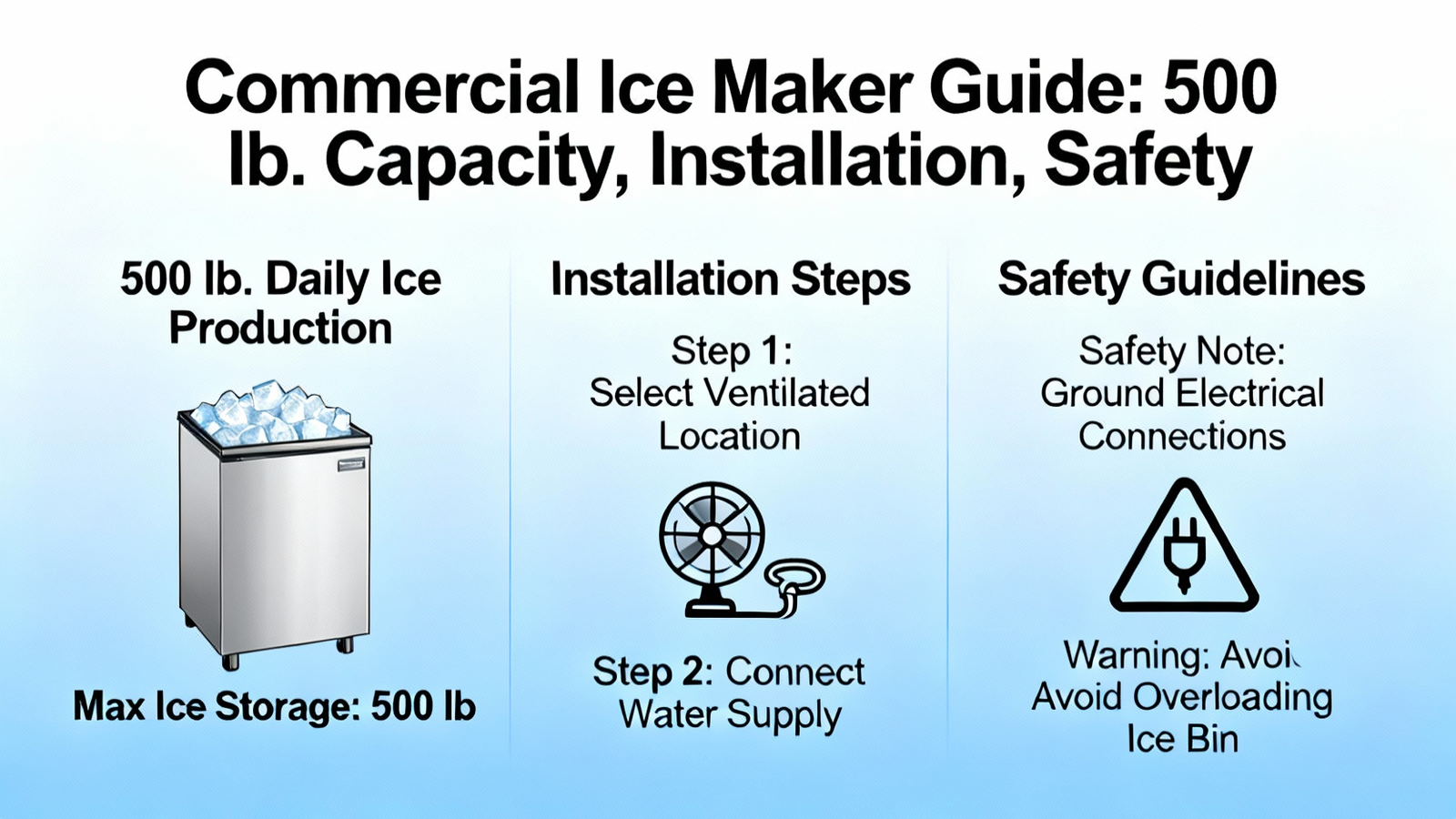
For restaurants, bars, and hotels, a reliable ice maker is a backbone of daily operations. This guide delves into the essential features, proper installation, and critical safety protocols for a heavy-duty 500 lb./24h capacity commercial ice maker. Understanding these details ensures you maximize performance, longevity, and safety for your business.
Engineering for Commercial Endurance
At the core of this unit is its durable stainless steel construction, chosen for its corrosion resistance and ease of cleaning in demanding environments. It operates on standard 110V/60Hz power, drawing 780W, and utilizes environmentally friendly R290 (propane) refrigerant. R290 has a lower Global Warming Potential (GWP) compared to traditional HFCs, a shift supported by environmental regulations aiming to phase down high-GWP refrigerants (Wikipedia, Refrigerants). With compatibility for climate types SN, N, and ST, this commercial stainless steel ice maker is built to perform reliably in varied ambient conditions, a critical factor noted by industry users discussing equipment longevity in food service subreddits.
Critical Installation and Setup Procedures
Proper installation is non-negotiable for optimal function. The unit requires a potable water supply with a pressure between 14.5-58 psi; outside this range, a pressure changeover valve is mandatory. A gravity-fed drain line, with its outlet lower than the machine’s, must be connected to handle meltwater. Perhaps most importantly, after delivery, the unit must be left upright for 24 hours before initial use to allow the compressor oil to settle, a step often emphasized by commercial kitchen technicians on forums to prevent immediate compressor failure.
Operational Safety and Best Practices
Safety protections are integrated, but user diligence is key. The ice maker must have at least 6 inches of clearance on all sides for airflow and must be kept away from heat sources and direct sunlight. Its three-prong plug should be connected directly to a grounded outlet; extension cords are not recommended due to the risk of overheating, a common fire hazard warning echoed in electrical safety discussions. Furthermore, as highlighted in a Reddit thread about commercial appliance safety, keeping the unit and cord away from flammable materials and using only water to make ice are fundamental rules for preventing accidents (Reddit, r/KitchenConfidential, 2023).
Maximizing Performance and Longevity
To ensure the 500 lbs./24h capacity ice maker delivers consistently, understand that ambient temperature directly impacts ice production cycles. Regular cleaning and descaling with approved solutions are essential to prevent mineral buildup, which can degrade performance over time. The machine’s design for indoor use is intentional; outdoor installation exposes it to contaminants and temperature extremes that can void warranties and lead to premature failure, a point frequently validated by service technicians in online communities.
In summary, a commercial ice maker like this 500 lb./24h stainless steel model is a significant investment that demands informed handling. Its durable construction and modern R290 refrigerant system are engineered for efficiency and environmental compliance. However, its real-world reliability hinges entirely on strict adherence to installation guidelines—proper water pressure, drainage, and the critical 24-hour settling period. Operational safety, from electrical precautions to correct placement, protects both your staff and your asset. Finally, proactive maintenance and understanding environmental influences on performance are what transform this piece of equipment from a purchase into a long-term, dependable partner for your business. By integrating these technical, safety, and operational principles, you secure a consistent ice supply that is vital for customer satisfaction and daily service flow.
This guide really highlights why a reliable 500 lb. commercial ice maker is so crucial for keeping daily operations running smoothly.
\}}
This guide really highlights why a reliable 500 lb. commercial ice maker is so crucial for keeping daily operations running smoothly.
\}}
Great guide on choosing a 500 lb. capacity ice maker—getting the installation and safety right is so crucial for busy operations.
\}}
Great guide on choosing a 500 lb. capacity ice maker—getting the installation and safety right is so crucial for busy operations.
\}}
This guide really highlights why a reliable 500 lb. commercial ice maker is such a crucial investment for busy operations.
\}}
This guide really highlights why a reliable 500 lb. commercial ice maker is such a crucial investment for busy operations.
\}}