
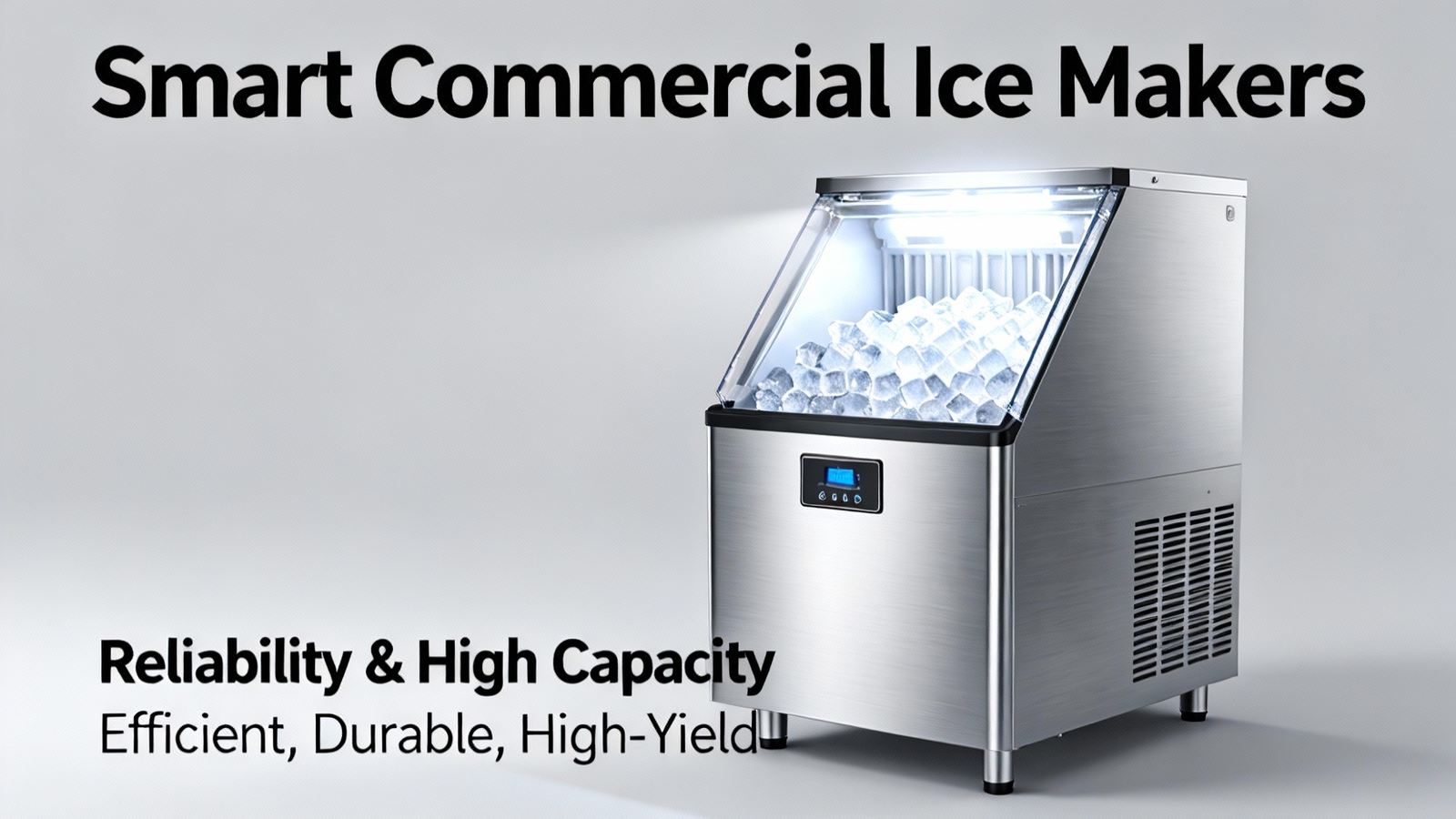
For any business that relies on a steady supply of ice, machine failure is more than an inconvenience—it’s a disruption to service and profit. Modern commercial ice makers have evolved into intelligent appliances designed to prevent such issues. This article explores the key features of advanced ice makers, focusing on smart alerts, automated maintenance, high-capacity production, and user-centric design that together ensure reliability and efficiency in demanding environments.
Intelligent Operation: Smart Alerts for Uninterrupted Service
The core of a reliable ice maker is its ability to communicate status and prevent problems before they halt production. Features like fault alerts and water shortage notifications are critical. As noted in a discussion on r/KitchenConfidential, proactive maintenance is paramount in food service, and machines that self-diagnose are invaluable. A water shortage alert, for instance, directly addresses a common point of failure, allowing staff to rectify a line issue before the machine’s cycle is compromised, ensuring the 24 Hours Split Commercial Ice Maker operates continuously.
Automated Maintenance: Saving Time and Ensuring Hygiene
Manual defrosting and descaling are labor-intensive tasks that, if neglected, lead to reduced efficiency and ice quality. Auto-defrost systems tackle ice buildup automatically, preserving energy and component lifespan. Furthermore, integrated water filters are essential for ice clarity and taste, removing sediments and impurities. The importance of water filtration in ice machines is well-documented, with Wikipedia noting that filters protect against contaminants that affect “taste, odor, and appearance.” This combination of auto-defrost and filtration ensures the machine maintains peak performance and output quality with minimal manual intervention.
Engineered for High-Volume Demand
Capacity is a defining metric for commercial units. A machine producing 450 lbs. of ice per day with a 300 lb. storage bin represents a significant output designed for high-traffic venues. This volume, translating to over 14,900 cubes daily, meets the needs of busy bars, restaurants, or hospitals. The split-system design, where the ice-making engine is separate from the storage bin, is a standard for high-capacity applications as it allows for placement flexibility and more efficient production cycles, a point often affirmed in commercial equipment reviews.
User-Centric Design and Accessibility
Finally, thoughtful design details directly impact daily usability and sanitation. An intuitive touch control panel simplifies operation, while features like adjustable feet ensure stable placement for consistent operation—uneven leveling is a known cause of harvest issues. The inclusion of a blue-lit storage bin and a flip-up door, as seen in the Tittla commercial ice maker, enhances visibility and access. Easy drainage options, both pump-assisted and gravity, further streamline cleaning and maintenance, completing a package built for real-world commercial use.
In conclusion, today’s commercial ice makers are sophisticated systems that blend smart technology with robust engineering. As we’ve explored, the integration of fault and shortage alerts transforms reactive maintenance into proactive management, a practice heavily endorsed by industry professionals online. Automated defrost and filtration systems uphold hygiene and efficiency standards critical in food service. The high-volume capacity of units like the 450 lb. per day split system addresses the core demand of commercial settings: never running out. Finally, user-focused elements—from leveling feet to accessible bin design—ensure the machine integrates smoothly into daily operations. Investing in an ice maker with this comprehensive feature set, such as the model discussed, is an investment in operational resilience, ensuring that a fundamental resource like ice is one less thing to worry about, allowing businesses to focus squarely on serving their customers.
This article really highlights how modern “smart” commercial ice makers are designed to prevent the costly disruptions of a machine failure.
\}}
It’s great to see how modern commercial ice makers use smart features to prevent costly downtime.
\}}
It’s great to see how modern commercial ice makers use smart features to prevent costly downtime.
\}}