
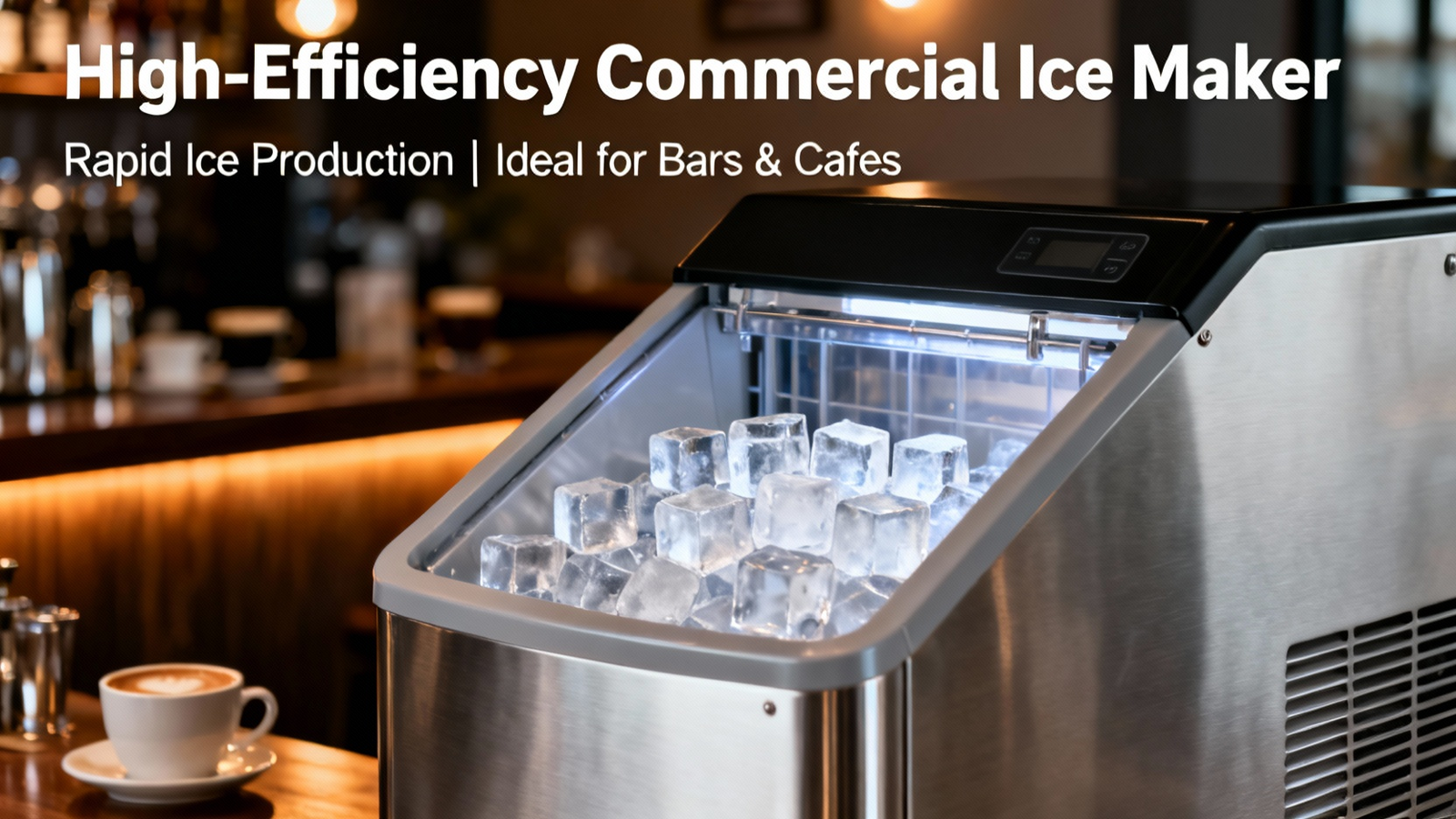
Unlocking Commercial Ice Production: A Deep Dive into High-Efficiency Ice Makers
For bars, cafes, and restaurants, a reliable ice machine is the unsung hero of service. This article explores the critical features of modern commercial ice makers, focusing on efficiency, hygiene, and operational intelligence. We’ll examine how technological advancements meet practical demands in high-volume environments.
The Critical Role of Water Filtration in Ice Quality
Water quality is the foundation of clear, odor-free, and great-tasting ice. A high-efficiency water filter, like the one included with the TITTLA commercial ice machine, does more than just convert tap water. It removes chlorine, sediments, and minerals that can cause cloudiness, off-flavors, and even scale buildup inside the machine. This scaling is a primary cause of reduced efficiency and premature failure. As noted in discussions on appliance maintenance, regular filter changes are as crucial for ice makers as they are for refrigerators (Reddit, r/Appliances, various threads). Clean water ensures not only superior ice but also protects the machine’s internal components, extending its service life and maintaining the high production capacity promised by the 495W compressor.
Engineered for Durability and High-Volume Output
Commercial equipment must withstand constant use. The use of stainless steel in construction is non-negotiable, as it is a durable, non-porous, and hygienic material that resists corrosion and is easy to sanitize—a key concern in food service environments. The engineering extends to performance metrics. A machine capable of producing 100 lbs of ice in 24 hours, like the TITTLA model, addresses the core need for volume. This output, translating to a batch of 45 cubes in 12-15 minutes, is powered by a commercial-grade compressor. This aligns with the principle that dedicated ice makers are far more efficient for volume production than the ice-making functions in a typical refrigerator freezer, a point often emphasized by culinary professionals (Reddit, r/Chefit, 2023). The freestanding design with elevated feet further protects the unit from ground moisture, a simple but vital design feature for longevity.
Intelligent Operation and User-Centric Design
Modern ice makers integrate smart features that simplify maintenance and operation. The auto-clean function is a significant advancement, using scheduled cleaning cycles to prevent biofilm and mold growth—a common issue noted in consumer reports and forums. The LCD control panel with adjustment buttons for ice thickness and timing provides precise control, allowing businesses to tailor output to daily needs. Features like a transparent observation window and interior lighting are not mere conveniences; they allow for at-a-glance inventory checks and operation verification without opening the storage bin, which helps maintain temperature and hygiene. The inclusion of practical accessories, such as a dedicated drain pipe for meltwater, tackles a specific pain point: keeping the unit and its surroundings dry and clean.
Application and Strategic Placement in Business
The versatility of a compact yet powerful ice cube maker is a key asset. Its design allows it to fit seamlessly into diverse settings: under a bar counter, in a café kitchen, or at a self-service drink station. The 24-pound storage capacity balances immediate availability with the need for fresh production, as commercial ice machines are designed for constant production, not long-term storage like a freezer. For optimal performance, it’s recommended to place the unit in a well-ventilated area with stable ambient temperatures, as excessive heat in the surrounding environment can force the compressor to work harder, reducing efficiency and ice output. This is a frequently cited installation tip in trade resources and service guides.
In conclusion, selecting a commercial ice maker requires a focus on the synergy between robust construction, intelligent features, and consistent high output. Machines like the stainless steel ice maker for home bar cafe exemplify this by combining a high-efficiency water filter for purity, a durable stainless steel body for longevity, and a powerful compressor for rapid production. The inclusion of automated cleaning and user-friendly controls reduces daily labor while ensuring food safety standards. Ultimately, a well-chosen ice maker is an investment in operational smoothness, allowing businesses to meet customer demand reliably without compromising on the quality or cleanliness of a fundamental ingredient—ice. By prioritizing these engineered features, establishments can secure a dependable solution that supports service efficiency and contributes to the overall customer experience.
This deep dive into high-efficiency ice makers really highlights how crucial the right machine is for keeping a busy bar running smoothly.
\}}
This deep dive into high-efficiency ice makers really highlights how crucial the right machine is for smooth service.
\}}
This deep dive into high-efficiency ice makers really highlights how crucial the right machine is for smooth service.
\}}
This deep dive into high-efficiency ice makers really highlights how crucial the right machine is for smooth service.
\}}