
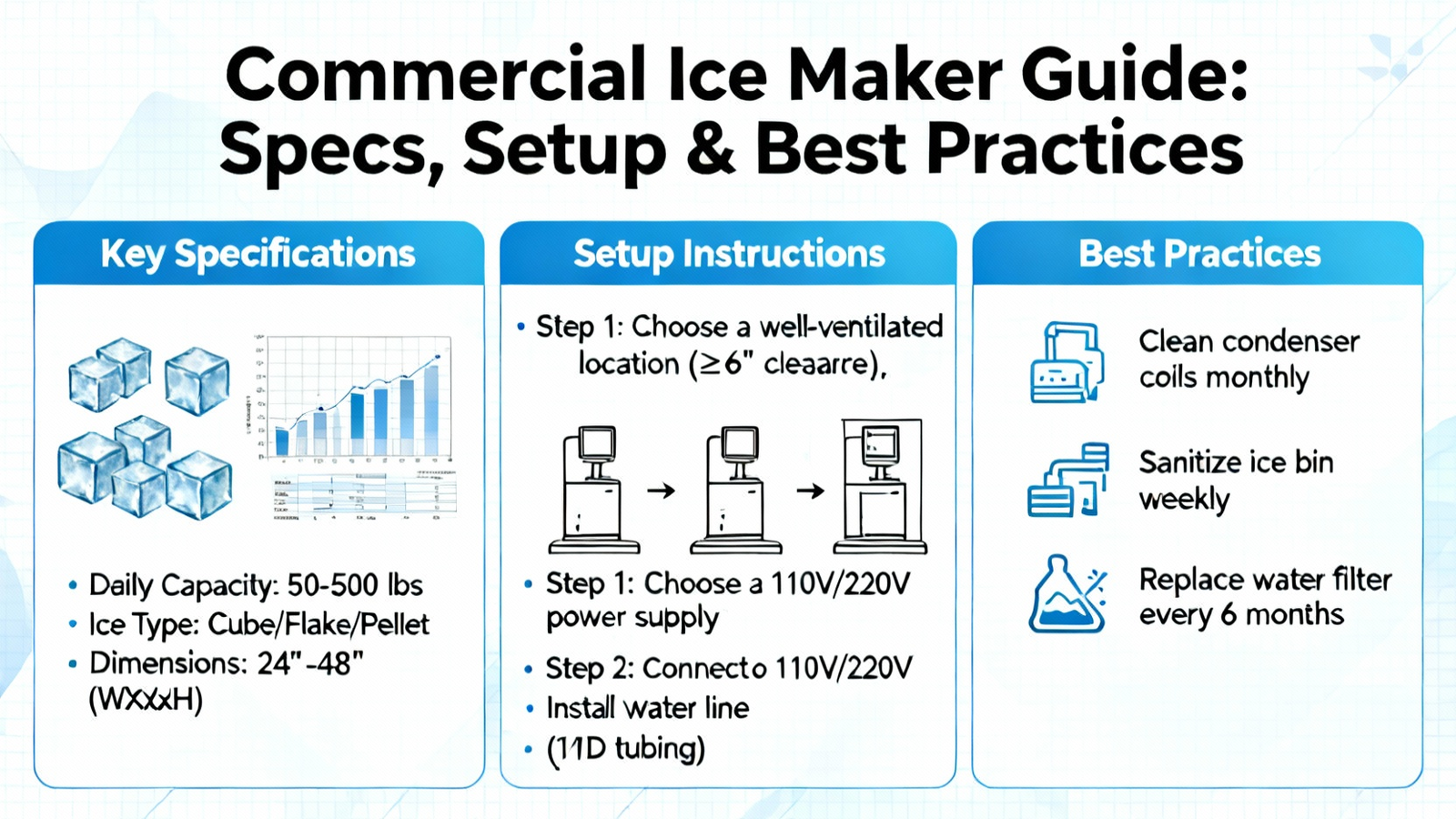
Selecting a commercial ice maker is a critical decision for any foodservice business. This guide delves into the specifications, installation requirements, and operational best practices for a durable stainless steel unit, ensuring you maximize its performance and longevity in a demanding environment.
Engineering for Demanding Environments
This heavy-duty ice maker is built with a focus on durability and broad operational compatibility. Its stainless steel construction is industry-standard for commercial kitchens due to its corrosion resistance and ease of cleaning, a point emphasized in discussions on restaurant equipment longevity. The unit is designed for 110V 60Hz power, the standard electrical configuration in the United States, making it plug-compatible in most commercial settings without special wiring. Its compatibility with climate types SN, N, and ST (Sub-Normal, Normal, and Sub-Tropical) ensures reliable performance across varied ambient temperatures, a crucial factor for consistent ice production as noted in ice machine engineering principles.
Critical Installation and Safety Protocols
Proper installation is non-negotiable for safety and efficiency. The unit requires a direct connection to a drinking water supply with a pressure between 14.5-58 psi. Water pressure outside this range can severely impact the machine’s fill cycles and valve longevity, necessitating a pressure changeover valve. Ventilation is key; maintaining at least 5.9 inches (15 cm) of clearance on all sides allows for essential airflow around the condenser, preventing overheating and inefficient operation. Safety is paramount: the use of extension cords is prohibited due to fire risk, and the unit must be kept away from flammable materials and heat sources like direct sunlight or stoves.
Initial Setup and Operational Best Practices
Upon delivery, a specific settling period is required. The unit must be left upright for 24 hours before initial plug-in to allow the environmentally friendly R290 (propane) refrigerant to settle within the compressor. R290 is gaining adoption for its low global warming potential, as detailed on Wikipedia’s R-290 refrigerant page. Furthermore, a gravity-fed drainage pipe must be connected before operation, with its outlet lower than the machine’s port, to handle meltwater discharge. Users should note that ice production time is inherently influenced by the surrounding ambient temperature, a common point of discussion among professionals, as seen in this refrigeration technician thread from November 2022.
Selecting the Right Machine for Your Business
With a net weight of approximately 145.51 lb and dimensions of 26.4 × 23.2 × 61.4 in, this freestanding unit is designed for stability and capacity in high-volume settings like restaurants, bars, hotels, and catering operations. When evaluating options, consider not just daily output but also physical footprint, electrical requirements, and long-term serviceability. For businesses seeking a robust and reliable solution, a machine like the 26.4 in. 145 lb Capacity Commercial Stainless Steel Ice Maker represents a significant investment in operational infrastructure. Understanding the total cost of ownership, including energy use with its 780W power draw and maintenance needs, is essential for making an informed purchase.
In conclusion, integrating a heavy-duty commercial ice maker into your business is a process that extends far beyond simply plugging in an appliance. It requires careful attention to the unit’s engineered specifications, from its durable stainless steel build and climate compatibility to its standard 110V power and modern R290 refrigerant. Successful implementation hinges on strict adherence to installation protocols: proper water pressure, mandatory ventilation space, correct drainage, and critical safety measures like avoiding extension cords. The initial setup, including the 24-hour settling period, is vital for ensuring compressor longevity and peak performance. By thoroughly understanding these requirements—the why behind the clearance needs, the how of drainage, and the importance of water quality—business owners can ensure their commercial ice maker operates reliably for years. This transforms it from a mere piece of equipment into a dependable backbone of daily service, supporting everything from beverage service to food presentation without interruption.
This guide really breaks down the key specs and setup steps you need to know when choosing a commercial ice maker.
\}}
This guide really helped clarify the key specs to look for in a commercial ice maker for our new restaurant setup.
\}}