
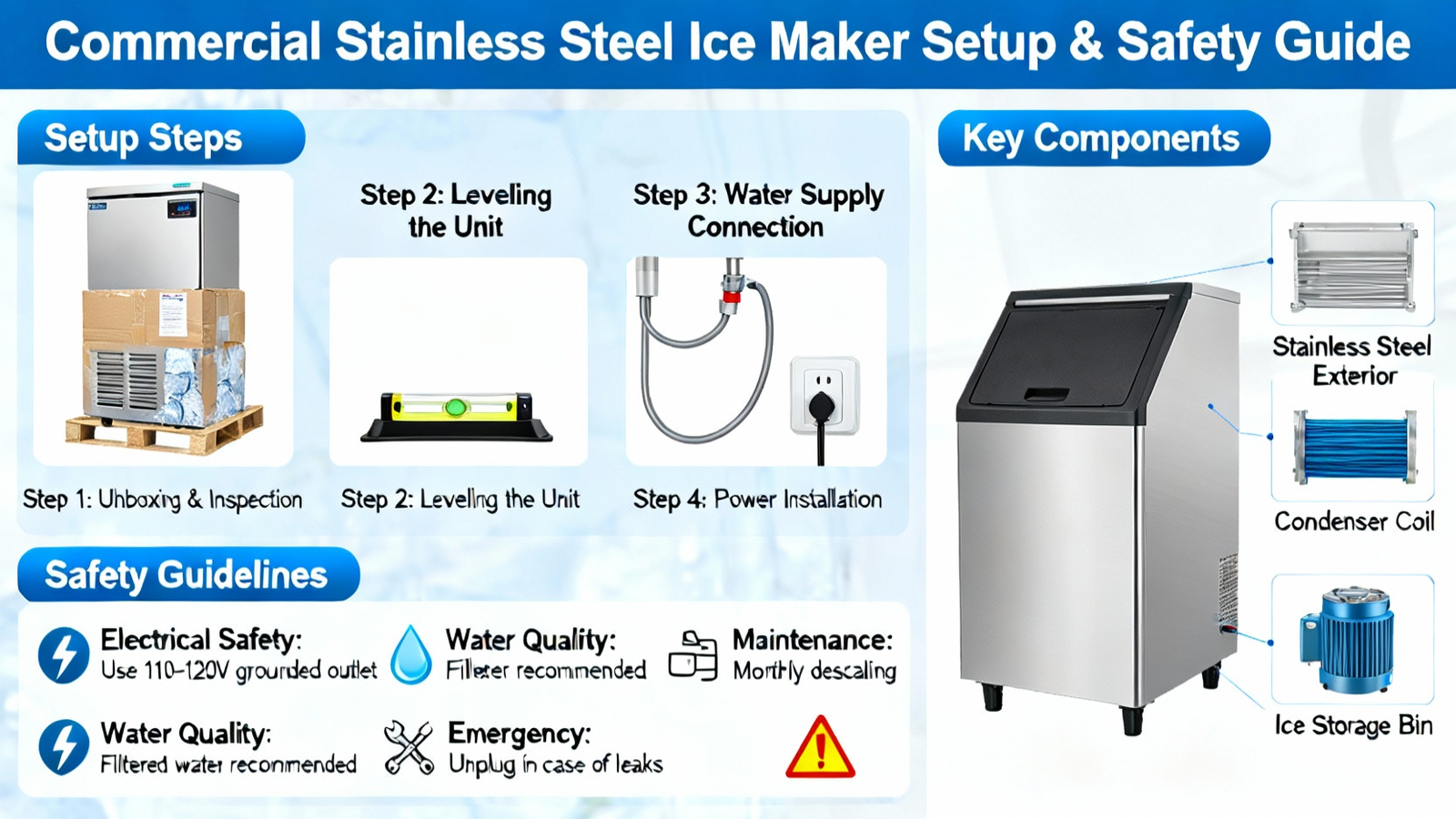
Selecting a heavy-duty commercial ice maker is a critical decision for any foodservice operation. This article provides a comprehensive guide to a robust stainless steel model, detailing its key specifications, essential installation requirements, and vital safety protocols to ensure optimal performance and longevity in a demanding commercial environment.
Engineering for Commercial Endurance
Built for the rigors of a bustling kitchen or bar, this ice maker features a durable stainless steel construction, known for its resistance to corrosion and ease of cleaning. Its design for 110V 60Hz operation makes it compatible with standard US commercial electrical systems, while its use of R290 (propane) refrigerant aligns with modern environmental standards due to its low Global Warming Potential (GWP). As noted on Wikipedia, hydrocarbons like R290 are gaining favor as “natural refrigerants” because of their minimal environmental impact compared to traditional HFCs. The unit’s compatibility with climate types SN, N, and ST ensures reliable ice production across varied ambient temperatures common in North America.
Critical Installation and Setup Protocols
Proper installation is non-negotiable for performance and safety. The unit requires a direct drinking water supply with a pressure between 14.5-58 psi, necessitating a pressure regulator if outside this range. A gravity-fed drainage connection is mandatory, as meltwater and wastewater are expelled automatically. Perhaps most crucially, after delivery, the unit must be left upright for 24 hours before initial use to allow the compressor oil to settle, a step emphasized by professionals on forums like r/KitchenConfidential to prevent compressor failure. Adequate ventilation—at least 5.9 inches on all sides—is required for heat dissipation, as confirmed by discussions on appliance efficiency.
Operational Safety and Best Practices
Adhering to safety guidelines protects both your staff and your investment. The ice maker comes with a three-prong plug and a 70″ cord; using an extension cord is strongly discouraged due to fire risk from overheating. It must be kept away from flammable materials and heat sources like direct sunlight or stoves. For consistent operation, only use potable water—never other liquids—to prevent damage and health hazards. As users on r/refrigeration threads often highlight, regular cleaning and preventative maintenance are key to avoiding costly repairs, a principle that applies fully to this commercial stainless steel ice maker.
Maximizing Performance and Longevity
To ensure the machine meets its capacity potential, understand that ambient temperature directly influences ice production time; hotter environments can reduce output. Positioning is key: a cool, shaded location with stable electrical supply promotes efficiency. Regular maintenance, including cleaning the air filter and sanitizing the water distribution system, is essential. Investing in a robust model like this 750 lbs./24h capacity ice maker is just the first step; its durability and output depend on conscientious operation and care, making it a reliable workhorse for restaurants, bars, and hotels.
Conclusion
In summary, this heavy-duty commercial ice maker represents a significant investment in operational efficiency for any high-volume foodservice business. Its stainless steel build, environmentally conscious R290 refrigerant, and versatile climate compatibility form a solid foundation for reliability. However, its true performance is unlocked through meticulous adherence to installation protocols—proper water pressure, mandatory drainage, and the critical 24-hour settling period—and unwavering commitment to safety practices, such as avoiding extension cords and ensuring clear ventilation. As supported by expert discussions on professional subreddits and technical resources, the longevity of commercial refrigeration equipment is inextricably linked to proper setup and preventative care. By following the outlined guidelines, operators can expect this unit to deliver consistent, high-capacity ice production, supporting seamless service and contributing to the overall success and safety of their daily operations. Ultimately, understanding and respecting the machine’s requirements transforms it from a simple appliance into a dependable cornerstone of your commercial kitchen.
This guide is super helpful for understanding the key setup and safety steps for a commercial stainless steel ice maker.
\}}
This guide really highlights why a heavy-duty commercial ice maker is such a crucial investment for a busy kitchen.
\}}