
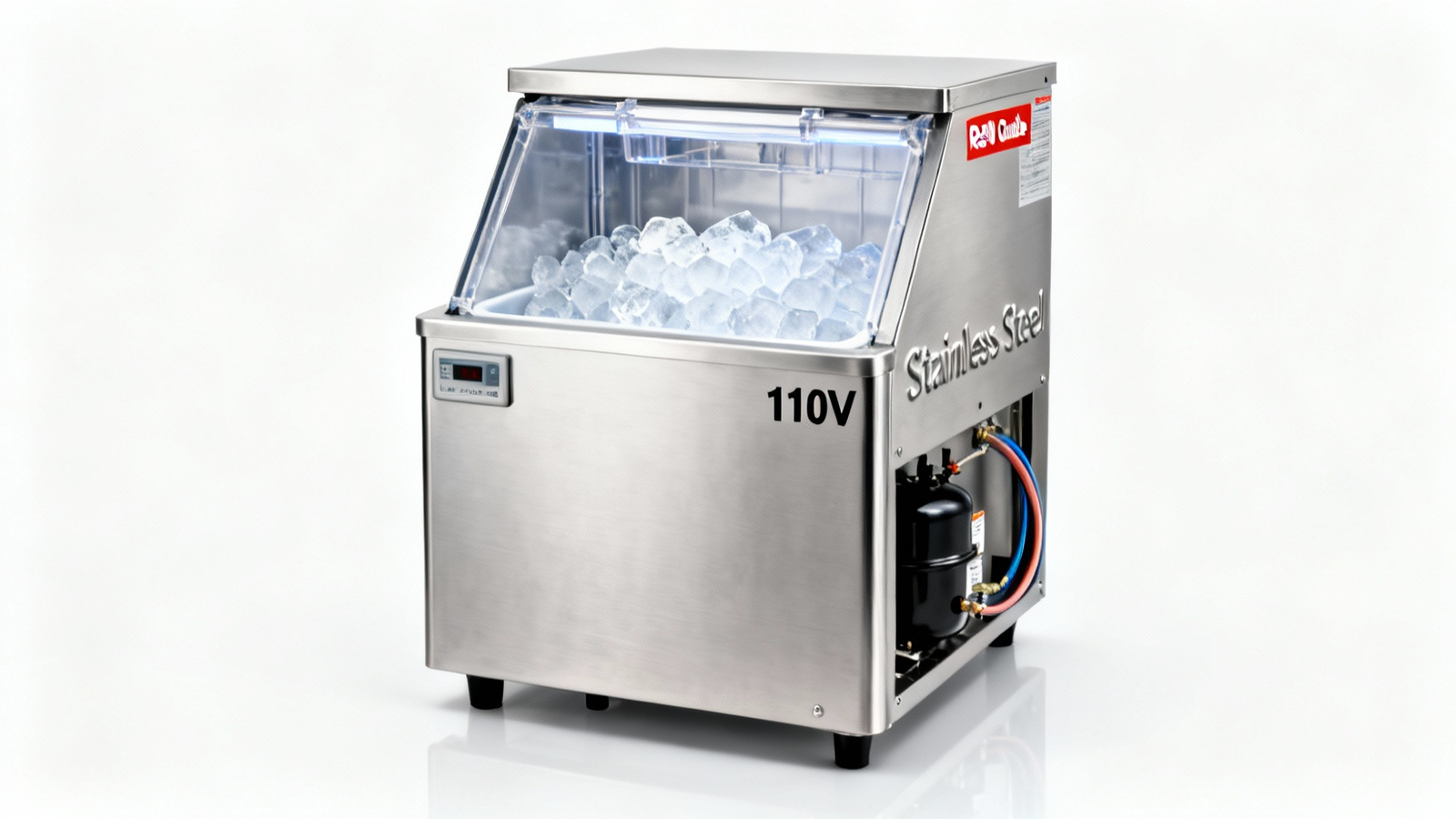
For restaurants, bars, and hotels, a reliable ice maker is essential. This guide explores the key features, installation requirements, and safety protocols for a heavy-duty 110V commercial ice maker with durable stainless steel construction and eco-friendly R290 refrigerant, ensuring optimal performance for your business.
Engineering for Commercial Endurance
Built for the rigors of daily service, this ice maker’s stainless steel construction offers superior corrosion resistance and ease of cleaning, critical for food safety. Its operation on standard 110V/60Hz power (780W) makes it versatile for many US locations without specialized electrical work. The use of R290 (propane) refrigerant is a significant modern advancement. According to Wikipedia, R290 has a “negligibly low ozone depletion potential and very low global warming potential” compared to traditional hydrofluorocarbons (HFCs), aligning with stricter environmental regulations. Furthermore, its compatibility with climate types SN, N, and ST (Sub-Normal, Normal, and Sub-Tropical) ensures reliable ice production across varied US environmental conditions, a point often emphasized in commercial equipment discussions for consistent performance.
Critical Installation and Setup Protocol
Proper installation is non-negotiable for safety and efficiency. The unit requires a direct drinking water supply with precise pressure (14.5-58 psi) and a proper drainage connection via gravity flow. As highlighted in user experiences on platforms like Reddit, neglecting the 24-hour settling period after delivery can damage the compressor, as the refrigerant and oil need to stabilize. For example, a user in a 2023 restaurant subreddit discussion stressed the importance of following manufacturer setup steps to avoid costly early failures. Adequate clearance (at least 5.9 inches on all sides) and placement away from heat sources are vital for airflow and compressor longevity, preventing overheating and excessive energy consumption.
Operational Safety and Best Practices
Adhering to safety guidelines protects both personnel and equipment. Key mandates include:
- Never using an extension cord, as the 780W draw can cause overheating and fire risk with undersized cables.
- Keeping the unit and its 70-inch power cord away from flammable materials.
- Using only potable water; other liquids can damage the system and create unsafe ice.
- Ensuring the three-prong plug is connected to a properly grounded outlet for safety protection type I, which is a fundamental requirement for all commercial appliances.
These precautions are standard for commercial-grade appliances and are frequently reiterated in equipment manuals and safety forums to mitigate operational hazards.
Maximizing Performance and Longevity
To ensure the commercial stainless steel ice maker delivers its full 750 lbs./24h capacity, ongoing care is essential. Recognize that ambient temperature directly impacts ice production cycles; higher room temperatures will increase production time. Regular cleaning and descaling, as per manufacturer instructions, prevent mineral buildup that can reduce efficiency and ice quality. The unit’s heavy-duty construction is designed for longevity, but its performance hinges on correct installation, adherence to safety notes, and routine maintenance. Investing in a robust model like this stainless steel ice maker is a strategic decision for businesses requiring a dependable, high-volume ice supply.
Conclusion
Selecting and operating a heavy-duty commercial ice maker is a significant investment in your operation’s backbone. This particular model, with its durable stainless steel build, environmentally conscious R290 refrigerant, and compatibility with standard US voltage and diverse climates, is engineered for demanding environments. Success, however, depends entirely on meticulous attention to the detailed setup—including the critical 24-hour settling period, precise water pressure, and proper drainage—and strict adherence to safety protocols like avoiding extension cords and ensuring adequate ventilation. As evidenced by discussions among industry professionals on platforms like Reddit, the longevity and reliability of such equipment are directly tied to following these guidelines. By understanding the engineering principles, respecting the installation and safety requirements, and committing to routine maintenance, you can maximize the output and lifespan of your commercial ice maker, ensuring it meets the relentless demand of your restaurant, bar, or hotel, thereby safeguarding your investment and supporting seamless daily service.
This guide really highlights why a reliable commercial ice maker is a must-have for busy establishments.
\}}
This guide is super helpful for understanding the installation and safety steps for a commercial ice maker with that eco-friendly R290 refrigerant.
\}}