
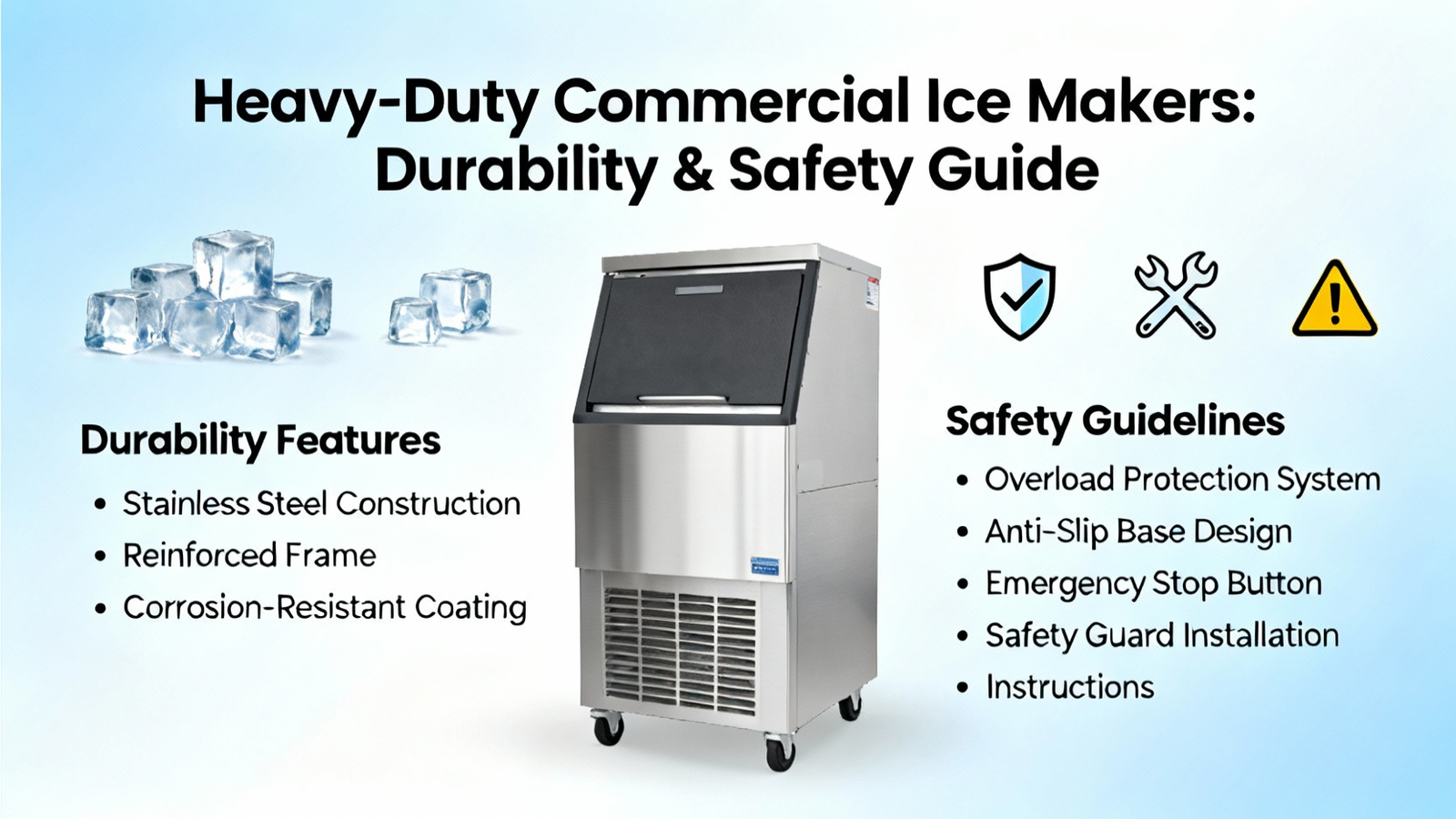
The Ultimate Guide to Heavy-Duty Commercial Ice Makers: Durability, Safety & Performance
Selecting the right commercial ice maker is critical for foodservice operations. This guide delves into the robust features of durable stainless steel units, essential safety protocols, and proper installation practices to ensure longevity and peak performance in demanding environments like restaurants, bars, and hotels.
Engineering for Endurance: Stainless Steel and Climate Adaptability
At the core of a reliable commercial ice maker is its construction. Units built with durable stainless steel construction offer superior resistance to corrosion, easy sanitation, and longevity in high-moisture environments. This material choice is a industry standard for durability, as noted in discussions on commercial kitchen equipment longevity. Furthermore, models designed for specific climate types (like SN, N, ST) ensure reliable performance across varied ambient temperatures, from subtropical to temperate zones. This climate compatibility is crucial for consistent ice production, as compressor efficiency is directly impacted by surrounding air temperature, a point often emphasized by HVAC professionals on forums like r/refrigeration.
Power, Refrigerant, and Operational Specifications
Understanding the technical specs ensures compatibility and efficiency. A unit operating on standard 110V 60Hz power with 780W draw is designed for typical US commercial kitchens. A key modern advancement is the use of environmentally friendly R290 refrigerant. R290 (propane) is a natural hydrocarbon with a very low Global Warming Potential (GWP), as documented on Wikipedia’s R-290 page. Its adoption reflects industry shifts towards sustainable refrigeration. Proper setup also requires a drinking water supply with precise pressure (14.5-58 psi) and a gravity-fed drain connection, highlighting that these are plumbed-in, permanent fixtures, not portable appliances.
Critical Safety and Installation Protocols
Adhering to manufacturer guidelines is non-negotiable for safety and warranty. Key mandates include:
- Ventilation Space: Maintaining at least 6 inches of clearance on all sides for airflow, preventing compressor overheating.
- Electrical Safety: Using the provided three-prong plug, avoiding extension cords, and keeping the unit away from flammable materials to mitigate fire risk.
- Initial Settling Period: Allowing the unit to stand upright for 24 hours after delivery before initial use lets the compressor oil settle, a critical step echoed in technician advice on Reddit to prevent premature failure (see example discussion).
- Indoor Use Only: Protection from direct sunlight, heat sources, and outdoor elements ensures stable operation and prevents safety hazards with electrical components.
Optimizing for Long-Term Performance in Your Business
Maximizing the lifespan of your investment involves proactive care. The requirement for a potable water source directly impacts ice quality and machine scaling. Using only water prevents damage to the evaporator and ensures food-safe ice. Furthermore, understanding that ice production time varies with ambient temperature helps set realistic expectations during peak summer operations. Regular cleaning and descaling, as per the manual, are essential to maintain efficiency and ice clarity. For operations requiring high-volume output, a model like the 23.23 in. 750 lbs./24h Capacity Commercial Stainless Steel Ice Maker is engineered to meet such heavy-duty demands with its robust build and significant daily production capacity.
Conclusion: A Strategic Investment for Demanding Operations
In summary, a heavy-duty commercial ice maker is a significant investment that demands careful consideration of its construction, specifications, and installation environment. The move towards durable stainless steel and eco-friendly refrigerants like R290 represents both a commitment to longevity and environmental responsibility. Strict adherence to safety protocols—including proper electrical connection, ventilation, and the crucial settling period—is paramount to prevent hazards and ensure reliable operation from day one. Ultimately, the performance and durability of a unit, such as the high-capacity commercial stainless steel ice maker, are proven through its ability to deliver consistent, clean ice under the pressures of a bustling service environment. By following these detailed guidelines, businesses can secure a vital piece of equipment that supports seamless service, upholds safety standards, and provides a return on investment through years of dependable performance.
This guide really highlights why durability and safety are non-negotiable when choosing a heavy-duty commercial ice maker.
\}}
This guide really highlights why durability and safety are non-negotiable when choosing a heavy-duty commercial ice maker.
\}}
This guide really highlights why durability and safety are non-negotiable when choosing a heavy-duty commercial ice maker.
\}}
This guide really highlights why durability and safety are non-negotiable when choosing a heavy-duty commercial ice maker.
\}}
This guide really highlights why durability is so crucial when choosing a heavy-duty commercial ice maker for a busy kitchen.
\}}
This guide really highlights why durability and safety are non-negotiable when choosing a heavy-duty commercial ice maker.
\}}