
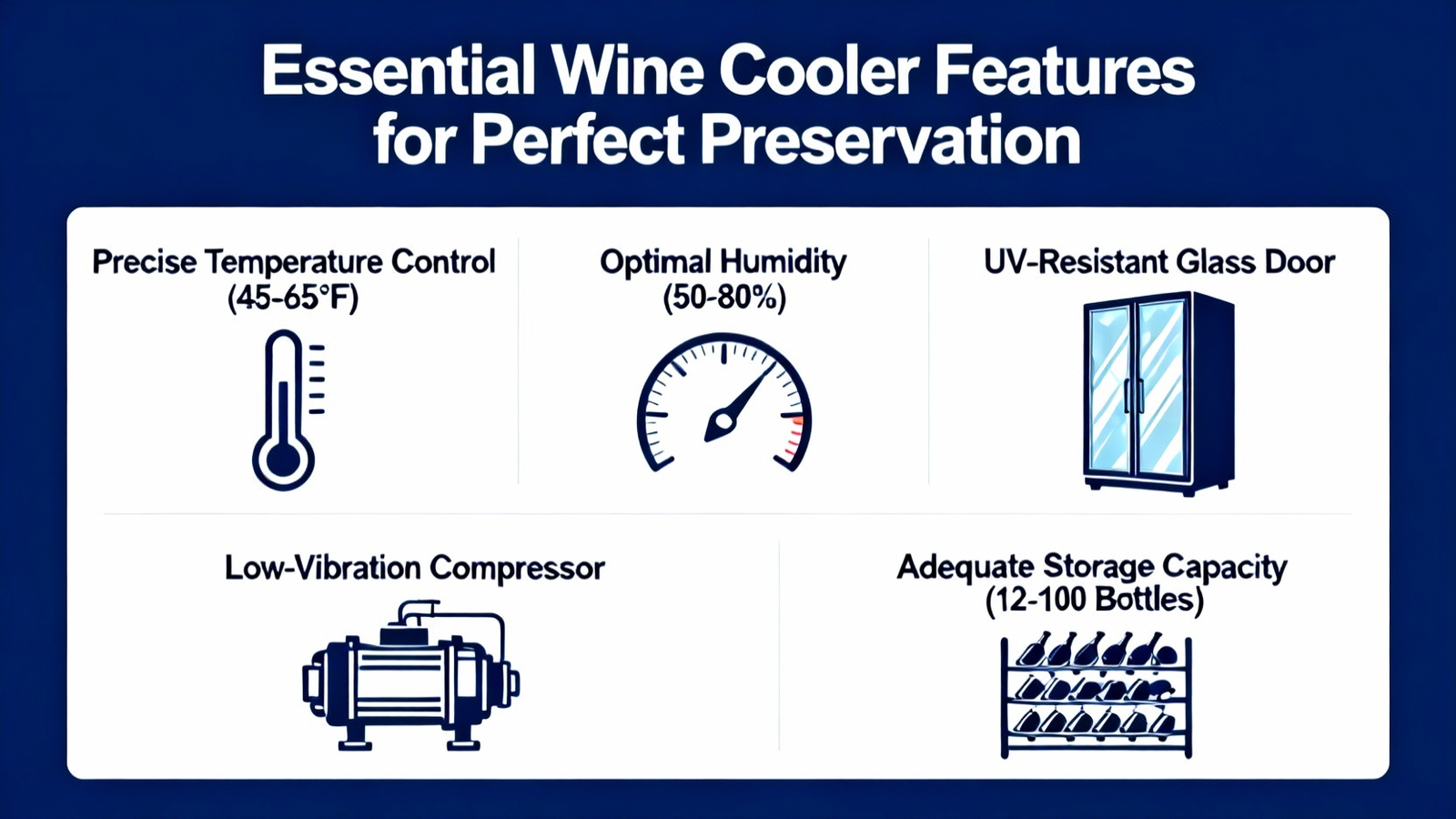
For wine enthusiasts, proper storage is the cornerstone of preserving a collection’s value and taste. This article explores the essential features of a modern wine cooler, detailing how specific technologies like light protection, precise temperature control, and advanced cooling work in harmony to create the ideal environment for your wine to mature gracefully over time.
The Foundation of Preservation: Light and Temperature
Two of the most critical enemies of wine are ultraviolet light and improper temperature. UV rays can degrade and prematurely age wine, a process known as “light strike,” which causes unpleasant aromas. As noted in a Reddit discussion on r/wine (February 2023), even ambient light in a room can have a cumulative damaging effect. A quality cooler, like the 15″ Single Zone 30-Bottle Wine Cooler, uses glass doors treated to filter harmful light. Paired with a user-adjustable temperature range (ideally 40°F to 65°F for a single-zone unit), it creates a stable dark environment. This stability is paramount, as temperature fluctuations cause the wine to expand and contract, potentially drawing in oxygen through the cork.
Intelligent Cooling and Airflow Design
Beyond a simple cold box, effective wine refrigeration requires sophisticated climate management. The goal is gentle, consistent cooling without vibration, which can disturb the sediment in aging wines. This is achieved through systems like internal air cooling and ventilated front windows, which promote efficient heat exchange and prevent “hot spots” within the unit. According to Wikipedia’s entry on wine cellars, air circulation is a key factor in maintaining uniform temperature and humidity. This meticulous engineering ensures every bottle, whether on a top or bottom shelf, experiences the same ideal conditions for preservation.
Flexible Organization for a Growing Collection
A well-designed cooler accommodates not just the wine’s needs, but also the collector’s. Removable beech wood shelves offer practical flexibility. Beech is a preferred material as it is strong, resistant to moisture, and won’t impart odors. This allows you to easily reconfigure space for different bottle sizes, from standard Bordeaux to larger Burgundy or Champagne bottles. The capacity of 30 standard bottles provides a compact yet spacious solution, making it an excellent fit for kitchens, dining areas, or home bars, as highlighted in discussions on r/winemaking (October 2022) regarding space-efficient storage options.
Elegant Functionality in Modern Design
The final element unites technology with aesthetics. Features like soft blue LED lighting offer visibility without the heat or harmful spectrum of incandescent bulbs, allowing you to showcase your collection safely. The elegant design, with its clean lines and thoughtful details, transforms the appliance into a piece of furniture. This combination of style and core functionality ensures your investment is protected in a unit that complements your living space, embodying the principle that proper care for fine wine need not be hidden away.
In summary, selecting a wine cooler is an investment in the longevity and quality of your wine collection. As we’ve explored, the essential features extend far beyond simple refrigeration. Protection from harmful light, a stable and precise temperature range maintained by advanced cooling and airflow systems, and flexible, non-invasive storage are non-negotiable for serious preservation. These technical elements work synergistically to slow oxidation, maintain desired chemical development, and prevent the spoilage that fluctuating environments cause. For enthusiasts and collectors in the United States, where home climates vary greatly, a dedicated cooler like the 30-bottle built-in wine refrigerator provides a controlled microclimate impossible to achieve in a standard kitchen refrigerator. Ultimately, a well-designed wine cooler is more than an appliance; it is a guardian of taste and potential. It allows both everyday bottles and special vintages to reach your glass exactly as the winemaker intended, ensuring every tasting experience is at its peak. By prioritizing these core features, you choose not just to store wine, but to cultivate it.
This article really highlights how crucial precise temperature control is for keeping a collection at its best.
\}}
This is a great breakdown of how modern features like light protection and precise temperature control work together to preserve a wine’s character.
\}}