
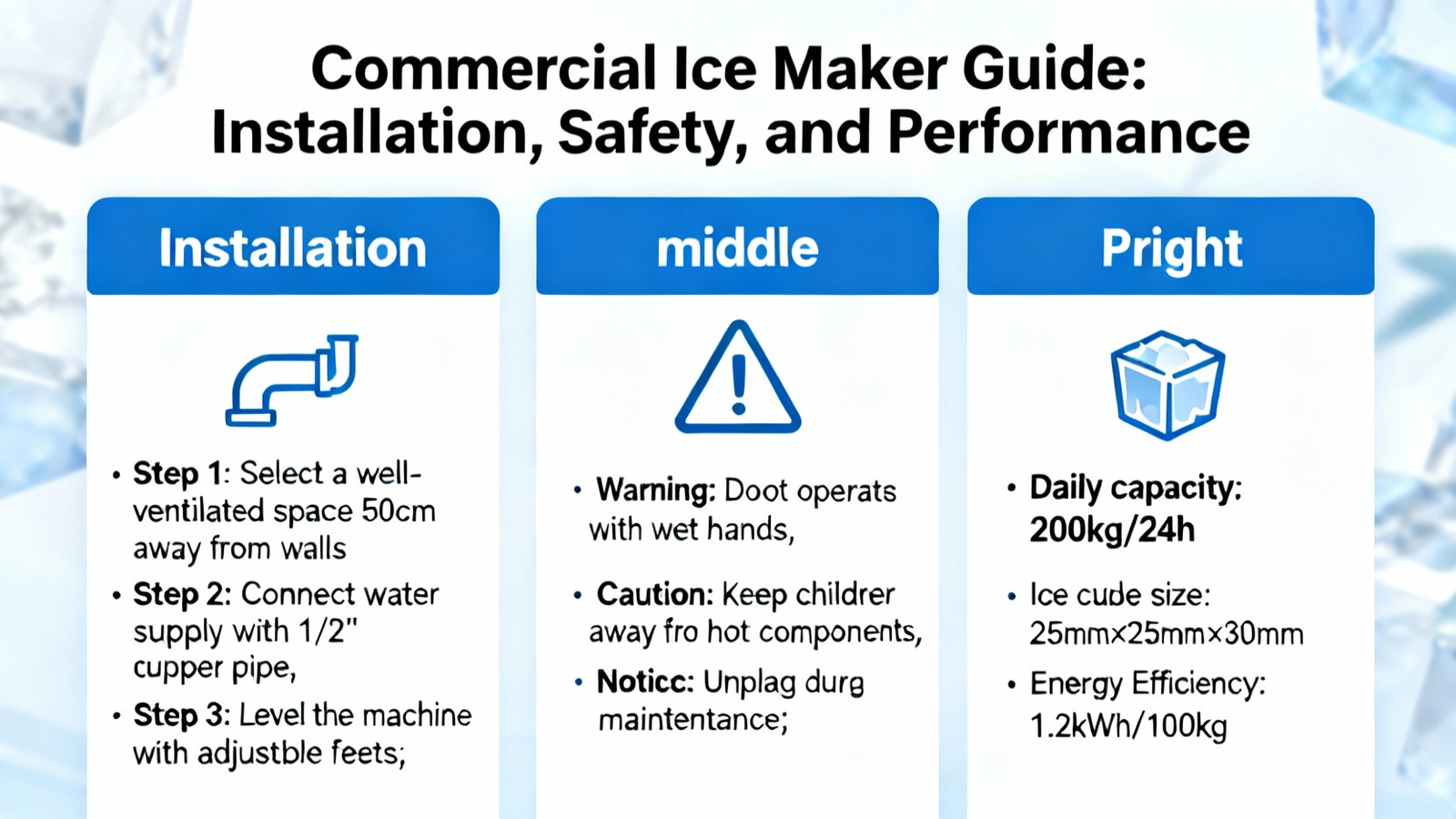
For restaurants, bars, and hotels, a reliable ice maker is the backbone of service. This guide explores the key features, essential installation requirements, and critical safety protocols for operating a heavy-duty, stainless steel commercial ice maker. Understanding these elements is crucial for maximizing performance, ensuring longevity, and maintaining safe operations in a demanding foodservice environment.
Engineering for Commercial Endurance
Built with durable stainless steel construction, this class of ice maker is designed to withstand the rigors of high-volume use. The material is not only resistant to corrosion and easy to sanitize—a critical point for food safety—but its robustness ensures a longer operational lifespan in damp, busy environments. The use of environmentally friendly R290 (propane) refrigerant is a significant modern advancement. As noted on Wikipedia, hydrocarbons like R290 have “zero ozone depletion potential and very low global warming potential,” making them a sustainable choice, though they require specific safety considerations during servicing due to flammability. This engineering, combined with compatibility across multiple climate types (SN, N, ST), means the unit is built to deliver consistent performance whether installed in a chilly stockroom or a warm kitchen.
Critical Installation and Setup Protocols
Proper installation is non-negotiable for optimal function. The unit requires a direct connection to a drinking water supply with a specific water pressure range (14.5-58 psi). Pressure outside this range necessitates a changeover valve to prevent mechanical issues. Furthermore, the machine must be leveled and positioned with at least 5.9 inches of clearance on all sides for adequate airflow, which is vital for the condenser to expel heat efficiently. A gravity-fed drain line, with its outlet lower than the machine’s port, must be connected to handle constant meltwater discharge. Perhaps the most crucial step, often emphasized by users in forums like Reddit, is to let the unit stand upright for 24 hours after delivery before initial use. This allows the compressor oil, which may have been disturbed during transit, to settle, preventing premature failure.
Operational Safety and Best Practices
Adhering to safety guidelines protects both your staff and your investment. The unit is equipped with a three-prong plug for proper grounding; using an extension cord is strongly discouraged as it can overheat and pose a fire risk. The location must be away from direct sunlight, stoves, or other heat sources, and never near flammable materials. It is designed for indoor use only, as outdoor conditions can lead to electrical hazards and performance issues. Importantly, only potable water should be used. Introducing other liquids can damage the internal components and contaminate the ice. As discussions on appliance safety highlight, following the manufacturer’s guidelines, like those for the 23.2 in. 500 lbs./24h Capacity Commercial Stainless Steel Ice Maker, is the primary method for mitigating operational risks.
Maximizing Performance and Output
To achieve the advertised 500 lb/24h capacity, operators must account for environmental variables. The surrounding air temperature directly influences ice production cycles; a hotter ambient temperature will increase cycle times and reduce daily output. Regular maintenance, such as cleaning the air filter and sanitizing the water distribution system, is essential to prevent scale buildup and bacterial growth, which can degrade performance and ice quality. The machine’s 70-inch power cord offers some placement flexibility, but it should be positioned to avoid creating a trip hazard in a busy workspace. For operations needing a high-volume solution, understanding these factors ensures that a model like the Commercial Stainless Steel Ice Maker meets its full potential.
In summary, a commercial ice maker is a significant investment that demands careful attention to detail from unboxing to daily operation. Its durable stainless steel construction and modern R290 refrigerant system are engineered for high-volume output and environmental responsibility, but these features only deliver value when paired with correct installation. Ensuring proper water pressure, adequate ventilation, and a functional gravity drain sets the foundation for reliable service. Strict adherence to safety protocols—including proper electrical connection, safe placement away from heat and flammables, and the critical 24-hour settling period—is paramount for protecting both personnel and the equipment. Finally, recognizing that factors like ambient temperature and regular maintenance impact output allows businesses to plan effectively and ensure a constant ice supply. By integrating these technical specifications, safety mandates, and performance insights, establishments can secure the return on investment that a robust 500 lb capacity ice maker is designed to provide, keeping service flowing smoothly and customers satisfied.
This guide really highlights why a reliable commercial ice maker is so essential for smooth daily operations.
\}}
Great guide—getting the installation and safety right on a commercial ice maker is so important for keeping service running smoothly.
\}}
Great guide—getting the installation and safety right on a commercial ice maker is so important for keeping service running smoothly.
\}}