
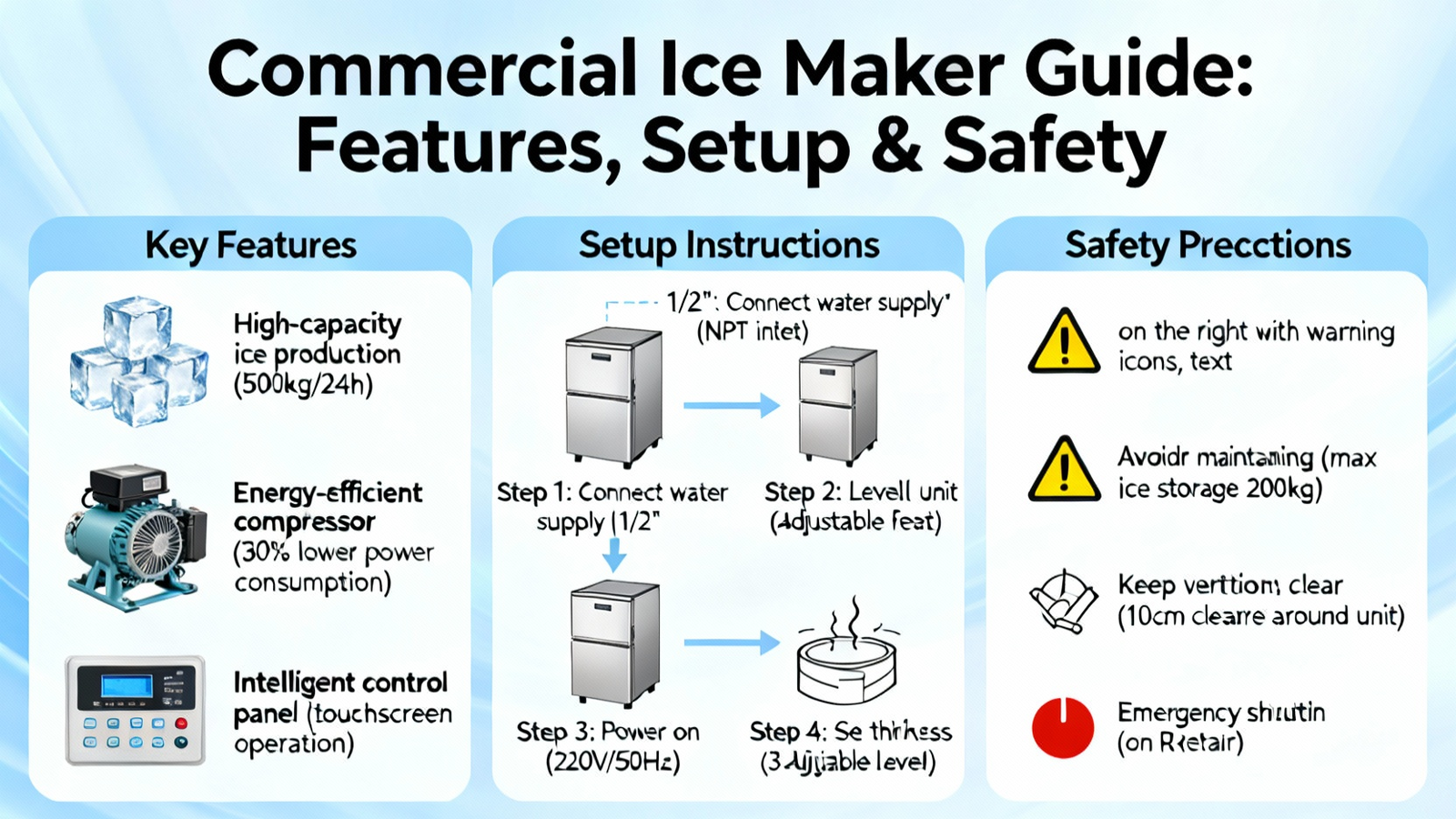
Heavy-Duty Commercial Ice Maker: Ultimate Guide to Features & Setup
Selecting the right commercial ice maker is crucial for foodservice operations. This guide delves into the robust features of a durable stainless steel unit, its optimal installation, and critical safety protocols. We’ll explore how its design ensures reliable performance in demanding environments like restaurants, bars, and hotels, while providing essential setup knowledge for long-term operation.
Engineering for Demanding Commercial Environments
This ice maker’s core is built for endurance. Its durable stainless steel construction is industry-standard for corrosion resistance and easy sanitation, a critical factor in commercial kitchens. Designed for 110V 60Hz operation, it integrates seamlessly into standard US electrical systems. The use of environmentally friendly R290 (propane) refrigerant is a forward-thinking choice. As noted in discussions on refrigerant trends, R290 has a significantly lower Global Warming Potential (GWP) compared to traditional HFCs, aligning with evolving environmental regulations (Wikipedia, R-290). Its compatibility with climate types SN, N, and ST ensures reliable ice production across varied ambient temperatures common in North America.
Strategic Installation for Peak Performance and Safety
Proper installation is non-negotiable for efficiency and safety. The unit requires a dedicated drinking water supply with precise pressure (14.5-58 psi) to function correctly. Critical spacing—at least 5.9 inches on all sides—allows for essential airflow, preventing compressor overload. The included 70-inch three-prong plug mandates a proper grounded outlet; using an extension cord is a documented fire hazard, a point often emphasized in commercial equipment forums. Furthermore, the unit must be placed away from heat sources and direct sunlight, as ambient temperature directly influences ice production cycles. A vital, often overlooked step is the 24-hour settling period after delivery, allowing the refrigeration system to stabilize for long-term health.
Operational Integrity and Essential Maintenance
Daily operation hinges on simple but strict guidelines. Only potable water should be used; introducing other liquids can damage the evaporator and contaminate ice. The machine’s wastewater and meltwater are discharged by gravity, necessitating a properly sloped drain line where the outlet is lower than the machine’s port to prevent backflow and microbial growth. Users should note that ice production time varies with room temperature, a thermodynamic principle. Regular cleaning with approved solutions is imperative to prevent scale and slime, issues frequently cited by business owners on hospitality subreddits as leading causes of downtime. For a model embodying these features, consider the stainless steel ice maker designed for high-volume needs.
Conclusion: Investing in Reliability for Your Business
In summary, a commercial ice maker like this stainless steel ice maker represents a significant investment in your operation’s backbone. Its durable construction, standard electrical requirements, and eco-friendly refrigerant are engineered for commercial rigor. However, its technical specifications—from water pressure needs to climate type compatibility—demand careful attention. The installation and safety notes, such as allowing proper clearance, avoiding extension cords, and observing the initial settling time, are not mere suggestions but essential protocols to ensure safety, maximize the machine’s lifespan, and protect your warranty. As highlighted in industry discussions, neglecting these steps is a common precursor to failure. By understanding the engineering principles behind its operation and adhering to strict setup and maintenance guidelines, you secure a reliable ice supply. This ensures seamless service for your customers and safeguards your business against preventable operational interruptions. Ultimately, the right commercial ice maker, properly installed and maintained, is a workhorse that pays dividends in consistency and efficiency day after day.
This guide really helped me understand the key features to look for in a durable commercial ice maker.
\}}
This guide really helped me understand the key features to look for in a commercial ice maker for my restaurant.
\}}