
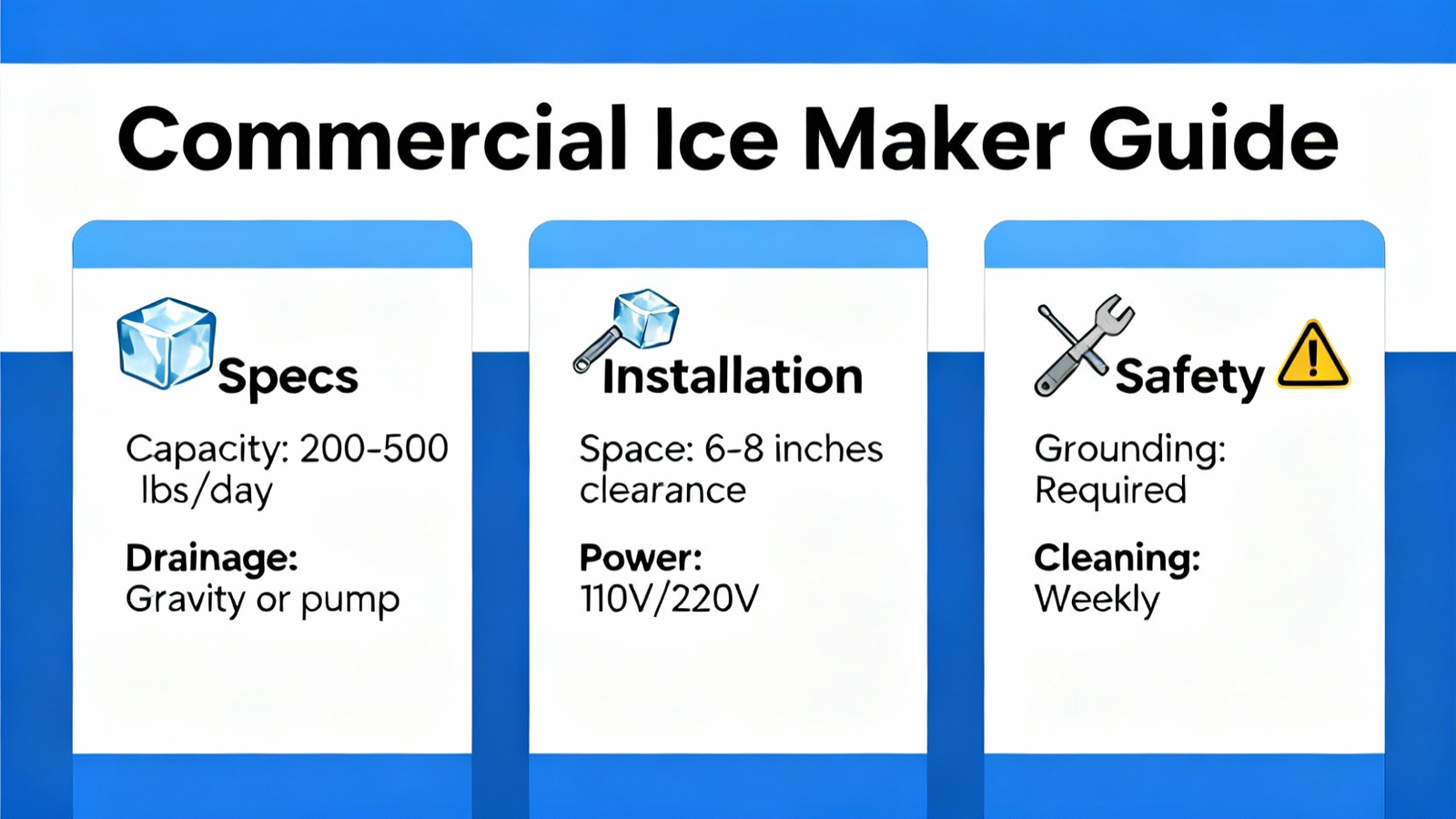
For restaurants, bars, and hotels, a reliable ice maker is the backbone of service. This guide delves into the heavy-duty commercial ice maker, focusing on the critical specifications, proper installation, and essential safety protocols for models like the 23.23 in. 750 lbs./24h Capacity Commercial Stainless Steel Ice Maker. Understanding these elements ensures optimal performance, longevity, and safety in your commercial operation.
Engineering for Demanding Environments
At its core, a commercial ice maker is built for endurance. The highlighted unit features a durable stainless steel construction, a standard in food service for its corrosion resistance and ease of cleaning. Its compatibility with climate types SN, N, and ST indicates reliable operation across varied ambient temperatures, from subtropical to temperate. The use of R290 refrigerant is a significant modern feature. R290, or propane, is a natural refrigerant with a very low Global Warming Potential (GWP). As noted on Wikipedia, natural refrigerants like hydrocarbons are gaining favor due to environmental regulations phasing out synthetic alternatives, though they require careful handling due to flammability. This aligns with the unit’s Safety protection type I classification, which typically denotes a basic insulation system.
Critical Installation and Setup Protocols
Proper installation is non-negotiable for performance and warranty. Key requirements include:
- Water Supply & Pressure: A direct drinking water supply is mandatory to ensure ice quality and prevent scale. The water pressure must be precisely between 14.5-58 psi; outside this range, a pressure changeover valve is required to prevent machine damage.
- Space & Ventilation: A minimum 5.9 inches (15 cm) of clearance on all sides is essential for airflow, preventing compressor overheating and ensuring efficient operation, as often emphasized in industry discussions.
- Initial Setup: After delivery, the unit must remain upright for 24 hours before being plugged in. This allows the compressor oil, which may have shifted during transit, to settle, preventing severe damage on startup—a critical step echoed by users on platforms like Reddit in appliance advice threads.
Operational Safety and Best Practices
Adhering to safety guidelines protects both personnel and equipment. The three-prong plug and 70″ power cord are designed for grounded, safe operation. Crucially, extension cords are not recommended due to the risk of overheating and fire from the 780W draw, a common warning for commercial appliances. The unit must be kept away from flammable materials, direct sunlight, and heat sources like stoves, as excessive ambient heat forces the compressor to work harder, reducing efficiency and lifespan. Furthermore, as the ice melts, a properly installed drain pipe (outlet lower than the machine’s) is required for effective wastewater discharge by gravity, preventing internal flooding.
Maximizing Longevity and Ice Quality
To ensure consistent ice production and machine longevity, operators must consider environmental factors. The surrounding environmental temperature directly influences ice-making time, with higher ambient temperatures slowing production. Using only water—no other liquids—prevents damage to the water distribution system and preserves ice clarity and taste. Regular cleaning and descaling, as per the manufacturer’s instructions, are vital to prevent mineral buildup that can reduce efficiency and contaminate ice. For high-volume needs, investing in a robust model like the commercial stainless steel ice maker ensures the capacity to meet peak demand without strain.
In summary, a heavy-duty commercial ice maker is a significant investment that demands careful consideration of its engineering, installation, and operation. From its stainless steel construction and environmentally conscious R290 refrigerant to the non-negotiable setup steps like the 24-hour settling period and precise water pressure requirements, each detail contributes to reliable service. Adherence to safety protocols—such as avoiding extension cords and ensuring proper clearance—is paramount for risk prevention. Ultimately, the performance of even a capable unit like the 23.23 in. 750 lbs./24h Capacity Commercial Stainless Steel Ice Maker hinges on the operator’s understanding of these interconnected factors. By following these guidelines, businesses can secure a consistent supply of clean ice, ensuring customer satisfaction and safeguarding their equipment for the long term, making it a cornerstone of efficient daily operations in the demanding United States foodservice industry.
This guide really highlights why choosing the right commercial ice maker is so critical for keeping service running smoothly.
\}}
This guide really highlights why choosing the right commercial ice maker is so critical for keeping service running smoothly.
\}}
This guide really highlights why choosing the right commercial ice maker is so critical for keeping service running smoothly.
\}}
This guide is a great breakdown of the critical specs and safety steps for choosing a reliable commercial ice maker.
\}}