
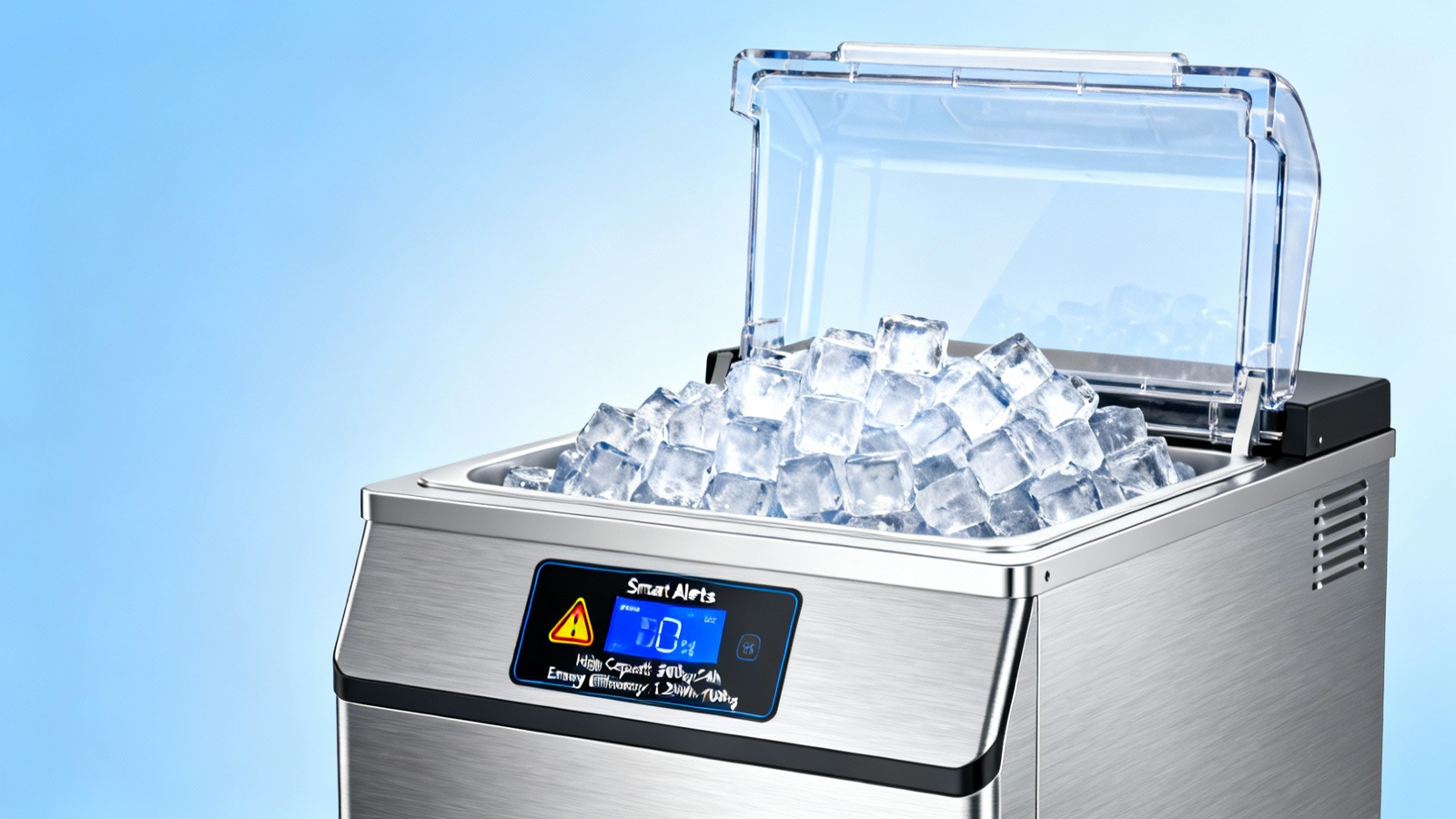
For any business that relies on a steady supply of ice, from bustling bars to high-volume restaurants, a commercial ice maker is a critical investment. This article delves into the advanced features of modern ice machines, focusing on intelligent alerts, operational efficiency, and high-capacity performance that ensure reliability and ease of use in demanding environments.
Intelligent Alerts for Uninterrupted Operation
Modern commercial ice makers are equipped with sophisticated monitoring systems that prevent downtime. A fault alert system immediately notifies staff of operational issues, allowing for swift intervention. This is complemented by a discreet ice full alert that stops production to prevent overflow and potential water damage. Furthermore, a water shortage alert is crucial; as noted in a discussion on Reddit’s r/refrigeration community (2023), low water supply can damage pumps and halt service, making this proactive feature a key safeguard for continuous production.
Engineered for Efficiency and Cleanliness
Beyond alerts, efficiency is built into the core operation. Auto defrost technology eliminates the labor-intensive and often-forgotten task of manual defrosting, which according to refrigeration principles documented on Wikipedia, is essential for maintaining energy efficiency and consistent ice production cycles. Integrated water filters are equally vital, removing impurities to ensure the ice is clean and tastes neutral, a non-negotiable standard in food service. Simple design elements like 4-adjustable feet ensure perfect leveling, which a technician on the same Reddit thread emphasized prevents uneven wear and erratic ice harvest cycles.
High-Capacity Performance and User Control
The true measure of a commercial unit is its output and accessibility. A machine producing 420 lbs. of ice per day, with a bin holding up to 300 lbs., is designed to meet peak demand without faltering. User interaction is streamlined through an intuitive touch control panel for precise adjustments. The inclusion of a blue lighted storage bin and a flip-up door with a dedicated scoop marries functionality with hygiene and ease of access, allowing staff to serve ice quickly even in low-light bar or kitchen settings.
Superior Drainage and Commercial Reliability
Professional installation and drainage are what separate commercial units from consumer models. A superior commercial split ice maker offers flexible drainage options. The main ice-making unit typically requires a water pump drainage system to efficiently eject wastewater, while the storage bin can often utilize simpler gravity drainage. This split-system design, common in high-capacity models like the 22.24 in. 420 lbs/24h ice maker, allows for greater installation flexibility, placing the noisy condenser away from customer areas while keeping the storage bin within easy reach.
In conclusion, today’s commercial ice makers are intelligent, high-output appliances designed to be reliable partners in business. The integration of proactive alert systems for faults, bin capacity, and water supply directly addresses the most common points of failure, reducing emergency repairs and downtime. Features like auto defrost and water filtration automate maintenance and quality control, ensuring consistent, clean ice production with minimal manual intervention. The substantial daily output and large storage capacity, managed through user-friendly controls and accessible design, cater directly to the relentless demands of restaurants, bars, and hotels. Ultimately, investing in a robust system with professional drainage options, such as the featured split commercial ice maker, is not just about purchasing equipment—it’s about ensuring operational continuity, upholding health standards, and securing the seamless service that customers and your business’s reputation depend on every day.
Smart alerts are a game-changer for keeping high-capacity ice makers running efficiently.
\}}
Smart alerts are a game-changer for keeping high-capacity ice makers running efficiently.
\}}
Smart alerts are a game-changer for keeping high-capacity ice makers running efficiently.
\}}
The smart alerts on these high-capacity machines are a game-changer for preventing downtime.
\}}