
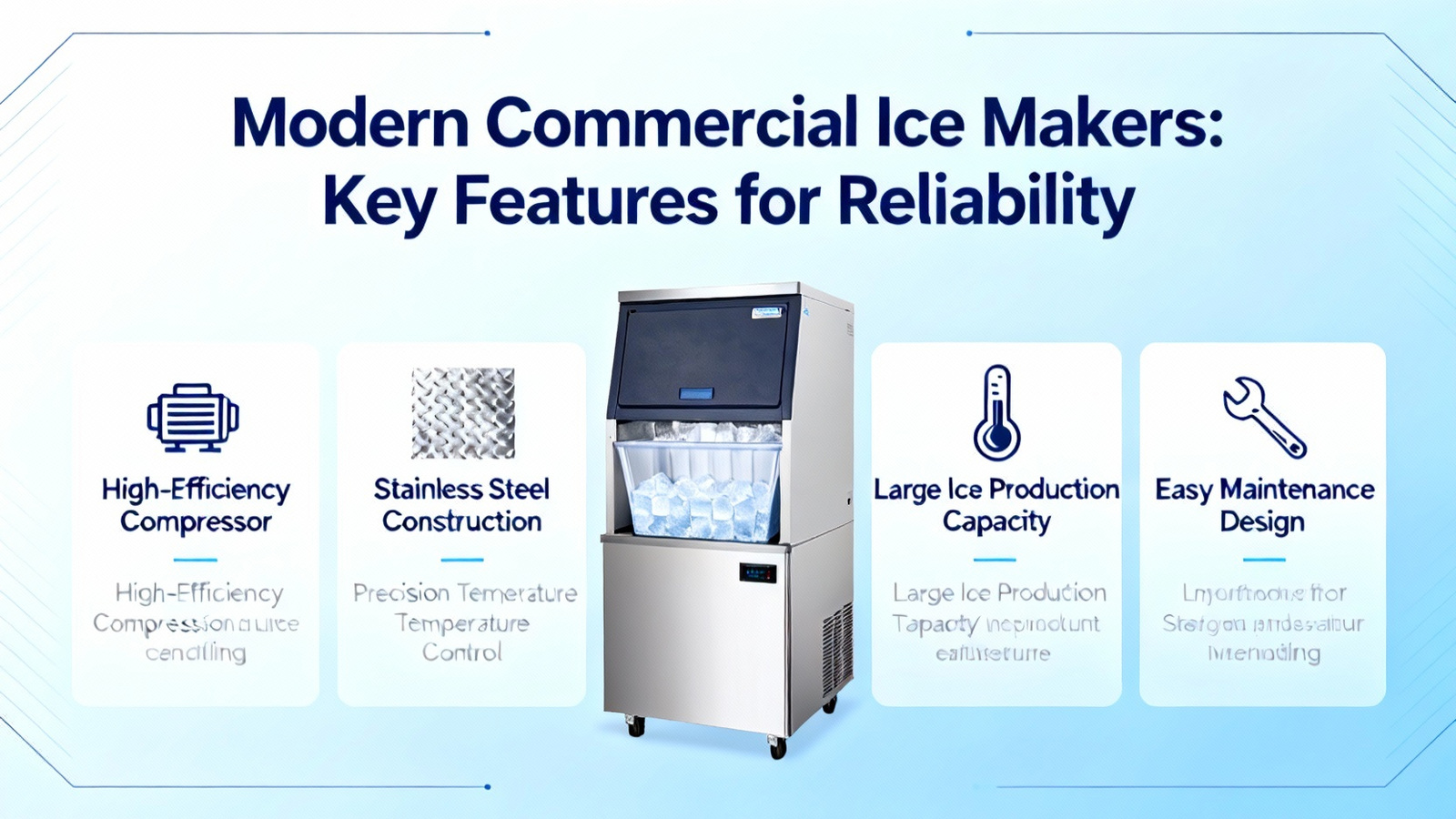
For any commercial kitchen, bar, or high-volume venue, a reliable ice machine is non-negotiable. Downtime or inconsistent production directly impacts service and revenue. This article explores the critical features of modern commercial ice makers, focusing on intelligent alerts, high-capacity performance, and user-centric design that together ensure operational continuity and efficiency.
Intelligent Alerts for Uninterrupted Operation
The core of a dependable ice maker lies in its ability to communicate status and prevent problems before they halt production. Modern units integrate fault alert systems that monitor internal functions, providing early warnings for issues like compressor faults or high temperatures, much like the diagnostic systems discussed by HVAC technicians on Reddit (August 2023). Coupled with water shortage and ice-full alerts, these features empower staff to address minor issues proactively, preventing major downtime. This shift from reactive repair to proactive maintenance is a cornerstone of modern commercial appliance design.
Engineering for High-Volume Production and Hygiene
Capacity and sanitation are paramount. A unit like the 22.3 in. 450 lbs. /24h Ice Capacity 300 lbs Split Commercial Ice Maker is engineered for demand, producing hundreds of pounds of ice daily. This scale necessitates features like integrated water filters, which are critical for ice quality and machine longevity. As noted on Wikipedia, scale buildup from hard water is a primary cause of ice machine failure, and filters help mitigate this. Furthermore, automatic defrost cycles maintain peak efficiency, ensuring consistent output without manual intervention, a key advantage during extended service hours.
User-Centric Design and Operational Convenience
Beyond raw power, thoughtful design reduces labor and enhances usability. An intuitive touch control panel simplifies operation, while features like a blue-lighted storage bin provide at-a-glance status checks in low-light environments. Physical stability is addressed with adjustable feet, eliminating wobble that can affect performance. The inclusion of a flip-up door and dedicated scoop, as seen in this commercial ice maker, streamlines access and maintains hygiene, preventing contamination during service—a concern frequently highlighted in food safety discussions.
Installation Flexibility and Drainage Options
Final installation versatility can dictate a unit’s suitability for a specific venue. The split design of the main ice maker and separate storage bin allows for configuration in spaces with logistical constraints. Offering both water pump drainage and gravity drainage for the bin provides crucial flexibility. This allows the unit to be installed where a direct floor drain isn’t accessible, a common challenge in retrofit installations. This adaptability ensures that high-capacity ice production can be integrated into a wider variety of commercial layouts.
In summary, selecting a commercial ice maker requires looking beyond daily pound capacity. As we’ve detailed, the integration of intelligent alert systems is critical for preemptive maintenance, directly reducing costly downtime. The engineering for high-volume production must be paired with hygiene safeguards like water filters and auto-defrost to ensure consistent, clean ice output. Furthermore, user-centric design elements—from stable adjustable feet to intuitive lighting and controls—directly impact daily staff efficiency and satisfaction. Finally, installation flexibility in drainage and configuration ensures the equipment can adapt to your physical space. A unit that synthesizes these elements, such as the featured split commercial ice maker, represents not just an appliance, but a reliable operational partner. By prioritizing these interconnected features, business owners can secure an ice production solution that supports seamless service, protects revenue, and meets the relentless demands of the commercial environment.
This article really highlights how intelligent alerts are a game-changer for preventing downtime in a busy kitchen.
\}}
This article really highlights how crucial intelligent alerts are for preventing downtime in a busy kitchen.
\}}