
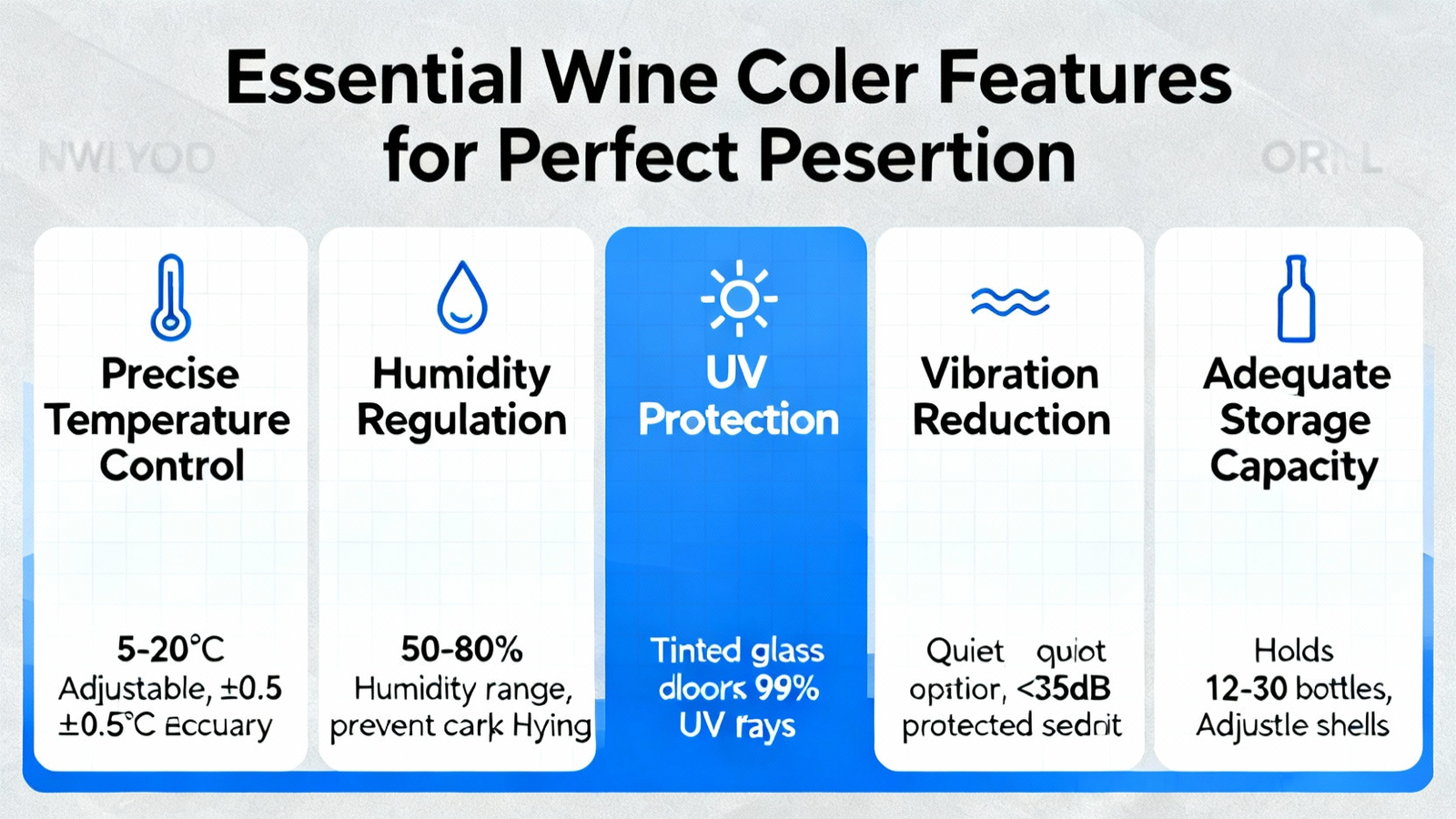
For the discerning wine enthusiast, proper storage is the silent guardian of a bottle’s potential. This article explores the essential features of a modern wine cooler, detailing how technologies like light protection, precise temperature control, and advanced cooling systems work in concert to create the ideal environment for your collection to mature gracefully and tastefully.
The Foundation of Preservation: Light and Temperature
Two of the most critical enemies of wine are ultraviolet light and improper temperature. UV rays can degrade and prematurely age wine, a process known as “light strike,” which causes unpleasant aromas and flavors. This is why the featured wine cooler utilizes protective glass doors. Equally vital is temperature stability. As noted in discussions among collectors on Reddit, fluctuations are a primary concern, with one user stating, “The constant temp is way more important than the actual temp…” in a January 2023 thread. A consistent range, like the 40°F to 65°F offered here, allows different styles to be stored at their ideal conditions.
Intelligent Cooling and Adaptable Storage
Beyond a simple cold box, effective wine refrigerators employ sophisticated air circulation. An internal air cooling system ensures even temperature distribution throughout the unit, preventing warm spots that could spoil your wine. This is complemented by features like ventilated front windows for efficient heat exchange. Inside, flexibility is key. The six removable beech wood shelves allow you to customize the layout not just for standard Bordeaux bottles but also for larger Burgundy, Champagne, or even magnum bottles, maximizing the advertised 30-bottle capacity to suit your specific collection.
Design Meets Functionality
A wine cooler with a glass door serves as both a storage unit and a display piece. Elegant soft blue LED lighting provides interior illumination without the heat or harmful spectrum of traditional incandescent bulbs, allowing you to showcase your collection safely. The user-friendly digital control panel puts precise management at your fingertips. This marriage of thoughtful design and practical function transforms the cooler from an appliance into a centerpiece that reflects the care you have for your wine.
The Collector’s Companion
Whether you’re building a diverse portfolio or curating a selection of favorites, the right storage solution is non-negotiable. Wikipedia’s entry on wine cellars emphasizes that the key purposes of storage are “to maintain a high humidity, lack of vibrations, and a dark, cool environment.” A modern countertop or freestanding cooler like this model is engineered to replicate these ideal conditions in a home setting. It addresses the core needs highlighted by authorities and enthusiasts alike, making professional-grade care accessible.
In summary, investing in a dedicated wine cooler is an investment in the longevity and quality of your wine. As we’ve explored, it systematically addresses the major threats to wine: harmful light through protective glass, temperature instability via advanced internal air cooling and ventilation, and organization challenges with flexible wooden shelving. The inclusion of soft LED lighting and intuitive controls elevates the user experience, blending seamlessly into your home. For both the casual lover and the serious collector, this 15″ Single Zone 30-Bottle Wine Cooler provides a compact, yet profoundly effective, solution. It embodies the principle that great wine is not just made but also preserved, ensuring every bottle you open has been given the opportunity to reach its full, intended expression. By creating a stable, dark, and cool environment, you are not just storing wine; you are safeguarding the stories and craftsmanship within each bottle for that perfect moment of enjoyment.
Great breakdown of how modern features like light protection and precise temperature control are the true guardians of a wine’s potential.
\}}
This article really highlights how essential precise temperature control is for protecting my collection.
\}}
This article really highlights how essential precise temperature control is for protecting my collection.
\}}