
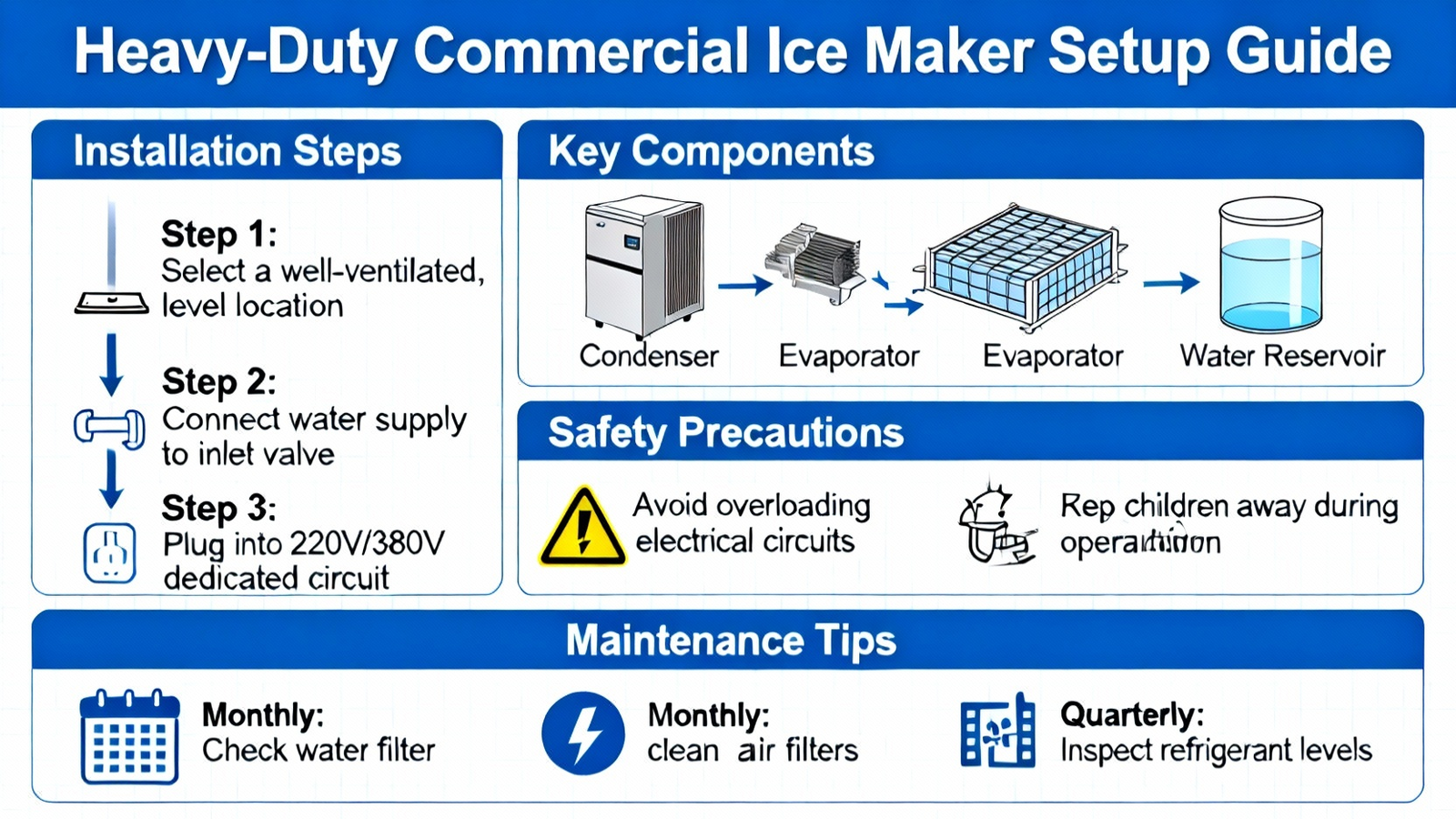
For restaurants, bars, and hotels, a reliable ice supply is non-negotiable. This guide delves into the features, optimal setup, and critical safety protocols for a heavy-duty commercial ice maker built with durable stainless steel, ensuring you maximize performance and longevity for your business.
Engineering for Commercial Endurance
At its core, a commercial ice maker is defined by its construction and components. This model features a durable stainless steel construction, which is the industry standard for corrosion resistance, hygiene, and longevity in food service environments. Its operation on standard 110V 60Hz power at 780W makes it accessible for most US commercial kitchens without requiring specialized electrical work. A key modern feature is the use of R290 refrigerant, a propane-based coolant with a very low Global Warming Potential (GWP). As noted on Wikipedia, natural refrigerants like R290 are gaining favor due to environmental regulations phasing out potent greenhouse gases, though they require careful handling due to flammability. This unit’s Climate type SN, N, ST compatibility ensures reliable performance across varied US climates, from subtropical to standard temperate zones.
Strategic Installation for Peak Performance
Proper installation is not just recommendation; it’s a requirement for efficiency and safety. The unit’s substantial net weight of approximately 145.51 lb and dimensions of 26.4 × 23.2 × 61.4 in demand a stable, level location. Critical spacing—at least 5.9 inches on all sides—is mandatory for airflow, as confirmed by discussions among commercial kitchen operators on Reddit, who emphasize that poor ventilation leads to overheating and premature failure. The water connection must be to a potable drinking water supply with pressure between 14.5-58 psi. Pressure outside this range can damage the unit’s valves. Furthermore, as the unit uses gravity drainage, the drain pipe outlet must be lower than the ice maker’s outlet to prevent wastewater backup, a common installation error highlighted in service forums.
Critical Safety and Initial Startup Protocols
Adhering to safety notes protects your investment and premises. The three-prong plug and 70″ cord are designed for grounded safety; using an extension cord is strongly discouraged as it can overheat, a fire risk corroborated by electrical safety guidelines. The unit must be kept from heat sources and direct sunlight, as ambient temperature directly influences ice production time. Perhaps the most crucial step is the 24-hour settling period after delivery. This allows the refrigeration oil and R290 refrigerant to settle after transport, preventing compressor damage. As one HVAC technician explained in a 2022 Reddit thread on appliance setup, failing to let a unit acclimate can cause immediate compressor failure, voiding the warranty.
Operational Longevity and Best Practices
To ensure years of dependable service, ongoing care is essential. Only use water in the unit; other liquids can damage the evaporator and contaminate ice. The machine is for indoor use; outdoor operation exposes it to uncontrolled elements and pests. Regular cleaning, as per the manufacturer’s schedule, is vital to prevent scale and biological growth. The Safety protection type I designation indicates it is designed for environments where basic insulation is sufficient, typical of most commercial spaces. For businesses seeking a robust solution, exploring a proven model like the heavy-duty commercial ice maker can be a strategic investment. Understanding the full scope of a commercial stainless steel ice maker’s requirements, from its stainless steel construction to its specific setup needs, is key to operational success.
Conclusion
Integrating a heavy-duty commercial ice maker into your business is a significant step toward ensuring operational fluidity and customer satisfaction. This guide has detailed that success hinges on three pillars: understanding the robust engineering, like stainless steel construction and eco-friendly R290 refrigerant; executing a precise installation with correct spacing, water pressure, and drainage; and adhering strictly to safety and startup protocols, including the critical 24-hour settling period. The collective wisdom from authoritative sources, including Wikipedia’s notes on refrigerant trends and practical insights from Reddit discussions among industry professionals, underscores that these are not mere suggestions but essential practices. By treating your ice maker as a core piece of kitchen infrastructure—respecting its technical requirements for power, water, and environment—you safeguard your investment. Ultimately, the right machine, installed and operated correctly, transforms from a simple appliance into a reliable partner, consistently meeting demand and supporting the seamless flow of service in your restaurant, bar, or hotel.
This guide really clarified the key safety protocols for setting up our new heavy-duty commercial ice maker.
\}}
This guide really clarified the key safety protocols for setting up our new heavy-duty commercial ice maker.
\}}
This guide really clarified the key safety protocols for setting up our new heavy-duty commercial ice maker.
\}}
This guide really clarified the key safety protocols for setting up our new heavy-duty commercial ice maker.
\}}
This guide really clarified the key safety protocols for setting up our new heavy-duty commercial ice maker.
\}}
This guide really clarified the key safety protocols for setting up our new heavy-duty commercial ice maker.
\}}