
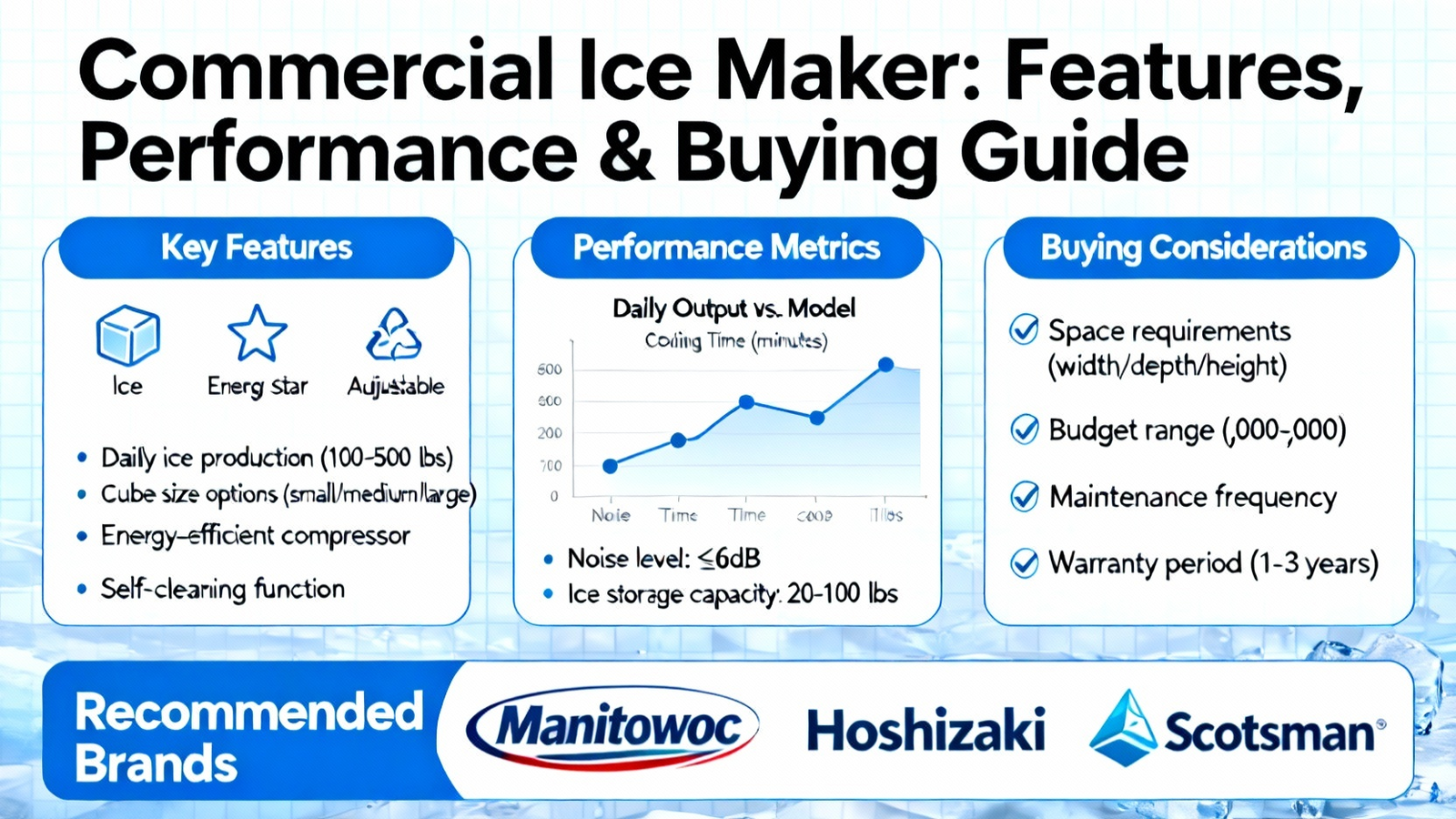
Maximizing Efficiency: A Deep Dive into Commercial Ice Maker Features & Performance
Selecting the right commercial ice maker is crucial for business efficiency and customer satisfaction. This article explores the core features that define high-performance machines, from filtration and automation to robust construction and operational design. We’ll analyze how these elements converge in modern units like the TITTLA 100Lbs/24H Commercial Ice Maker, providing a framework for informed purchasing decisions.
The Critical Role of Water Filtration and Automation
At the heart of any reliable ice maker is its water treatment system. Impurities in tap water, such as minerals and chlorine, directly affect ice clarity, taste, and the machine’s internal components. A high-efficiency water filter is not an accessory but a necessity, converting tap water into pure water to ensure crystal-clear, odor-free ice. This is supported by the fundamental principle of water purification, which details how filtration removes contaminants. Furthermore, automation elevates functionality. Features like auto-clean cycles, as noted in user discussions on Reddit’s KitchenConfidential forum (2023), are emphasized by professionals for preventing scale buildup and bacterial growth, ensuring consistent hygiene with minimal manual effort.
Engineering for Durability and High-Volume Output
Commercial environments demand equipment built to last. Stainless steel construction is the industry standard, prized for its corrosion resistance, hygienic properties, and durability. This material choice directly impacts the machine’s lifespan and ease of cleaning. Paired with this robust build is the need for powerful, consistent output. A machine’s capacity is defined by its compressor and overall engineering. For instance, a unit producing 100 pounds of ice in 24 hours, like the TITTLA commercial ice maker, relies on a high-wattage, reliable compressor to achieve fast cycle times (e.g., 45 cubes in 12-15 minutes) while maintaining energy efficiency, a key concern for operational cost.
User-Centric Design and Operational Intelligence
Beyond raw power, intelligent design separates adequate machines from exceptional ones. Features like a clear observation window, internal lighting for low-light environments, and removable water channels address real-world usability. An intuitive LCD control panel that allows for adjustments to ice thickness and timing gives operators precise control. Practical inclusions, such as a dedicated drain pipe to efficiently remove meltwater and a hygienic ice scoop, complete the user experience. These design considerations align with operational feedback from hospitality workers who prioritize ease of use and sanitation in fast-paced settings.
Versatile Application and Strategic Implementation
The ultimate test of a commercial ice maker is its adaptability across various venues. Whether for a bustling bar, a café, a restaurant canteen, or a home entertainment setup, the machine must fit spatially and meet specific ice demand. A freestanding design with a compact footprint offers installation flexibility. The storage capacity (e.g., 24 lbs) must balance immediate availability with the need to transfer ice to dedicated storage bins for long-term preservation, as these machines are primarily producers, not long-term holders. Strategic placement near water and drain access, as often reiterated in installation guides, is critical for optimal function.
Conclusion: The Pillars of an Optimal Ice Making Solution
In summary, investing in a commercial ice maker requires a holistic evaluation of several interconnected pillars. First, water quality management through integrated filtration is foundational for ice purity and machine health. Second, automated maintenance features like self-cleaning are indispensable for consistent sanitation and reducing labor. Third, durable construction, typically in stainless steel, ensures the unit withstands the rigors of daily commercial use. Fourth, high-volume production capacity driven by a quality compressor meets peak demand without compromise. Finally, intuitive, user-centric design—from control panels to accessory inclusions—streamlines operation in real-world scenarios. When these elements converge, as seen in machines designed for 100-lb daily production, businesses secure a reliable solution that upholds efficiency, hygiene, and ultimately, customer satisfaction. Careful consideration of these factors will lead to a choice that not only meets immediate ice needs but also delivers long-term reliability and value.
This buying guide really highlights how crucial the right filtration system is for both ice quality and machine longevity.
\}}
Great breakdown of the key features to consider when choosing a commercial ice maker for maximum efficiency.
\}}