
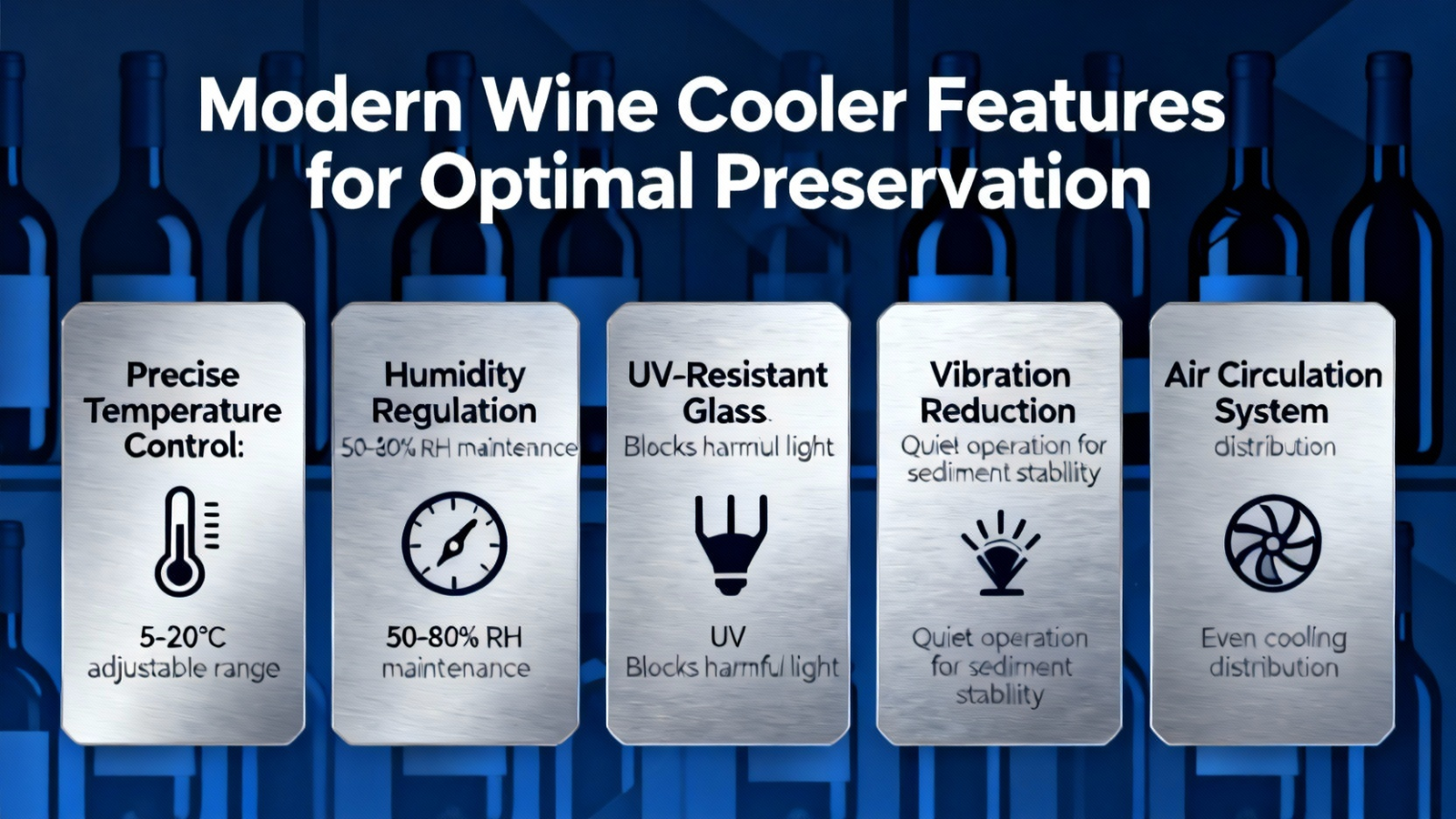
For the discerning wine enthusiast, proper storage is the silent guardian of a bottle’s potential. This article explores the essential features of a modern wine cooler, detailing how specific technologies like light protection, precise temperature control, and advanced air circulation work in concert to create an optimal environment for preserving and aging your collection.
The Foundation of Preservation: Light and Temperature
Two of the most critical enemies of wine are ultraviolet light and temperature fluctuation. UV rays can degrade and prematurely age wine, a process known as “light strike,” which causes unpleasant aromas and flavors. The glass doors on a quality cooler are specifically treated to filter out this harmful spectrum. Equally vital is a stable temperature within the ideal cellaring range of 40°F to 65°F. As noted in discussions among collectors on Reddit’s r/wine community, consistency is more important than the exact number for long-term aging, preventing the expansion and contraction that forces cork movement and oxidizes the wine.
Intelligent Cooling and Airflow Design
Beyond basic refrigeration, an effective wine cooler employs a sophisticated internal air cooling system. This system, coupled with features like ventilated front windows, ensures even temperature distribution throughout the unit, eliminating hot spots. This gentle, stabilized environment is crucial because, as explained on Wikipedia’s Wine Cellar entry, the goal is to slow the chemical reactions involved in aging. Rapid temperature swings can accelerate these reactions detrimentally, while a steady chill allows wines to mature at their intended, graceful pace.
Flexible Organization for Evolving Collections
A collection is never static. The inclusion of six removable beech wood shelves provides essential flexibility. This allows you to customize the layout not just for standard Bordeaux bottles, but also for larger Burgundy, Champagne, or even magnum bottles. This adaptability future-proofs your investment, accommodating new acquisitions and varying bottle shapes without compromising capacity or organization, making it a practical choice for both casual lovers and serious collectors.
Elegant Functionality in Practice
The final elements merge utility with aesthetic appeal. The soft blue LED interior lighting offers visibility without the heat or harmful light spectrum of traditional bulbs. A user-friendly digital control panel puts precise temperature management at your fingertips. With a capacity for 30 bottles, this 30-bottle wine cooler provides a compact yet spacious solution, designed to integrate seamlessly into kitchen, dining room, or entertainment space while performing its primary duty: preservation.
In summary, a modern wine cooler is a sophisticated appliance built upon core principles of oenology. It actively combats the damaging effects of light and temperature instability through treated glass and precise, consistent cooling systems—a point underscored by both enthusiast communities and established resources. The flexibility offered by removable wooden shelving acknowledges the dynamic nature of a wine collection, while thoughtful design elements like soft LED lighting and intuitive controls add daily convenience. Ultimately, whether you are laying down a few special bottles for the future or curating a diverse selection for regular enjoyment, investing in proper storage is investing in the wine itself. A dedicated cooler like the 15″ Single Zone model provides a controlled microenvironment that allows each bottle to reach its full expressive potential, ensuring that every opened bottle is a true reflection of the winemaker’s intent. It transforms storage from an afterthought into an active part of the wine enjoyment journey.
Great article—it really highlights how essential features like precise temperature control are for optimal preservation.
\}}
Great article—I never realized how much advanced air circulation in a modern wine cooler could impact long-term preservation.
\}}
I really appreciate how this article breaks down the specific technologies, like precise temperature control, that are so crucial for protecting a wine collection.
\}}